Want to be in the loop?
subscribe to
our notification
Business News
NEW DECREE EXPECTED TO HALT TEMPORARY IMPORT VIOLATIONS
Goods temporarily imported for re-export can be kept in Việt Nam for no more than 60 days from the date of completion of customs formalities, according to a new Governmental decree.
Decree 69/2018/NĐ-CP, issued by the Government, details a number of articles of the Law on Foreign Trade Management, which lays down rules on the temporary import and re-export of goods.
In cases where it is necessary to extend the time limit, businesses must send written requests for extension to the customs sub-departments which carry out the temporary import procedures. The duration of each extension shall not exceed 30 days and not more than two extensions may be granted per batch of goods temporarily imported for re-export.
Upon expiry of the 60-day limit, businesses are required to re-export the goods out of Việt Nam or destroy them. In case they want to import into Việt Nam, they must abide by regulations on the management of imported goods, as well as tax.
The Deputy Minister of Agricultural and Rural Development (MARD), Trần Thành Nam, told enternews.vn that while it had positive effects on border economic development, the temporary import and re-export of agricultural products also had its share of flaws, sometimes "strangling" domestic production.
Nam said in many cases of temporary import for re-export, after being imported, goods were unloaded and divided into small packages to sell to the market.
"Such consumption is not in accordance with international trade conventions, so the detection of violations will negatively affect the prestige of agricultural products from Việt Nam," Nam said.
The storage period is long, while the enterprises are allowed to remove the goods from the customs control area and take responsibility for preservation of the status quo during the storage period. This is a loopole for enterprises to violate the regulations.
Many agro-forestry and fishery products temporarily imported for re-export are on the list of goods banned from import and domestic consumption. However, some of these products find their way to the market and end up being consumed. Their untaxed status means they are cheaper than general market prices, which has a negative impact on the domestic market and creates a price war for Vietnamese goods.
Nam said the Minister of Agricultural and Rural Development urged the Prime Minister in mid-2017 to temporarily suspend the temporary import and re-export of meat products and animal organs. In the long run, however, the ministry needed to come up with a comprehensive assessment of the impact of the temporary importation and re-export of frozen food items to the nation’s economic and social interests, he said.
It is also necessary to have an accurate view of the impact of this activity on the market to ensure food safety and production for Vietnamese consumers, Nam said.
According to Deputy Minister of Industry and Trade Trần Quốc Khánh, temporary import for re-export is recognised and permitted under Vietnamese law. The activity is still under the management of the ministry in accordance with the provisions of the Commerce Law, the Foreign Trade Management Law, relevant guiding documents, and the direction of the Prime Minister, Khánh said.
“In the process of management, all comments will be studied and received by the ministry, and will be finalised or submitted to the competent authorities to complete the relevant regulations,” Khánh said.
Source: VNS
Related News
MEMBER CORNER / PROMOTIONS
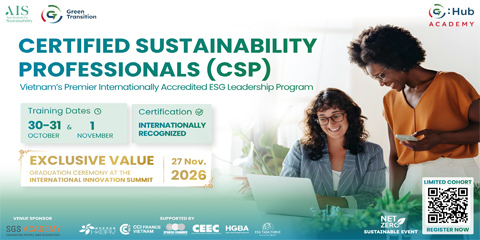
HCMC | CERTIFIED SUSTAINABILITY PROFESSIONAL (CSP) TRAINING | REGISTRATION OPEN
As sustainability becomes deeply embedded in corporate strategy and supply-chain operations across Vietnam, Hong Kong Business Association Vietnam is pleased to endorse the upcoming Certified Sustainability Professional (CSP) training program by the Asia Institute for Sustainability (AIS) - a premier internationally recognized ESG credential in Vietnam.
VIETNAM ECONOMY INVESTMENT
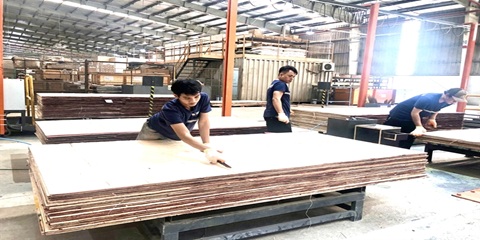
HCM CITY SAYS HOW IT PLANS TO ACHIEVE 10-11% ANNUAL EXPORT GROWTH FOR REST OF DECADE
The southern economic hub aims to strengthen its role as the country’s largest import-export centre while developing into a regional transhipment centre in Southeast Asia, supported by green and digital transformation and a circular economy. HCM City has outlined measures to expand production capacity, cut logistics costs, diversify export markets, and help businesses meet increasingly stringent international standards as it targets average annual export growth of 10-11 per cent through 2030.
VIETNAM ECONOMY INVESTMENT
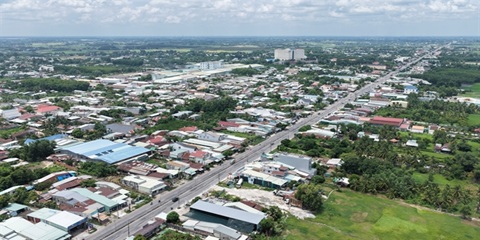
HCM CITY LEADS ECONOMIC RESTRUCTURING IN SOUTHEAST REGION
According to Associate Professor, Dr Vũ Tuấn Hưng, director of the Institute of Social Sciences of the Southern Region, the Southeast is a strategically important socio-economic space in Việt Nam’s development given its advantages in location, industry, trade, services, logistics, science and technology, urbanisation and human resources.
TECHNOLOGY
DIGITAL TRANSFORMATION TURNED INTO PRACTICAL TOOLS FOR PEOPLE, BUSINESSES
Việt Nam is moving its digital transformation agenda beyond policy frameworks and individual technology platforms towards practical applications that address everyday needs, as authorities seek measurable outcomes from science, technology and innovation. Under Politburo Resolution No. 57-NQ/TW issued on December 22, 2024, the implementation is increasingly shifting from simply completing assigned tasks towards developing concrete products and services for citizens and businesses.
TECHNOLOGY
APPLYING TECHNOLOGY FOR ECONOMIC TRANSFORMATION
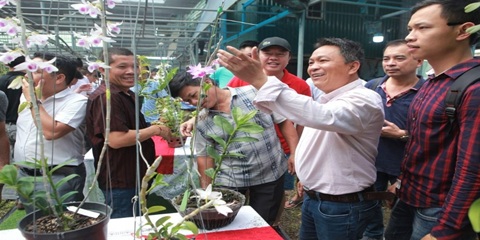
Having completed its new rural development program, Hanoi is shifting its focus toward improving development quality and building smart, sustainable rural areas. The transformation of Dong La orchid-growing village in An Khanh, a western commune of Hanoi, shows how digital technology is becoming a driver of production, market expansion, and higher incomes for local residents.

MEMBER CORNER / PROMOTIONS
VIGLACERA HONORED AS THE "LEADING GREEN INDUSTRIAL REAL ESTATE DEVELOPER 2026"
Organized by the Vietnam Investment Review, this prestigious awards program recognizes industry pioneers advancing eco-industrial parks, clean energy transition, and rigorous ESG standards. Outperforming competitors through a rigorous evaluation, Viglacera Corporation – JSC proudly ranked among the Top 5 highest-positioned enterprises in the Leading Green Industrial Real Estate Developers 2026 category, reinforcing its premier position in Vietnam’s industrial real estate sector.
Events Sponsors






















