Want to be in the loop?
subscribe to
our notification
Business News
NEW DEVELOPMENTS IN MANAGEMENT OF IMPORT-EXPORT ACTIVITIES
A draft decree detailing a number of articles of the Foreign Trade Management Law is currently being submitted to the Government of Vietnam, to replace Decree 187/2013/ND-CP. The draft decree will be applied in early 2019 with many new features that will directly affect the import and export of goods.
According to the representative of the Ministry of Industry and Trade, the draft decree stipulates a number of articles of the Foreign Trade Management Law including 8 chapters, 73 articles and 10 appendices. In particular, the main contents of the Decree include: Regulations on measures to manage export and import activities; management of temporary import for re-export, temporary export for re-import, border gate, transit; foreign trade activities (transiting, processing, buying and selling agents); and dispute resolution on the application of foreign trade management measures.
The remarkable point of the draft decree is the list of goods prohibited from export and import issued in the Decree; the ministries and ministerial-level agencies shall reach agreement with the Ministry of Industry and Trade before promulgating the detailed list and 100 per cent of the promulgated list will have HS code. The draft decree stipulates that in exceptional cases, the Prime Minister may issue a decision on allowing the import of goods specified in the List of goods prohibited for import or export, for example to serve scientific research.
For exported, imported goods under the license, the draft regulations stipulate that 100 per cent of the list issued with HS code. For dossiers, licensing procedures and draft decrees, general provisions on dossiers of permit granting and permit procedures, the licensing time limit is 10 working days, unless otherwise provided for by law. Ministries and ministerial-level agencies shall promulgate or submit to competent agencies for promulgation detailed regulations on permit dossiers; announce the agency, organization and address of the trader's dossier.
In addition, a number of exported and imported goods are under specific regulations such as goods for defence and security purposes shall comply with the Prime Minister's decisions and the regulations on export and import licensing. The draft decree has a new point, the regulation on the import of goods that directly affect defence and security but not for purposes of national defence and security. These products will be imported under license of the Ministry of Industry and Trade on the basis of the opinion of the Ministry of Defence, Ministry of Public Security.
The temporary export for re-import border gates include: main border gates, international border gates; auxiliary border gates and border crossings in border-gate economic zones; border gate, other places. For auxiliary border gates, the border opening in the border gate economic zones shall be re-exported only when the provincial People's Committees announce opening auxiliary border gates, the exit openings are eligible for re-export and the provincial People's Committees shall select authorized traders. This is a new solution to reduce the number of licensed businesses allowed to temporarily export for re-import. The selection of licensed goods merchants shall apply only to goods subject to temporary export for re-import license and conditional goods trading.
The draft decree excludes licensing for many cases of temporary export for re-import such as parts without contracts to serve replacement and repair of ships and foreign aircraft; means of transporting goods for export or import serving exhibitions and fairs; or telecommunication equipment for testing.
In addition, the draft also stipulates the temporary export for re-import cases must have the license of the Ministry of Industry and Trade, such as: Goods prohibited from export and import, goods suspended from export and import; Goods subject to export quota control, import quota, tariff quota, export and import license. The draft also stipulates cases where no license is required: temporary export for re-import goods still in warranty period for warranty, maintenance and repair purposes; temporary export for re-import goods abroad to attend trade fairs and exhibitions. Particularly for goods banned from export, they shall only be permitted to participate in overseas trade fairs and exhibitions with the approval of the Prime Minister.
In particular, the draft Decree distinguishes transit in the form of transshipment. According to the draft decree, in the case of goods subject to transit permits transported by sea from foreign countries into the transshipment area at seaports and then brought abroad from this transit area, or arriving at transshipment areas at ports or other seaports for international transfer, the transit procedures shall comply with the Finance Ministry's regulations, without permits of the Ministry of Industry and Trade.
In the field of processing goods subject to the import ban, the draft decree stipulates the competence of the Prime Minister to decide on the processing, repair and recycling of goods prohibited from import, Ministry of Industry and Trade in coordination with the Ministry of Construction will decide this. This is a new point compared with the current Decree 187/2013/ND-CP, during the transfer of circulars, the guidance of the relevant ministries will take effect until December 31, 2018.
Source: VCCI
Related News

MEMBER CORNER / PROMOTIONS
HCMC | CERTIFIED SUSTAINABILITY PROFESSIONAL (CSP) TRAINING | REGISTRATION OPEN
As sustainability becomes deeply embedded in corporate strategy and supply-chain operations across Vietnam, Hong Kong Business Association Vietnam is pleased to endorse the upcoming Certified Sustainability Professional (CSP) training program by the Asia Institute for Sustainability (AIS) - a premier internationally recognized ESG credential in Vietnam.
VIETNAM ECONOMY INVESTMENT
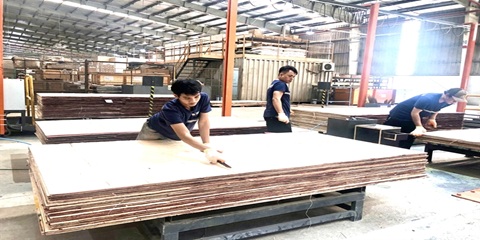
HCM CITY SAYS HOW IT PLANS TO ACHIEVE 10-11% ANNUAL EXPORT GROWTH FOR REST OF DECADE
The southern economic hub aims to strengthen its role as the country’s largest import-export centre while developing into a regional transhipment centre in Southeast Asia, supported by green and digital transformation and a circular economy. HCM City has outlined measures to expand production capacity, cut logistics costs, diversify export markets, and help businesses meet increasingly stringent international standards as it targets average annual export growth of 10-11 per cent through 2030.
VIETNAM ECONOMY INVESTMENT
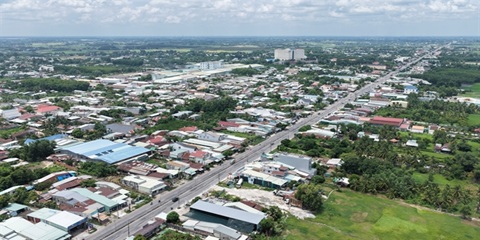
HCM CITY LEADS ECONOMIC RESTRUCTURING IN SOUTHEAST REGION
According to Associate Professor, Dr Vũ Tuấn Hưng, director of the Institute of Social Sciences of the Southern Region, the Southeast is a strategically important socio-economic space in Việt Nam’s development given its advantages in location, industry, trade, services, logistics, science and technology, urbanisation and human resources.
TECHNOLOGY
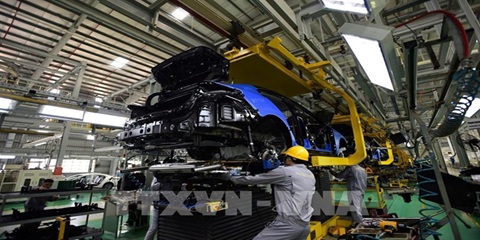
DIGITAL TRANSFORMATION TURNED INTO PRACTICAL TOOLS FOR PEOPLE, BUSINESSES
Việt Nam is moving its digital transformation agenda beyond policy frameworks and individual technology platforms towards practical applications that address everyday needs, as authorities seek measurable outcomes from science, technology and innovation. Under Politburo Resolution No. 57-NQ/TW issued on December 22, 2024, the implementation is increasingly shifting from simply completing assigned tasks towards developing concrete products and services for citizens and businesses.
TECHNOLOGY
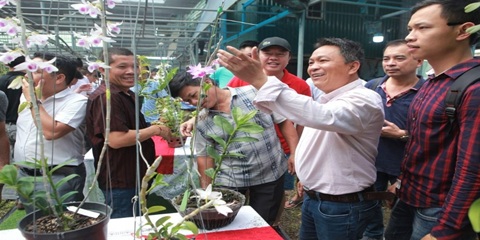
APPLYING TECHNOLOGY FOR ECONOMIC TRANSFORMATION
Having completed its new rural development program, Hanoi is shifting its focus toward improving development quality and building smart, sustainable rural areas. The transformation of Dong La orchid-growing village in An Khanh, a western commune of Hanoi, shows how digital technology is becoming a driver of production, market expansion, and higher incomes for local residents.

MEMBER CORNER / PROMOTIONS
VIGLACERA HONORED AS THE "LEADING GREEN INDUSTRIAL REAL ESTATE DEVELOPER 2026"
Organized by the Vietnam Investment Review, this prestigious awards program recognizes industry pioneers advancing eco-industrial parks, clean energy transition, and rigorous ESG standards. Outperforming competitors through a rigorous evaluation, Viglacera Corporation – JSC proudly ranked among the Top 5 highest-positioned enterprises in the Leading Green Industrial Real Estate Developers 2026 category, reinforcing its premier position in Vietnam’s industrial real estate sector.
Events Sponsors






















