Want to be in the loop?
subscribe to
our notification
Business News
NEW FTAS PUTS LOGISTICS IN LIMELIGHT
New-generation free trade agreements are increasing the importance of domestic logistics groups, with Vietnam emerging as a safe yet high-return market for overseas parties pouring money into new developments.
Sydney-based growing logistics developer LOGOS last week announced completion of its first acquisition in Vietnam – a 13-hectare development site located in the northern province of Bac Ninh’s Vietnam-Singapore Industrial Park. The move follows the establishment of LOGOS Vietnam Logistics Venture last month, which has an initial forecast portfolio of approximately $350 million by gross asset value.
LOGOS’ head of Vietnam Glenn Hughes said, “The long-term potential of the Vietnamese logistics market is supported by strong tailwinds, as companies seek to diversify their supply chains across multiple countries and further invest in technology within their facilities to meet the growing demand of e-commerce.”
Similarly, TM Insight, an Asia-Pacific consulting company specialising in supply chain, property advisory, and property management services, has recently acquired XAct Solutions, a supply chain and industrial property advisory firm based in Australia with a footprint across Asia, including Vietnam.
James Christopher, president of TM Insight Asia, told VIR, “As we look to expand in the region, Vietnam was identified as a key focus market as it is one of the fastest-growing markets in Southeast Asia and had the region’s highest increase in the global market share in the past five years in manufacturing.”
Some of the solutions with which TM Insight plans to support businesses in Vietnam include diversifying sourcing. With Vietnam now becoming a location of choice for businesses seeking manufacturing capabilities outside of China, TM Insight sees the opportunity to work with businesses here to leverage this situation.
Most recently, South Korea’s KCTC Vietnam Ltd. also tied up with Tan Cang Cai Mep Container Terminal JSC (TCCT) to develop the port warehouse and logistics industries in Vietnam. Established in 2008, KCTC Vietnam is a foreign-invested enterprise with 49 per cent South Korean funding. The company focuses on multimodal transport business, good storage, as well as cargo handling, warehousing, and logistics consulting services.
“With over 12 years of experience in logistics services, KCTC Vietnam is aiming to become a centre providing the best logistics solutions to customers in Asia,” said general director of KCTC Park Hyun Bae.
Meanwhile, TCCT is a subsidiary of Saigon Newport Corporation, established in 2007. Put into operation in 2009, TCCT is Vietnam’s first deep-water seaport, capable of receiving ships up to 160,000 deadweight tonnage. TCCT has teamed up with KCTC to handle Out of Gauge shipments in the Cai Mep port area. The new partnership is expected to pave the way for promising development for both firms in logistics.
In August, the International Finance Corporation, a member of the World Bank Group, provided a financing package of $70 million to Vietnam’s Indo Trans Logistics Corporation (ITL) in an aim to support the development of the logistics sector, thus facilitating trade and enhancing the competitiveness of the country’s economy during COVID-19.
This funding will help ITL transform and grow by acquiring new assets, developing new warehouses and facilities, and deploying advanced information technology systems.
Likewise, some European investors are keen on developing a $1-billion logistics complex in the southern province of Ba Ria-Vung Tau to capitalise on the growing trade demands from the entry of the EU-Vietnam Free Trade Agreement.
At last month’s meeting with Prime Minister Nguyen Xuan Phuc, the Netherlands’ Ambassador to Vietnam Elsbeth Akkerman and Belgian Ambassador to Vietnam Paul Jansen said that they both support the project, which will help enhance cooperation and investment between the EU and Vietnam.
Julien Brun, managing partner at CEL Consulting, told VIR that this is a very favourable time for Vietnamese logistics investment, with Vietnam still set to enjoy economic growth in 2020 while all other countries in ASEAN are going to face recession.
According to Brun, when industrial production volume grows, logistics needs to absorb this increase of volume. Furthermore, as industries mature, the need for more advanced logistical solutions becomes critical as a way to optimise cost.
“A good example is the cold chain where seafood manufacturers have to show that not only manufacturing is compliant to international norms, but also the whole supply chain. Traceability can only happen with modern logistics as it requires to record every single transfer from raw materials to final consumer. Without proper IT infrastructure, this traceability cannot happen,” Brun said.
Brun also pointed out that more manufacturers are willing to outsource their logistics to third-party logistics companies. As logistics is very demanding from an operational standpoint, it becomes quickly more cost-efficient to delegate the logistics operations to a specialised company. “With all these factors added together, logistics is a very safe industry to invest in as volume, service quality requirement, and outsourcing trends add up together, providing investors a very positive outlook,” he concluded.
Source: VCCI
Related News
MEMBER CORNER / PROMOTIONS
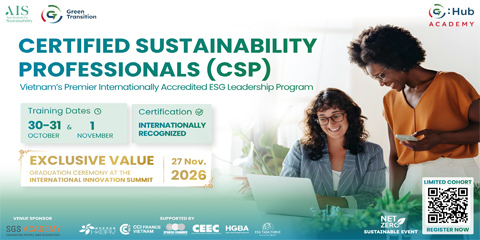
HCMC | CERTIFIED SUSTAINABILITY PROFESSIONAL (CSP) TRAINING | REGISTRATION OPEN
As sustainability becomes deeply embedded in corporate strategy and supply-chain operations across Vietnam, Hong Kong Business Association Vietnam is pleased to endorse the upcoming Certified Sustainability Professional (CSP) training program by the Asia Institute for Sustainability (AIS) - a premier internationally recognized ESG credential in Vietnam.
VIETNAM ECONOMY INVESTMENT
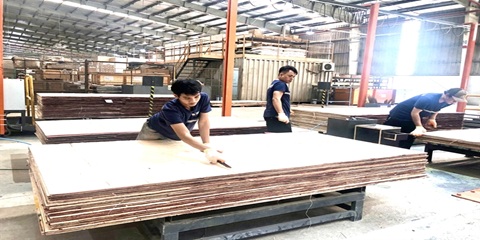
HCM CITY SAYS HOW IT PLANS TO ACHIEVE 10-11% ANNUAL EXPORT GROWTH FOR REST OF DECADE
The southern economic hub aims to strengthen its role as the country’s largest import-export centre while developing into a regional transhipment centre in Southeast Asia, supported by green and digital transformation and a circular economy. HCM City has outlined measures to expand production capacity, cut logistics costs, diversify export markets, and help businesses meet increasingly stringent international standards as it targets average annual export growth of 10-11 per cent through 2030.
VIETNAM ECONOMY INVESTMENT
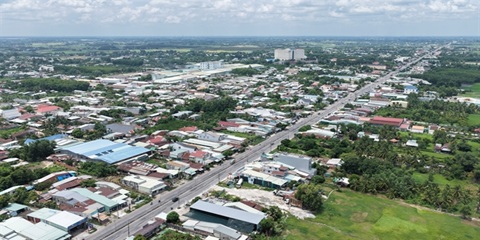
HCM CITY LEADS ECONOMIC RESTRUCTURING IN SOUTHEAST REGION
According to Associate Professor, Dr Vũ Tuấn Hưng, director of the Institute of Social Sciences of the Southern Region, the Southeast is a strategically important socio-economic space in Việt Nam’s development given its advantages in location, industry, trade, services, logistics, science and technology, urbanisation and human resources.
TECHNOLOGY
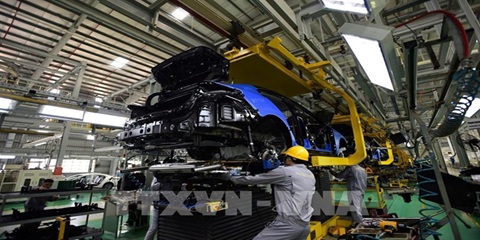
DIGITAL TRANSFORMATION TURNED INTO PRACTICAL TOOLS FOR PEOPLE, BUSINESSES
Việt Nam is moving its digital transformation agenda beyond policy frameworks and individual technology platforms towards practical applications that address everyday needs, as authorities seek measurable outcomes from science, technology and innovation. Under Politburo Resolution No. 57-NQ/TW issued on December 22, 2024, the implementation is increasingly shifting from simply completing assigned tasks towards developing concrete products and services for citizens and businesses.
TECHNOLOGY
APPLYING TECHNOLOGY FOR ECONOMIC TRANSFORMATION
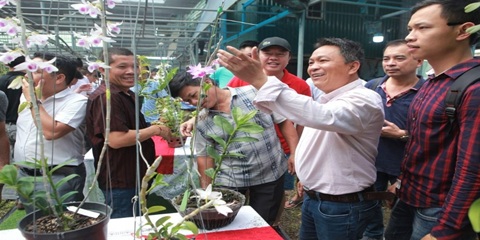
Having completed its new rural development program, Hanoi is shifting its focus toward improving development quality and building smart, sustainable rural areas. The transformation of Dong La orchid-growing village in An Khanh, a western commune of Hanoi, shows how digital technology is becoming a driver of production, market expansion, and higher incomes for local residents.

MEMBER CORNER / PROMOTIONS
VIGLACERA HONORED AS THE "LEADING GREEN INDUSTRIAL REAL ESTATE DEVELOPER 2026"
Organized by the Vietnam Investment Review, this prestigious awards program recognizes industry pioneers advancing eco-industrial parks, clean energy transition, and rigorous ESG standards. Outperforming competitors through a rigorous evaluation, Viglacera Corporation – JSC proudly ranked among the Top 5 highest-positioned enterprises in the Leading Green Industrial Real Estate Developers 2026 category, reinforcing its premier position in Vietnam’s industrial real estate sector.
Events Sponsors






















