Want to be in the loop?
subscribe to
our notification
Business News
NEW LAW CLEARS PATH FOR FOREIGN BUYERS
The new Law on Housing passed by the National Assembly will bring positive changes related to housing ownership of foreigners in Vietnam when it comes into effect in 2025.
Talking with VIR, Le Tuan Anh, managing partner of DN Legal, said that foreigners’ right to buy and sell housing from fellow non-nationals is recognised in the new legislation, which was passed on November 27.
“Under the new law, eligible foreigners can acquire houses directly from other foreigners possessing properties in Vietnam, a right which was not previously expressly recognised under the current law,” Anh said.
Under the current law, ownership rights for non-Vietnamese individuals can be reflected in the respective certificates of land use rights, housing ownership, and other assets attached to land, such as land use or housing rights certificate for houses acquired via investing in real estate projects, direct purchases with real estate project developers, or gifts or inheritance.
Each developer can only allocate a specific number of its housing products in each project to foreign buyers. This limitation encompasses a maximum of 30 per cent for apartments and a maximum of 250 landed houses within a commune/ward boundary.
“Thus, if a foreigner wishes to acquire a home in a real estate project from a fellow foreigner or a local individual, the notary office which notarises the transfer agreement will often require pre-approval or confirmation from the developers acknowledging that such a transfer is within the quota limit,” Anh said.
“A limited number of notary offices still proceed to notarise foreigner-to-foreigner transfer, though this is more of a practice note than legislatively allowed. These factors have led to complex procedures in the secondary market for housing products.”
Meanwhile, the new law also stipulates clearly that the government will provide detail guidelines of areas that fall within the criteria of national defence.
“With the new law and guiding decree, we hope to see clear demarcation from the state on sensitive defence areas, which will assist foreigners in determining licensing requirements for issuance of land use right certificates,” Anh said.
Other new points in the new law include expanding conditions for development and access to social housing. In particular, it offers notable points for additional supported subjects such as businesses and cooperatives in industrial parks.
Le Hoang Chau, chairman of the Ho Chi Minh City Real Estate Association, said that the new law could be one of the best over the past 30 years, ensuring the synchronisation and unity of the legal system.
“The new law has flexible, attractive incentives, for example, using 20 per cent of a project’s land for commercial housing development or service business,” Chau said.
The new law stipulates that the Vietnam General Confederation of Labour is the agency in charge of investing in social housing construction. Vice president of the confederation, Ngo Duy Hieu, said one of the top concerns of workers was housing.
“Currently, the need for housing for workers is huge, while the state’s ability to meet it is still limited, and businesses are not often interested in social housing in general. Therefore, the confederation is suitable to be responsible for building housing for this group of people,” Hieu said.
The new Law on Housing is scheduled to take effect in January 2025, along with corresponding decrees and circulars being drafted, and will replace the law from 2014.
Source: VIR
Related News

MEMBER CORNER / PROMOTIONS
KNIC ENGAGES WITH GOVERNMENT AND HIGH-TECH BUSINESS COMMUNITIES IN CHINA
From Beijing to Shandong, KN Holdings and KN Industrial City are continuing to expand their engagement with government authorities, trade promotion organizations, and high-tech business communities in China. In Beijing, the delegation met with the Center for International Economic and Technological Cooperation under the Ministry of Industry and Information Technology (MIIT), exchanging perspectives on industrial and technology cooperation between the two markets.

VIETNAM ECONOMY INVESTMENT
VIETNAM’S TRADE TOPS $825 BILLION BY MID-SEPTEMBER
Figures released on September 21 showed goods trade reached nearly $55 billion in the first 15 days of September alone, bringing cumulative turnover since the beginning of the year to more than $825 billion. The strong growth reflects robust trade flows, with demand for consumer goods and production inputs remaining high.

TECHNOLOGY
VIỆT NAM'S BUSINESSES MOVE TOWARDS AI AGENTS
Việt Nam’s AI landscape is entering a new phase as businesses move beyond generative AI (GenAI) tools designed to assist human users towards autonomous AI, agentic AI and AI agents that can take action with limited supervision, experts have said. The shift comes as Việt Nam seeks to accelerate science and technology, innovation and digital transformation under Politburo Resolution 57-NQ/TW, issued on December 22, 2024.
GARMENT / TEXTILE
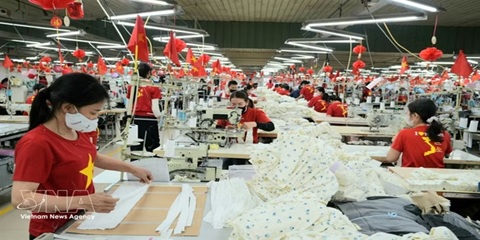
VIỆT NAM TARGETS $48 BILLION IN TEXTILE-GARMENT EXPORTS
Việt Nam’s textile and garment industry is facing both opportunities and challenges amid complex and unpredictable developments in the global market, prompting businesses to improve growth quality, optimise production costs and enhance adaptability in pursuit of an export turnover of about $48 billion this year. The target is considered an important milestone that requires concerted efforts from management agencies and the business community.
INFRASTRUCTURE / CONSTRUCTION / LOGISTIC / PORT
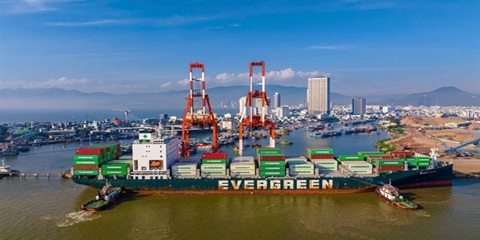
CUTTING LOGISTICS COSTS KEY TO BOOSTING EXPORTS
Reducing costs has become an increasingly urgent priority for import-export activities, particularly logistics costs, a conference in Hà Nội was told on Tuesday. According to Deputy General Director of the Ministry of Industry and Trade's Agency for Foreign Trade, Trần Thanh Hải, import-export activities has remained a bright spot for the economy in recent years, playing an important role and helping drive macroeconomic growth.

LEGAL UPDATE / POLICY
FLEXIBLE FISCAL POLICY HELPS DRIVE ECONOMIC GROWTH
Việt Nam’s fiscal policy has been implemented in a targeted expansionary manner since early 2026, helping maintain macroeconomic stability and supporting the country’s goal of achieving double-digit economic growth. According to the Ministry of Finance, State budget revenue in the first eight months of 2026 was estimated at VNĐ2.02 quadrillion (US$77.7 billion), equivalent to 80 per cent of the annual estimate and up 16 per cent year-on-year.
Events Sponsors






















