Want to be in the loop?
subscribe to
our notification
Business News
NEW REGULATIONS ENHANCE TRANSPARENCY IN PRIVATE PLACEMENT OF BONDS
The new decree on offering and trading private placement bonds helps standardise and improve bond issuance conditions, supervision of capital use purposes and information transparency, said analysts.
The Government on September 16 issued Decree 65/2022/ND-CP which amends and supplements a number of articles of Decree 153/2020/ND-CP dated December 31, 2020 on offering and trading private placement bonds in the domestic market and offering corporate bonds to the international market.
The new decree seeks to strengthen issuers' responsibilities and obligations in using bond proceeds for the intended purposes.
Analysts from Mirae Asset Securities Vietnam Joint Stock Company, Nguyen Nam Son and Nguyen Duong Cong Nguyen, said that the corporate bond market will see many fluctuations in the short term, related to the review of the compliance level of bond issuance.
The development potential of this market remained very large. If compared with countries in the region, the ratio of corporate bonds to GDP of Vietnam is currently at a low level of 15 per cent, while that of Thailand is about 97 per cent or Malaysia with 58 per cent.
The issuance of this new decree shows the determination of the management agency to stabilise the corporate bond market, which has faced many risks and shortcomings, leading to cases of violations in recent years, they said.
The new decree adds provisions on ensuring publicity and sets standards and strengthens sanctions enforcement measures and removes unreasonable constraints on the corporate bond market, according to Vu Tien Loc, president of the Vietnam International Arbitration Centre and member of the Economic Committee of the National Assembly.
All the adjustments in the new decree are believed to strengthen the State's management role to protect investors, Loc said.
According to the Vietnam Bond Market Association (VBMA), in the first eight months of 2022, there were 344 private placements of bonds worth about VND211.3 trillion, accounting for 96 per cent of the total issuance value. The value of bond private placement decreased by about 40 per cent compared to the same period last year.
KB Securities Vietnam Joint Stock Company (KBSV) said that since 2005, when the Vietnamese corporate bond market started operating, the total issuance value has reached nearly VND2.5 quadrillion with more than 5,000 issuances, playing an important role in providing capital for the economy. The market size has increased sharply by 140 times, equivalent to nearly 18.3 per cent of GDP.
Most businesses choose to issue in the form of private placement, with the private issuance rate usually reaching 85-95 per cent of the total issuance, because of public issuance regulations at a higher cost.
Do Bao Ngoc, deputy general director of Vietnam Kien Thiet Securities Company, said that the new decree would help the market solve the current shortcomings in legal issues.
Under the new decree, the bond owner's representative also participates in the process of controlling the purpose of capital use of the issuer and must periodically report to the management agency. Thus, there will be an additional unit to monitor the process of using capital.
According to Ngoc, Decree 65 has a positive and huge impact on the corporate bond market, contributing to solving capital problems and promoting positive changes in businesses in terms of transparency, while limiting investor risks.
Source: VIR
Related News

CHARITY / EXHIBITION / OTHER EVENTS
INVESTMENT OPPORTUNITIES IN CA MAU PROVINCE: 96 PROJECTS AND 20 STRATEGIC PROJECTS
We are pleased to share with you information on investment projects currently seeking investors in Ca Mau Province. Should your esteemed company or association be interested, we kindly invite you to review the project information and complete the registration form via the links provided. The Ho Chi Minh City Investment and Trade Promotion Centre (ITPC) will consolidate the expressions of interest and facilitate connections with the leadership of Ca Mau Province at a meeting tentatively scheduled for 13 November 2026 in Ho Chi Minh City.

MEMBER CORNER / PROMOTIONS
BẰNG KIỀU LIVESHOW - A SYMPHONY OF LOVE UNDER THE GOLDEN GLOW
A masterclass in live music that takes the audience on a soulful journey through immortal love songs, guided by the peerless artistry and emotive storytelling of renowned singer Bằng Kiều. The highlight of the night is his seamless musical chemistry with special guest Triệu Hồng Ngọc, promising passionate and deeply resonant duets inside the magnificent Grand Ballroom.
INFRASTRUCTURE / CONSTRUCTION / LOGISTIC / PORT
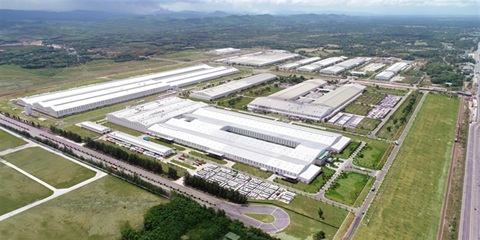
ĐÀ NẴNG GREEN-LIGHTS US$105 MILLION THAI DEVELOPMENT DEAL
The central city has approved an investment proposal by Thailand’s WHA Group to develop infrastructure for the 400ha WHA Đà Nẵng Industrial Park project on two communes of Thăng Bình and Đồng Dương, with an investment of more than VNĐ2.7 trillion (US$105 million). The city said it approved WHA Industrial Development International's status as an investor in the project, which is expected to take place between 2027 and 2034.
VIETNAM ECONOMY INVESTMENT
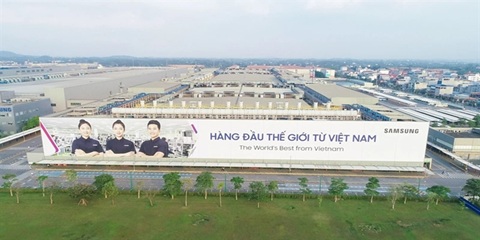
MOBILE PHONE EXPORTS RISE 20% TO $51.8 BILLION IN FIRST NINE MONTHS
Exports of mobile phones and components rose 20 per cent year-on-year to nearly US$51.8 billion in the first nine months of 2026, with China, the US and Republic of Korea accounting for more than half of the total. Shipments to the three markets reached a combined $26.18 billion, or 50.6 per cent of total exports of the product group during the period, according to data from the Vietnam Department of Customs under the Ministry of Finance.

INFRASTRUCTURE / CONSTRUCTION / LOGISTIC / PORT
VIỆT NAM-CAMBODIA TRADE GATHERS PACE TOWARDS $20 BILLION TARGET
Trade between Việt Nam and Cambodia continues to grow, remaining a bright spot and a key pillar of bilateral cooperation as the two countries aim to raise two-way trade to US$20 billion in the coming years. After setting a record of more than $11.3 billion last year, bilateral trade reached about $8.7 billion in the first eight months of this year, up 8.3 per cent year on year.
VIETNAM ECONOMY INVESTMENT
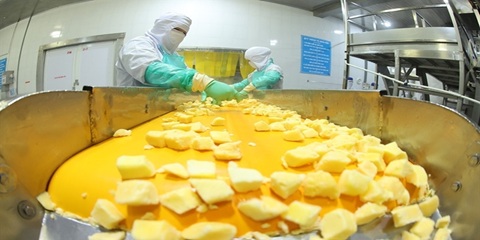
FRUIT AND VEGETABLE EXPORTS POISED TO HIT $10 BILLION IN 2026
Fruit and vegetable exports are on track to reach nearly US$10 billion in 2026, after rising 19.9 per cent year on year to nearly US$7.4 billion in the first nine months, driven by strong seasonal demand and abundant tropical fruit supplies. The Ministry of Agriculture and Environment said the growth reflected stronger international demand for fresh produce and processed agricultural products.
Events Sponsors






















