Want to be in the loop?
subscribe to
our notification
Business News
NEW RESOLUTION OPENS OPPORTUNITIES FOR LOGISTICS SECTOR
At the beginning of 2023, Vietnam set its sights on becoming a high-income developed country, and the past year has demonstrated Ho Chi Minh City’s efforts to overcome challenges and reclaim its position as a regional economic powerhouse. Kiet Le, research lead, Manufacturing Group at Dezan Shira & Associates, shares his views on how the city can utilise its initiatives to make future breakthroughs.
After a prolonged wait, the government issued Resolution No.98/2023/QH15, a sweeping initiative to steer Vietnam back towards prosperity. However, the pressing question lingers: will this ambitious vision result in tangible changes for the average Vietnamese citizen? The path forward remains laden with uncertainties.
Resolution 98 passed by the National Assembly in June 2003 took full effect from August 1, 2023, focusing on introducing a transport-oriented urban development model for Ho Chi Minh City. Notable adjustments include increased decentralisation and autonomy for Ho Chi Minh City People’s Committee in matters of budget allocation and urban planning.
Resolution 98 encompasses three key sectors including attracting strategic investors, science and technology management and innovation, and the organisational structure of the city. The focus of this initiative is mainly on Thu Duc city and Ho Chi Minh City, and 27 mechanisms are tailored exclusively for the latter.
Opportunities to attract investments in logistics sector
A need for higher foreign direct investment (FDI) to boost the country’s growth requires better policies, infrastructure, and technology to provide an attractive destination for foreign investors.
Resolution 98 sets out to address these areas to draw in higher investment for the country. Major sectors addressed in Resolution 98 include high technology research and development, technology, biotechnology, automation, and clean energy, integrated circuit industry, design technology, manufacturing components, new chip technologies, and investing in the construction of Can Gio International Port.
Through these sectors, a clear trend can be seen with Ho Chi Minh City prioritising investment in technology-related projects and a call for investment in the new Can Gio International Port. Ho Chi Minh City requires a solution to its land availability problem so a shift to technology-related activities is essential due to better land usage for investment return. This will lead away from agriculture, gearing to the original goal of increasing innovation and productivity. In addition, the new Can Gio International Port provides better overall industrial logistic infrastructure and aims to leverage the south's current standing as a key economic region.
Among the identified contributors, there is a notable improvement in logistics infrastructure facilitated by a model that empowers Ho Chi Minh City to engage in compensation, support, and resettlement projects around Ring Road 3. This model not only grants the city increased autonomy in shaping its trajectory but also underscores its decision to acquire land. This land can then be strategically auctioned to select investors, fostering the aspiration of expanding urban development projects.
Spanning major key areas in Ho Chi Minh City (Thu Duc, Cu Chi, Hoc Mon, and Binh Chanh), as well as extending into the provinces of Dong Nai, Binh Duong, and Long An, Ring Road 3 encapsulates a vital geographic expanse. This comprehensive initiative bolsters logistics infrastructure and addresses challenges in Thu Duc arising from earlier noted issues related to inadequate infrastructure. The overarching policy aims to fortify businesses along Ring Road 3, promoting better infrastructure projects for sustained growth and development.
Resolution 98 places a heightened emphasis on incentivising technology and innovation, particularly in the realm of startup activities. As outlined, endeavours in innovation and startup initiatives can qualify for a corporate income tax (CIT) exemption spanning up to five years, encouraging and seeking to promote growth in the available technology of the country to further pull in investment.
First results revealved
The result can be seen with immediate effect, as the government aims to take immediate action to adjust certain aspects of the economy for the full implementation of the Resolution 98.
However, beyond even the immediate benefits, Resolution 98 sets out to achieve the goal of further investment incentives for the logistics and technology industries that align with the goal of restoring the strong standing of Ho Chi Minh City to play a crucial role in the Southern Key Economic Region.
Given the multifaceted goals outlined, diligent supervision and effective development are crucial for the resolution's successful implementation. Recognising that the full impact of Resolution 98 necessitates time and resources, it is essential to grasp the substantial opportunities it could offer when executed correctly. This potential has already become evident in the immediate economic benefits witnessed across the city, underscoring its positive trajectory.
Effective implementation of Resolution 98 hinges on a collaborative effort between the city and the advisory council. The pace of applying the resolution relies entirely on the synergy achieved through their collaboration. Resolution 98 is designed not just to offer increased incentives for improvement but also to champion decentralisation, empowering the city with geater responsibility for driving and expediting the city's ongoing development.
Resolution 98 is not positioned as a solution for all challenges but as a foundation paving the way for future development not only within the city but also on a national scale.
Phan Van Mai, Chairman of Ho Chi Minh City People's Committee, envisions there will be significant concrete results after three years of implementation. These results can be reported and evaluated to refine the resolution for greater benefit to both the city and the country at large.
Source: VIR
Related News
MEMBER CORNER / PROMOTIONS
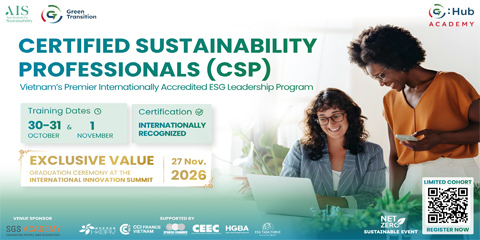
HCMC | CERTIFIED SUSTAINABILITY PROFESSIONAL (CSP) TRAINING | REGISTRATION OPEN
As sustainability becomes deeply embedded in corporate strategy and supply-chain operations across Vietnam, Hong Kong Business Association Vietnam is pleased to endorse the upcoming Certified Sustainability Professional (CSP) training program by the Asia Institute for Sustainability (AIS) - a premier internationally recognized ESG credential in Vietnam.
VIETNAM ECONOMY INVESTMENT
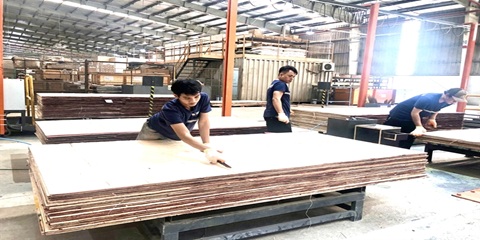
HCM CITY SAYS HOW IT PLANS TO ACHIEVE 10-11% ANNUAL EXPORT GROWTH FOR REST OF DECADE
The southern economic hub aims to strengthen its role as the country’s largest import-export centre while developing into a regional transhipment centre in Southeast Asia, supported by green and digital transformation and a circular economy. HCM City has outlined measures to expand production capacity, cut logistics costs, diversify export markets, and help businesses meet increasingly stringent international standards as it targets average annual export growth of 10-11 per cent through 2030.
VIETNAM ECONOMY INVESTMENT
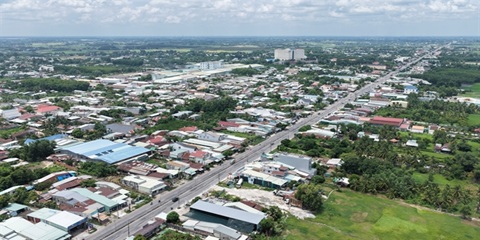
HCM CITY LEADS ECONOMIC RESTRUCTURING IN SOUTHEAST REGION
According to Associate Professor, Dr Vũ Tuấn Hưng, director of the Institute of Social Sciences of the Southern Region, the Southeast is a strategically important socio-economic space in Việt Nam’s development given its advantages in location, industry, trade, services, logistics, science and technology, urbanisation and human resources.
TECHNOLOGY
DIGITAL TRANSFORMATION TURNED INTO PRACTICAL TOOLS FOR PEOPLE, BUSINESSES
Việt Nam is moving its digital transformation agenda beyond policy frameworks and individual technology platforms towards practical applications that address everyday needs, as authorities seek measurable outcomes from science, technology and innovation. Under Politburo Resolution No. 57-NQ/TW issued on December 22, 2024, the implementation is increasingly shifting from simply completing assigned tasks towards developing concrete products and services for citizens and businesses.
TECHNOLOGY
APPLYING TECHNOLOGY FOR ECONOMIC TRANSFORMATION
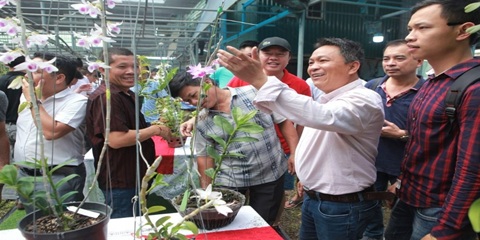
Having completed its new rural development program, Hanoi is shifting its focus toward improving development quality and building smart, sustainable rural areas. The transformation of Dong La orchid-growing village in An Khanh, a western commune of Hanoi, shows how digital technology is becoming a driver of production, market expansion, and higher incomes for local residents.

MEMBER CORNER / PROMOTIONS
VIGLACERA HONORED AS THE "LEADING GREEN INDUSTRIAL REAL ESTATE DEVELOPER 2026"
Organized by the Vietnam Investment Review, this prestigious awards program recognizes industry pioneers advancing eco-industrial parks, clean energy transition, and rigorous ESG standards. Outperforming competitors through a rigorous evaluation, Viglacera Corporation – JSC proudly ranked among the Top 5 highest-positioned enterprises in the Leading Green Industrial Real Estate Developers 2026 category, reinforcing its premier position in Vietnam’s industrial real estate sector.
Events Sponsors






















