Want to be in the loop?
subscribe to
our notification
Business News
PM TELLS NORTHERN REGION TO OPTIMISE ADVANTAGES FOR STRONGER DEVELOPMENT
Cái Lân Port in the northern province of Quảng Ninh, one of the key ports connecting economic hubs in the region. VNA/VNS Photo Huy Hùng
HƯNG YÊN The northern economic region held advantages over other parts of the country to develop, especially in terms of infrastructure and human resources, Prime Minister Nguyễn Xuân Phúc said at a conference held in the northern province of Hưng Yên on Tuesday.
The Government leader highlighted the region’s strategic importance in terms of politics, society-economy and defence-security, adding that it was the second biggest economic region in the country and the only region where all localities contributed to the central budget.
Nearly 80 per cent of communes in the region had been recognised as new rural areas and the lowest rate of poor households at 2 per cent, Phúc said.
He asked localities to reform policies on investment, finance, land and human resources, as well as focus on institutional reforms and improve the regional co-ordination mechanism.
The PM also pointed to shortcomings in the region such as the unsustainable growth of the service sector, which used to be one of the region’s strong points but had fallen into decline.
Other shortcomings included small-scale agricultural production with outdated cultivation techniques and processing technology; weak connections in production and business; and environmental pollution in urban and rural areas, river basins, trade villages and industrial clusters.
Most foreign direct investment (FDI) projects focused on sectors and industries subject to investment incentives using low-cost labour. Industrial projects were mainly concentrated in Hà Nội, Hải Phòng and Bắc Ninh such as Samsung, LG, Microsoft and Canon, and just stopped at processing and assembling with low added value, the PM noted.
The region should maintain its role as the country’s centre of politics, economics, culture and science-technology, and strive to become one of the nation’s two biggest economic hubs besides the key southern economic region, he said.
The region must take the lead in science-technology and innovation as well as economic restructuring, the PM added.
He also urged the region to push ahead with building rural areas and reforming administrative procedures, improving the business environment, preventing corruption and wastefulness, and ensuring social safety.
Regional links were a focal point at the conference, with local leaders proposing several measures to promote regional connectivity.
Chairman of Hà Nội's People’s Committee Nguyễn Đức Chung submitted six key measures, emphasising the development of transport networks, industrial parks, clean water supplies, waste treatment, housing and environmental protection.
Chairman of Hưng Yên's People’s Committee Nguyễn Văn Phóng asked the Government to help Hà Nội and Hưng Yên implement transport projects, including connecting the Hà Nội – Hải Phòng and Cầu Giẽ – Ninh Bình expressways.
Leaders from Quảng Ninh Province suggested speeding up the construction of the Hà Nội-Cái Lân railway and building a high-speed rail route linking Hà Nội, Hải Phòng and Quảng Ninh.
The northern key economic region, comprising Hà Nội, Hải Phòng, Bắc Ninh, Quảng Ninh, Hải Dương, Hưng Yên and Vĩnh Phúc, covers nearly 16,000 sq.km, making up 4.7 per cent of the country’s total area. It has a population of over 16 million, accounting for 17 per cent of the nation’s population.
The region boasts a modern and synchronous transport infrastructure network linking regional localities such as the Hà Nội – Hải Phòng, Hà Nội – Cầu Giẽ – Ninh Bình, Hà Nội – Thái Nguyên, Hà Nội – Lào Cai, and Hạ Long – Hải Phòng highways, along with domestic and international airports such as Nội Bài, Cát Bi and Vân Đồn, and important seaports like Lạch Huyện and Cái Lân.
According to Minister of Planning and Investment Nguyễn Chí Dũng, the region’s average gross regional development product (GRDP) growth exceeded 9 per cent in 2016-18.
Last year, its total GRDP made up about 31.73 per cent of the country’s total, ranking second after the key southern economic region. The region contributed over 31 per cent to State budget revenue and accounted for over 30 per cent of national exports.
The total development investment in the region reached nearly VNĐ1.6 quadrillion (US$70 billion), making up 29.76 per cent of the country’s total investment.
Source: VIR
Related News

MEMBER CORNER / PROMOTIONS
HCMC | CERTIFIED SUSTAINABILITY PROFESSIONAL (CSP) TRAINING | REGISTRATION OPEN
As sustainability becomes deeply embedded in corporate strategy and supply-chain operations across Vietnam, Hong Kong Business Association Vietnam is pleased to endorse the upcoming Certified Sustainability Professional (CSP) training program by the Asia Institute for Sustainability (AIS) - a premier internationally recognized ESG credential in Vietnam.
VIETNAM ECONOMY INVESTMENT
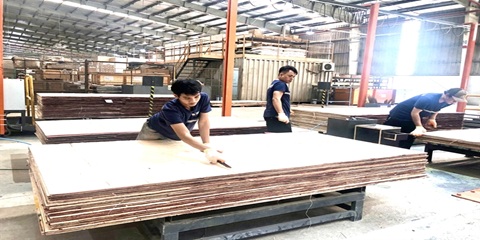
HCM CITY SAYS HOW IT PLANS TO ACHIEVE 10-11% ANNUAL EXPORT GROWTH FOR REST OF DECADE
The southern economic hub aims to strengthen its role as the country’s largest import-export centre while developing into a regional transhipment centre in Southeast Asia, supported by green and digital transformation and a circular economy. HCM City has outlined measures to expand production capacity, cut logistics costs, diversify export markets, and help businesses meet increasingly stringent international standards as it targets average annual export growth of 10-11 per cent through 2030.
VIETNAM ECONOMY INVESTMENT
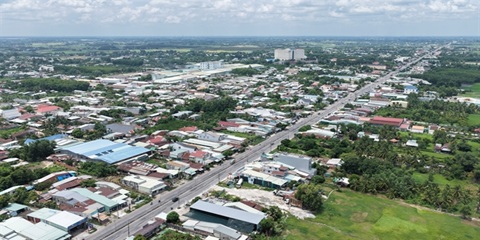
HCM CITY LEADS ECONOMIC RESTRUCTURING IN SOUTHEAST REGION
According to Associate Professor, Dr Vũ Tuấn Hưng, director of the Institute of Social Sciences of the Southern Region, the Southeast is a strategically important socio-economic space in Việt Nam’s development given its advantages in location, industry, trade, services, logistics, science and technology, urbanisation and human resources.
TECHNOLOGY
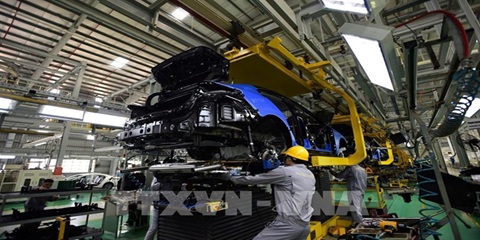
DIGITAL TRANSFORMATION TURNED INTO PRACTICAL TOOLS FOR PEOPLE, BUSINESSES
Việt Nam is moving its digital transformation agenda beyond policy frameworks and individual technology platforms towards practical applications that address everyday needs, as authorities seek measurable outcomes from science, technology and innovation. Under Politburo Resolution No. 57-NQ/TW issued on December 22, 2024, the implementation is increasingly shifting from simply completing assigned tasks towards developing concrete products and services for citizens and businesses.
TECHNOLOGY
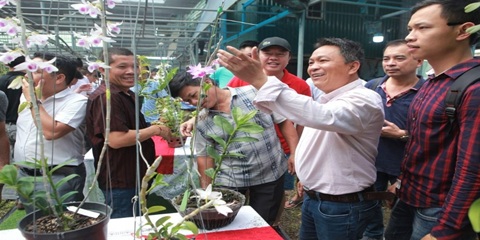
APPLYING TECHNOLOGY FOR ECONOMIC TRANSFORMATION
Having completed its new rural development program, Hanoi is shifting its focus toward improving development quality and building smart, sustainable rural areas. The transformation of Dong La orchid-growing village in An Khanh, a western commune of Hanoi, shows how digital technology is becoming a driver of production, market expansion, and higher incomes for local residents.

MEMBER CORNER / PROMOTIONS
VIGLACERA HONORED AS THE "LEADING GREEN INDUSTRIAL REAL ESTATE DEVELOPER 2026"
Organized by the Vietnam Investment Review, this prestigious awards program recognizes industry pioneers advancing eco-industrial parks, clean energy transition, and rigorous ESG standards. Outperforming competitors through a rigorous evaluation, Viglacera Corporation – JSC proudly ranked among the Top 5 highest-positioned enterprises in the Leading Green Industrial Real Estate Developers 2026 category, reinforcing its premier position in Vietnam’s industrial real estate sector.
Events Sponsors






















