Want to be in the loop?
subscribe to
our notification
Business News
PPP FUNDING CHANNEL FOR TRANSPORT AND ENERGY INFRASTRUCTURE DEVELOPMENT
In addition to policies on public-private partnership (PPP) investment, many solutions need to be applied consistently to boost private investment in transport and energy infrastructure development.
Modern transport infrastructure development to spur interregional economy and energy development for business demands and sustainable environmental protection are two of strategic tasks for socioeconomic development of Vietnam.
Vietnam aims to have 5,000km of highways by 2030. Currently, it has 1,163km of expressways and 786km is under construction.
In Power Master Plan VII, renewable energy is expected to be raised to 4.5% of electricity production in 2020 and 6% in 2030. Accordingly, the growth must reach 16 billion kWh (6-7,000 MW) and 42-45 billion kWh (15-20,000 MW).
The investment demand for transport and energy infrastructure is huge while social resources are enormous and the PPP model is considered an effective channel to mobilize finance and technology from the private sector for transport and energy infrastructure development in Vietnam.
According to the Procurement Management Department, the Ministry of Planning and Investment, the legal framework for PPP investment has been basically completed to accelerate enforcement of PPP investment policies. The PPP model appeared more than 20 years ago, with the initial legal framework being a governmental decree on BOT investment contract. It was then gradually developed from Decree No. 15/2015 to Decree No. 63/2018. Most recently, the National Assembly passed the Law on PPP Investment, effective from January 1, 2021. The PPP Investment Law features attraction of more private resources, especially from foreign investors.
In particular, the Ministry of Planning and Investment drafted and submitted Directive No. 30/CT-TTg dated November 23, 2021 on accelerated implementation of PPP investment and bidding policies to the Prime Minister for approval. This directive presses relevant bodies to quickly complete detailed instructions for effective enforcement of PPP Law.
Although the policy basis is being gradually completed, many barriers are lying in the way to draw PPP investment fund. Some associations and investors have reported on PPP policy matters such as tax, land, state budget, management and use of public assets. In addition, PPP is a complex investment method engaged by many stakeholders (government, businesses, lenders and others) in a long-term contract, with many potential risks.
In order to further promote the PPP investment method in the coming time, experts recommend that the policy framework on PPP should be consistent to attract the private sector into specific PPP projects in line with their objectives, nature and characteristics. Moreover, many other factors are needed, including an enabling investment environment, macroeconomic stability, better national credibility, better planning quality and capital market diversity.
Each ministry, branch and locality also play a very important role in enforcing the law quickly and effectively. Accordingly, competent authorities need to select appropriate projects that produce socioeconomic effects. At the same time, the financial and commercial feasibility must be ensured. Risk distribution must be a reasonable and acceptable to investors.
Additionally, ministries, branches and localities should prioritize allocating a part of state fund for PPP projects. Investment promotion also needs to be taken into account to widely woo domestic and foreign investors.
As for difficulties that existed prior to the effective date of the PPP Law, competent authorities will need to support investors to deal with them as per contracts signed and rule of law. That will contribute to strengthening investors' confidence in new projects.
Source: VCCI
Related News

CHARITY / EXHIBITION / OTHER EVENTS
INVESTMENT OPPORTUNITIES IN CA MAU PROVINCE: 96 PROJECTS AND 20 STRATEGIC PROJECTS
We are pleased to share with you information on investment projects currently seeking investors in Ca Mau Province. Should your esteemed company or association be interested, we kindly invite you to review the project information and complete the registration form via the links provided. The Ho Chi Minh City Investment and Trade Promotion Centre (ITPC) will consolidate the expressions of interest and facilitate connections with the leadership of Ca Mau Province at a meeting tentatively scheduled for 13 November 2026 in Ho Chi Minh City.

MEMBER CORNER / PROMOTIONS
BẰNG KIỀU LIVESHOW - A SYMPHONY OF LOVE UNDER THE GOLDEN GLOW
A masterclass in live music that takes the audience on a soulful journey through immortal love songs, guided by the peerless artistry and emotive storytelling of renowned singer Bằng Kiều. The highlight of the night is his seamless musical chemistry with special guest Triệu Hồng Ngọc, promising passionate and deeply resonant duets inside the magnificent Grand Ballroom.
INFRASTRUCTURE / CONSTRUCTION / LOGISTIC / PORT
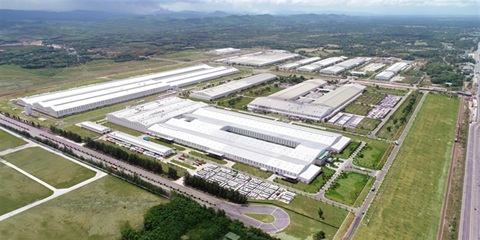
ĐÀ NẴNG GREEN-LIGHTS US$105 MILLION THAI DEVELOPMENT DEAL
The central city has approved an investment proposal by Thailand’s WHA Group to develop infrastructure for the 400ha WHA Đà Nẵng Industrial Park project on two communes of Thăng Bình and Đồng Dương, with an investment of more than VNĐ2.7 trillion (US$105 million). The city said it approved WHA Industrial Development International's status as an investor in the project, which is expected to take place between 2027 and 2034.
VIETNAM ECONOMY INVESTMENT
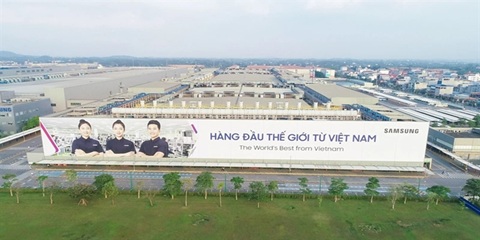
MOBILE PHONE EXPORTS RISE 20% TO $51.8 BILLION IN FIRST NINE MONTHS
Exports of mobile phones and components rose 20 per cent year-on-year to nearly US$51.8 billion in the first nine months of 2026, with China, the US and Republic of Korea accounting for more than half of the total. Shipments to the three markets reached a combined $26.18 billion, or 50.6 per cent of total exports of the product group during the period, according to data from the Vietnam Department of Customs under the Ministry of Finance.
INFRASTRUCTURE / CONSTRUCTION / LOGISTIC / PORT
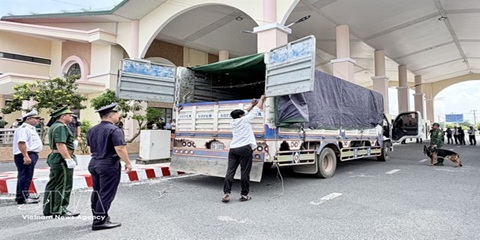
VIỆT NAM-CAMBODIA TRADE GATHERS PACE TOWARDS $20 BILLION TARGET
Trade between Việt Nam and Cambodia continues to grow, remaining a bright spot and a key pillar of bilateral cooperation as the two countries aim to raise two-way trade to US$20 billion in the coming years. After setting a record of more than $11.3 billion last year, bilateral trade reached about $8.7 billion in the first eight months of this year, up 8.3 per cent year on year.
VIETNAM ECONOMY INVESTMENT
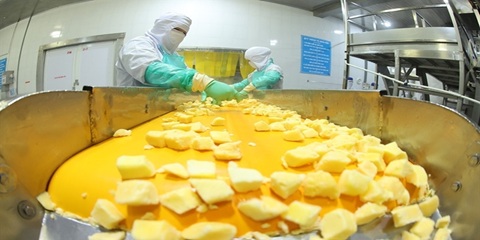
FRUIT AND VEGETABLE EXPORTS POISED TO HIT $10 BILLION IN 2026
Fruit and vegetable exports are on track to reach nearly US$10 billion in 2026, after rising 19.9 per cent year on year to nearly US$7.4 billion in the first nine months, driven by strong seasonal demand and abundant tropical fruit supplies. The Ministry of Agriculture and Environment said the growth reflected stronger international demand for fresh produce and processed agricultural products.
Events Sponsors






















