Want to be in the loop?
subscribe to
our notification
Business News
PRESSURE ON EXCHANGE RATE TAKES ON NEW LOOK
In tandem with forecasts regarding potential reductions in policy interest rates, discussions surrounding a potential reduction in reserve requirements have emerged in the last couple of weeks.
According to economist Le Xuan Nghia, one of the biggest risks to the Vietnamese economy is that lending rates remain high despite the State Bank of Vietnam’s (SBV) recent efforts to reduce operating interest rates. “The real interest rate is still at 10 per cent, which is too high, but this is because the operator is still worried about exchange rate fluctuations,” said Dr. Nghia.
According to a senior leader at BIDV, the increasing pressure on the exchange rate earlier in the month mainly stemmed from the increase in the US/China exchange rate in the international market of about 5 per cent to 7.25 within 2 months. At the same time, the demand for foreign currency to hedge risks increased in the context of very low swap transaction costs.
“In addition, the market sentiment was also affected to a certain extent when the USD/VND exchange rate on the free market also increased strongly during this period. However, the increase in the exchange rate quickly cooled down after that when the domestic foreign currency supply-demand balance tended to be more abundant,” the BIDV leader said.
According to data from the General Statistics Office, the trade balance in July reached a surplus of $2.15 billion - the highest level in recent years, reinforcing the surplus trend since the beginning of the year to a record $15.23 billion. Moreover, foreign direct investment disbursement also tended to recover strongly, hitting $1.72 billion, the largest rise since the beginning of the year.
However, exchange rate pressure increased not only in July but also in early August. The interbank USD/VND traded at 23,761 on August 3, an increase of nearly 0.8 per cent compared to the end of June. Since the beginning of 2023, the interbank exchange rate has increased by about 0.5 per cent while the market rate has increased by 1 per cent.
“Hoarding and speculating in foreign currencies is no longer popular, when people have partly learned lessons after the fluctuations of the exchange rate last year,” added the BIDV leader. “The market’s confidence has been further strengthened with regulators’ proactive and flexible management measures to stabilise the value of the VND.”
According to Dinh Quang Hinh, head of Macro and Market Strategy at VNDirect, there are factors that can put pressure on the VND exchange rate in the second half of 2023. Specifically, the interest rate difference between VND and USD will continue to shrink as the Fed’s operating interest rate may remain at the peak until the end of 2023 to curb inflation, while the SBV is oriented to continue lowering interest rates to support growth. At the same time, domestic inflation may increase from the end of the third quarter of 2023.
“However, the VND exchange rate will still be supported by a high trade surplus and stable overseas funding and remittances. In addition, the agreements to sell shares to foreign investors expected to be implemented in the second half of 2023 will increase the supply of foreign currency, and Vietnam is a country that currently maintains high real interest rates,” said Hinh.
According to economist Nghia, the domestic foreign currency supply-demand balance has been a big fulcrum for the exchange rate in the past period, and August’s movements may not be an exception. History shows that August is the peak period of trade surplus, with a trade balance surplus forecasted to reach about $2.5-3 billion this year when exports improve as Samsung launched a new product line.
“In addition, it is expected that VPBank’s capital sale to foreign partners will also be implemented soon in the near future to improve the foreign currency supply in the market, estimated at $1.3-1.5 billion if successful,” Nghia said.
He mentioned three factors that make it difficult for the SBV to have more room to reduce operating interest rates. “Firstly, the USD Index may drop further to the threshold of 100 points. It is unlikely to rise again in the context of the current multipolar world, using many currencies. Secondly, the price of imported raw materials may increase, especially fuel prices, but the Ministry of Finance still has room to intervene, such as reducing taxes and petrol fees. Thirdly, Vietnam’s balance of payments is still positive.”
Source: VIR
Related News

INFRASTRUCTURE / CONSTRUCTION / LOGISTIC / PORT
VIỆT NAM-CAMBODIA TRADE GATHERS PACE TOWARDS $20 BILLION TARGET
Trade between Việt Nam and Cambodia continues to grow, remaining a bright spot and a key pillar of bilateral cooperation as the two countries aim to raise two-way trade to US$20 billion in the coming years. After setting a record of more than $11.3 billion last year, bilateral trade reached about $8.7 billion in the first eight months of this year, up 8.3 per cent year on year.
TECHNOLOGY
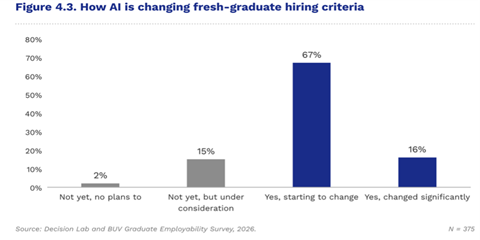
AI BEGINNING TO RESHAPE RECRUITMENT CRITERIA
Digital literacy is the only capability area in which fresh graduates meet employers’ expectations, according to a new report. Yet, it is also the standard rising fastest, as businesses increasingly expect new hires to use AI effectively in the workplace. Some 83 per cent of employers say AI has changed, or is beginning to change, their hiring criteria, while 94 per cent report higher expectations for digital and AI capabilities than they had two to three years ago.

INFRASTRUCTURE / CONSTRUCTION / LOGISTIC / PORT
ĐÀ NẴNG GREEN-LIGHTS US$105 MILLION THAI DEVELOPMENT DEAL
The central city has approved an investment proposal by Thailand’s WHA Group to develop infrastructure for the 400ha WHA Đà Nẵng Industrial Park project on two communes of Thăng Bình and Đồng Dương, with an investment of more than VNĐ2.7 trillion (US$105 million). The city said it approved WHA Industrial Development International's status as an investor in the project, which is expected to take place between 2027 and 2034.

VIETNAM ECONOMY INVESTMENT
MOBILE PHONE EXPORTS RISE 20% TO $51.8 BILLION IN FIRST NINE MONTHS
Exports of mobile phones and components rose 20 per cent year-on-year to nearly US$51.8 billion in the first nine months of 2026, with China, the US and Republic of Korea accounting for more than half of the total. Shipments to the three markets reached a combined $26.18 billion, or 50.6 per cent of total exports of the product group during the period, according to data from the Vietnam Department of Customs under the Ministry of Finance.

VIETNAM ECONOMY INVESTMENT
FRUIT AND VEGETABLE EXPORTS POISED TO HIT $10 BILLION IN 2026
Fruit and vegetable exports are on track to reach nearly US$10 billion in 2026, after rising 19.9 per cent year on year to nearly US$7.4 billion in the first nine months, driven by strong seasonal demand and abundant tropical fruit supplies. The Ministry of Agriculture and Environment said the growth reflected stronger international demand for fresh produce and processed agricultural products.
GARMENT / TEXTILE
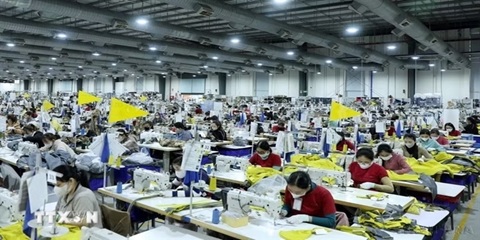
TEXTILE EXPORTS FACE DUAL CHALLENGES OF SUSTAINING ORDERS AND BOOSTING EFFICIENCY AMID GROWING COMPETITION
Data shows that the textile and garment sector maintained its growth momentum in the first nine months of this year. The industry's total export turnover reached an estimated US$35.721 billion in the first nine months of this year, up 3.3 per cent year-on-year. Despite posting encouraging export figures, Vietnamese textile and garment enterprises continue to navigate unpredictable market variables.
Events Sponsors






















