Want to be in the loop?
subscribe to
our notification
Business News
PUBLIC INVESTMENT DISBURSEMENT REACHES $17.6 BILLION IN NINE MONTHS
Prime Minister Pham Minh Chinh has ordered ministries and local authorities to urgently assess investment performance for the first nine months of 2025.
Under Official Dispatch No. 194/CD-TTg, issued on October 10, the directive calls for stronger state management of investment activities and measures to foster a more favourable business environment. The move aims to fully disburse assigned capital, sustain growth of over 8 per cent this year, and lay the groundwork for rapid progress in the 2026–2030 period, particularly in digital, green, and circular economy development.
The prime minister instructed ministers, heads of government agencies, and chairpersons of provincial and municipal People’s Committees to focus on several key tasks.
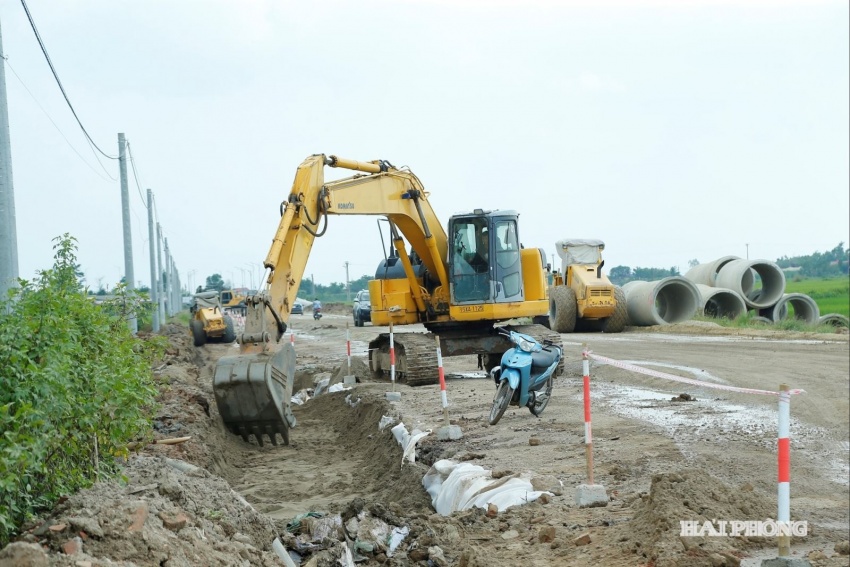
Contractors work on the construction of Hoa River Bridge. Photo: MoC
First, they must effectively implement government resolutions and the prime minister’s directives on state management of investment, reform the public service system, and strengthen administrative discipline. Authorities are urged to shorten processing times for investment procedures, ensuring that individuals and enterprises remain at the centre of public service.
Second, ministries and localities should direct subordinate agencies to accelerate the handling of investment-related documents at all levels in a professional, transparent, and efficient manner.
Third, they are required to promote digitalisation, automation, and data connectivity, while enhancing management capacity and labour productivity to reduce costs and processing time.
Specifically, he asked the Ministry of Finance (MoF) to study, develop content, forms, information, and data for reporting investment results for the first nine months of 2025 according to the provisions of Articles 69, 70, and 72 of the Investment Law to ensure consistency, enough information, ease of implementation, and convenience of use.
The MoF needs to urgently issue documents to guide ministries, central and local agencies to report investment results in a unified manner according to the established form, and completed before October 12.
It must also synthesise the reporting results of ministries, agencies and localities and report to the prime minister before October 20.
The prime minister also requested ministries, agencies, People's Committees of provinces and centrally run cities to base on their assigned functions, tasks, authorities, and instructions of the MoF to promptly prepare a report on investment results for the first nine months of 2025 and report to the prime minister before October 15, 2025.
The PM assigned Deputy Prime Minister Ho Duc Phoc to monitor, direct, handle and resolve difficulties and problems of agencies, units and localities according to his authority, and report to him if beyond his authority.
The Government Office monitors and urges ministries, agencies and localities to urgently implement this official dispatch.
According to the MoF, more than VND440 trillion (US$17.6 billion) in public investment was disbursed in the first nine months of 2025 – equivalent to half of the target set by the prime minister for authorities at all levels.
During this period, nine ministries and central agencies, along with 17 localities, achieved disbursement rates at or above the national average. However, 29 ministries, central agencies, and 15 localities reported rates below the national average.
Source: VIR
Related News

INFRASTRUCTURE / CONSTRUCTION / LOGISTIC / PORT
VIỆT NAM-CAMBODIA TRADE GATHERS PACE TOWARDS $20 BILLION TARGET
Trade between Việt Nam and Cambodia continues to grow, remaining a bright spot and a key pillar of bilateral cooperation as the two countries aim to raise two-way trade to US$20 billion in the coming years. After setting a record of more than $11.3 billion last year, bilateral trade reached about $8.7 billion in the first eight months of this year, up 8.3 per cent year on year.
TECHNOLOGY
AI BEGINNING TO RESHAPE RECRUITMENT CRITERIA
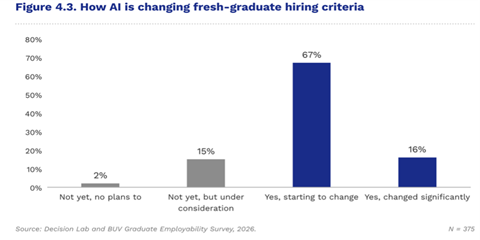
Digital literacy is the only capability area in which fresh graduates meet employers’ expectations, according to a new report. Yet, it is also the standard rising fastest, as businesses increasingly expect new hires to use AI effectively in the workplace. Some 83 per cent of employers say AI has changed, or is beginning to change, their hiring criteria, while 94 per cent report higher expectations for digital and AI capabilities than they had two to three years ago.

INFRASTRUCTURE / CONSTRUCTION / LOGISTIC / PORT
ĐÀ NẴNG GREEN-LIGHTS US$105 MILLION THAI DEVELOPMENT DEAL
The central city has approved an investment proposal by Thailand’s WHA Group to develop infrastructure for the 400ha WHA Đà Nẵng Industrial Park project on two communes of Thăng Bình and Đồng Dương, with an investment of more than VNĐ2.7 trillion (US$105 million). The city said it approved WHA Industrial Development International's status as an investor in the project, which is expected to take place between 2027 and 2034.

VIETNAM ECONOMY INVESTMENT
MOBILE PHONE EXPORTS RISE 20% TO $51.8 BILLION IN FIRST NINE MONTHS
Exports of mobile phones and components rose 20 per cent year-on-year to nearly US$51.8 billion in the first nine months of 2026, with China, the US and Republic of Korea accounting for more than half of the total. Shipments to the three markets reached a combined $26.18 billion, or 50.6 per cent of total exports of the product group during the period, according to data from the Vietnam Department of Customs under the Ministry of Finance.

VIETNAM ECONOMY INVESTMENT
FRUIT AND VEGETABLE EXPORTS POISED TO HIT $10 BILLION IN 2026
Fruit and vegetable exports are on track to reach nearly US$10 billion in 2026, after rising 19.9 per cent year on year to nearly US$7.4 billion in the first nine months, driven by strong seasonal demand and abundant tropical fruit supplies. The Ministry of Agriculture and Environment said the growth reflected stronger international demand for fresh produce and processed agricultural products.
GARMENT / TEXTILE
TEXTILE EXPORTS FACE DUAL CHALLENGES OF SUSTAINING ORDERS AND BOOSTING EFFICIENCY AMID GROWING COMPETITION
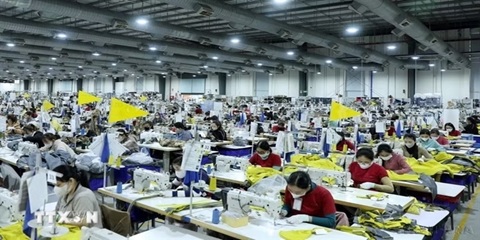
Data shows that the textile and garment sector maintained its growth momentum in the first nine months of this year. The industry's total export turnover reached an estimated US$35.721 billion in the first nine months of this year, up 3.3 per cent year-on-year. Despite posting encouraging export figures, Vietnamese textile and garment enterprises continue to navigate unpredictable market variables.
Events Sponsors






















