Want to be in the loop?
subscribe to
our notification
Business News
RAPID CREDIT GROWTH POSSIBLE, BUT RISKY: EXPERTS
The Government has called for faster than targeted credit growth in pursuit of this year’s GDP goal of 6.7 per cent.
However, experts have some concern that this would exert more pressure on the central bank to ensure macroeconomic stability and efficiency of credit growth.
In a meeting with top Government top officials last weekend, Prime Minister Nguyễn Xuân Phúc urged the State Bank of Việt Nam to work out measures to boost credit growth to 21 per cent this year, higher than the initial target of 18 per cent.
This is the second time in a month that the SBV has been officially requested to do this.
In mid July, Mai Tiến Dũng, Minister and Chairman of the Government Working Group to the central bank conveyed a message from the PM, asking the SBV to ensuring the credit growth pace at 18-20 per cent, identifying it as one of the ways to reach the year’s GDP goal.
The newly-set lending growth rate is said to be achievable, but there are concerns the extra pressures it will bring to bear on the central bank in maintaining macroeconomic stability.
Experts say the economy’s ability to absorb the additional capital as also inflationary pressures should be taken into account.
According to the National Financial Supervisory Commission, credit growth in the first seven months is estimated to reach 9.3 per cent, 0.5 percentage points higher than the same period last year.
In fact, several commercial banks have asked for the central bank’s permission to raise the credit growth limit as they have almost used up the quota set for the year.
The Việt Nam International Commercial Joint Stock Bank (VIB)’s outstanding loans have increased by 15.7 per cent in the first two quarters of the year, while the target set by the SBV in the beginning of the year was 16 per cent.
The Việt Nam Prosperity Commercial Joint Stock Bank (VPBank) also saw a 12 per cent growth in H1 lending, meaning that it can only raise its outstanding loans by four per cent in the remaining six months of 2017.
SBV Governor Lê Minh Hưng said that the target of 18-20 per cent credit growth was feasible as many commercial banks have launched programmes to support enterprises by reducing lending interest rates, following the central bank’s decision to cut several basic interest rates.
Credit demand
Nguyễn Khắc Quốc Bảo, head of the Faculty of Finance under the HCM City University of Economics, said that the SBV allowing commercial banks to lower lending interest rates in some areas, or opening more credit room for them to increase lending was, in the end, just moves to influence the money supply side.
If the Government wants efficient and sustainable credit growth, it must pay attention to the economy’s capability to absorb capital, he said.
It is important that the Government and other ministries and agencies create favorable conditions for businesses in priority sectors to access bank loans while reducing administrative procedures and non-interest expenses, according to Bảo.
If this is done, the reduction in lending rates and expansion of credit growth for the banking system will make sense and bring real benefits to the economy.
Dr Lê Xuân Nghĩa, former chairman of the National Financial Supervisory Commission, said: “The faster-than-planned credit growth of over 20 per cent is reachable thanks to favourable macroeconomic conditions that the SBV can use as a base to consider an expansion in money supply and facilitate a further cut in lending and deposit interest rates.”
However, the SBV should also take into account the ability of SMEs to absorb the expanded credit, Nghĩa stressed, adding that the ability depends on whether the lending interest rates remain high or not.
"If the interest rates are still kept high, the additional source of capital will likely flow to risky sectors like real estate and securities – something that the Government does not expect," he said.
“If the lending interest rates are lowered, more capital would flow into production and processing fields, which would help increase aggregate demand, thereby boosting GDP growth,” he added.
Nghĩa explained that "processing and manufacturing enterprises usually have to borrow money used as working capital to buy materials. Expense on input materials probably amounts to 80 per cent of their total costs, so they suffer a huge pressure of paying interest."
The expert reiterated his warning: “We do not have ‘large room’ for further credit growth, so we must be prudent.”
Financial expert Phan Ngọc Minh said that it would be more difficult for the SBV to manage its monetary policy if it was forced to ensure credit growth of over 20 per cent, because it would still have to keep inflation below 5 per cent this year.
Potential risks
According to a report by the Bảo Việt Securities Company, total outstanding loans in the whole banking system has reached VNĐ6 quadrillion (US$266 billion). If the credit growth rate of the year is 20 per cent, the lending must increase by VNĐ1.2 quadrillion for the whole year and by VNĐ642 trillion in the last five months of the year.
This might put pressure on the liquidity of the banking system, especially when banks have to make more payments towards the end of the year, the report said.
Earlier, the IMF country report for Việt Nam released in July showed that the credit growth averaged 24 per cent in the last 10 years. It said credit-to-GDP ratio reached 124 per cent of GDP at the end of 2016, while the appropriate level should be 80 per cent.
The report highlighted that the credit-to-GDP ratio was now close to levels during previous periods of macroeconomic stability, signalling potential risks ahead.
IMF experts also said that alongside rapid credit growth, productivity of credit and rates of return on investment have deteriorated due to misallocation of capital across enterprises, between and within industries.
They have, therefore, voiced concerns over Việt Nam’s credit growth, saying “monetary policy should remain on hold but be alert for signs of rising core inflation.”
Executive directors at the IMF warned that “vigilance would be needed to contain rapid credit growth and credit allocation made more market-based, which would improve its efficiency in supporting growth.”
Source: VNS
Related News
VIETNAM ECONOMY INVESTMENT
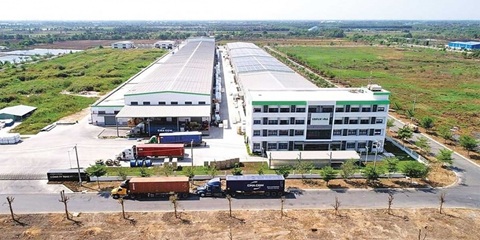
FOREIGN INVESTORS SEEKING A SYNCHRONISED MANUFACTURING ECOSYSTEM
Instead of focusing only on land costs and incentives as usual, foreign investors are seeking a synchronised manufacturing ecosystem, from stable power supply and logistics to shared infrastructure and the convenience of completing residence procedures for experts to serve their long-term investment in the country.
INFRASTRUCTURE / CONSTRUCTION / LOGISTIC / PORT
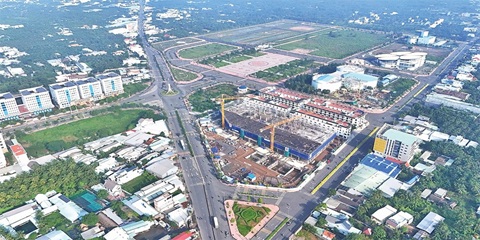
DONG THAP PROVINCE STEPS UP INDUSTRIAL EXPANSION AND INFRASTRUCTURE CONNECTIVITY
Accelerating public investment, strengthening inter-regional connectivity, and expanding industrial land are helping Dong Thap efficiently bolster competitiveness and drive economic growth. Following the 2025 merger of the former Dong Thap and Tien Giang provinces, the expanded Dong Thap province in the Mekong Delta faces mounting pressure to accelerate infrastructure development and strengthen connectivity among local economic zones, urban areas, industrial parks (IPs), and production centres.
PROPERTY / INDUSTRIAL ZONE
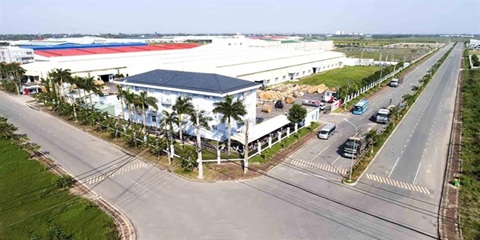
HCM CITY ATTRACTS US$5.7 BILLION INTO EXPORT PROCESSING AND INDUSTRIAL ZONES
HCM City attracted US$5.7 billion in domestic and foreign investment into its export processing and industrial zones during the first nine months of 2026. The figure exceeded the city's full-year target by 31 per cent, highlighting strong momentum in high-quality industrial investment under Resolution No.10-NQ/TW. Total investment reached 131 per cent of the 2026 target of $4.25 billion and represented a 29 per cent increase compared with the same period in 2025, according to the city's Export Processing and Industrial Zones Authority (HEPZA).

BANKING / FINANCE / INSURANCE / TAX
REMITTANCES TO HCM CITY RISE NEARLY 40% IN Q3
Remittances to HCM City reached more than US$2.83 billion in the third quarter of this year, up 39.5 per cent from the previous quarter and 3.6 per cent year-on-year. This was the first quarter showing positive annual growth this year, helping narrow the decline in remittance inflows over the first nine months. According to the State Bank of Vietnam (SBV)’s Regional Branch 2, remittances transferred to HCM City through credit institutions and economic organisations totalled $2.835 billion in Q3, an increase of more than $802 million from the previous quarter.

VIETNAM ECONOMY INVESTMENT
LOCALITIES REPORT BREAKTHROUGH RESULTS IN FDI IN FIRST NINE MONTHS
In Ho Chi Minh City, total registered capital reached $17.2 billion in the first nine months, up 4.2 times from the same period last year. The figure included more than $9.35 billion in newly registered capital and over $4.9 billion in additional capital for existing projects. Foreign investors also registered more than $2.9 billion through capital contributions and share purchases.

TECHNOLOGY
TECH SECTOR GROWTH OPENS UP OPPORTUNITIES FOR VIỆT NAM TO GO GLOBAL
The growth of the electronics, semiconductor and high-tech sectors worldwide is opening up a variety of opportunities for Vietnamese enterprises to integrate more deeply into the global supply chain. However, to become suppliers for these corporations, domestic enterprises must meet rigorous standards regarding quality, technology, productivity and order fulfilment capabilities.
Events Sponsors






















