Want to be in the loop?
subscribe to
our notification
Business News
REAL ESTATE MARKET NEEDS CREDIT SOLUTIONS: EXPERTS
In an effort to address the ongoing challenges faced by the domestic real estate market, an approach encompassing legal, administrative, and financial solutions is urgently required, particularly in the realm of credit.
This was expressed by Prof. Ngo Tri Long, leader of the Ministry of Finance's Price Research Institute, during a seminar on the revitalisation and sound development of capital for the domestic real estate sector. The event, held on April 19, was organised by the Vietnam Financial Consulting Association (VFCA).
Dr. Le Minh Nghia, VFCA's deputy chairman, said during the discussion that the majority of capital directed towards the real estate market is substantial in scale, and typically takes the form of medium to long-term investments. However, for years, Vietnam’s property market has been heavily reliant on bank credit, amounting to approximately 2.6 quadrillion VND, and constituting nearly 20 per cent of the nation's total capital.
In light of this, recent endeavours have sought to persify capital sources, tapping into alternative channels such as equities, bonds, and foreign investment, with a view to fostering recovery and growth within the real estate market.
However, according to Nghia, from the last six months of 2022, the real estate market and businesses have faced many difficulties, especially in terms of capital liquidity and legal procedures.
Besides that, lending interest rates, petrol and oil prices, building material prices and labour costs have increased, leading to higher production costs for real estate businesses. Those factors have caused many projects to stop.
Especially, the tight control of credit by the State after the mistakes of real estate businesses in issuing inpidual bonds and manipulating stock prices have made it difficult for real estate businesses in approaching capital, said Nghia.
To remove those difficulties in credit for the real estate market, Long said that it is necessary to focus credit on eligible and feasible real estate projects and the housing segment that the market has real demand for.
Now, the State Bank should consider classifying property projects and investors to stabilise the market as well as the psychology of homebuyers, Long said.
The segment that needs difficulties removing right now is social housing products, he said.
The State needs to control credit risk for the real estate segment, and also follow granting of credit for property enterprises and projects.
Other factors are to improve the quality of the statistical system with regular updated information on real estate projects with large outstanding loans, and to assess the real estate market and investors, aiming at having suitable credit solutions.
In addition, the State needs to implement a credit package of 120 trillion VND for social housing, a programme on providing loans for developing social housing and worker housing projects, and upgrading or re-building old apartments.
The banking system should have solutions to encourage businesses to develop social housing projects and housing for workers.
Long said that in the past three years, the COVID-19 pandemic caused the real estate market to fall into a difficult situation. Many real estate businesses were inefficient and had shortages of capital.
“The scale of Vietnam’s real estate market is not large compared to other countries in the region, but more than 70 per cent of real estate investment capital is bank loans, and 65 per cent of collateral to get the loans is real estate,” Long said.
He also said that after a period of massive lending, banks and credit institutions are now more careful with real estate projects.
Besides that, in 2023, real estate businesses are under great pressure from the maturity of bonds.
According to Long, the number of bankrupt real estate businesses has increased by nearly 40 per cent in the past year.
According to incomplete statistics from the annual financial reports of real estate companies listed on the stock exchange, the value of real estate inventories and unfinished construction projects by the end of 2022 had a very strong increase.
“This means the businesses do not have more capital to deploy further. Without timely and effective solutions, the real estate market may slide into crisis, adversely affecting the goal of maintaining macro-economic stability and social security," Long said.
Therefore, the Government has issued decrees and resolutions to remove difficulties in capital for the real estate market.
Those are the Government's decrees on the offering and trading of inpidual corporate bonds in the domestic market and the offering of corporate bonds in the international market.
In addition, there is a project on the development of 1 million social housing houses by 2030 and Resolution No. 33/NQ-CP of the Government on solutions removing and promoting the development of a healthy and sustainable real estate market.
According to Nghia, this is the Government's determination to remove obstacles and promote a healthy and sustainable development of the real estate market, contributing to the process of socio-economic recovery and development after the COVID-19 pandemic.
Source: VIR
Related News

INFRASTRUCTURE / CONSTRUCTION / LOGISTIC / PORT
VIỆT NAM-CAMBODIA TRADE GATHERS PACE TOWARDS $20 BILLION TARGET
Trade between Việt Nam and Cambodia continues to grow, remaining a bright spot and a key pillar of bilateral cooperation as the two countries aim to raise two-way trade to US$20 billion in the coming years. After setting a record of more than $11.3 billion last year, bilateral trade reached about $8.7 billion in the first eight months of this year, up 8.3 per cent year on year.
TECHNOLOGY
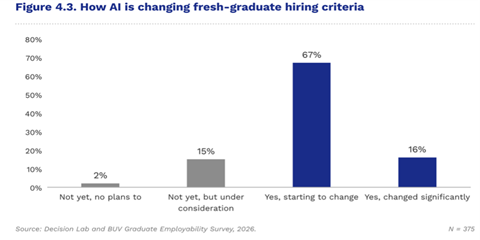
AI BEGINNING TO RESHAPE RECRUITMENT CRITERIA
Digital literacy is the only capability area in which fresh graduates meet employers’ expectations, according to a new report. Yet, it is also the standard rising fastest, as businesses increasingly expect new hires to use AI effectively in the workplace. Some 83 per cent of employers say AI has changed, or is beginning to change, their hiring criteria, while 94 per cent report higher expectations for digital and AI capabilities than they had two to three years ago.

INFRASTRUCTURE / CONSTRUCTION / LOGISTIC / PORT
ĐÀ NẴNG GREEN-LIGHTS US$105 MILLION THAI DEVELOPMENT DEAL
The central city has approved an investment proposal by Thailand’s WHA Group to develop infrastructure for the 400ha WHA Đà Nẵng Industrial Park project on two communes of Thăng Bình and Đồng Dương, with an investment of more than VNĐ2.7 trillion (US$105 million). The city said it approved WHA Industrial Development International's status as an investor in the project, which is expected to take place between 2027 and 2034.

VIETNAM ECONOMY INVESTMENT
MOBILE PHONE EXPORTS RISE 20% TO $51.8 BILLION IN FIRST NINE MONTHS
Exports of mobile phones and components rose 20 per cent year-on-year to nearly US$51.8 billion in the first nine months of 2026, with China, the US and Republic of Korea accounting for more than half of the total. Shipments to the three markets reached a combined $26.18 billion, or 50.6 per cent of total exports of the product group during the period, according to data from the Vietnam Department of Customs under the Ministry of Finance.

VIETNAM ECONOMY INVESTMENT
FRUIT AND VEGETABLE EXPORTS POISED TO HIT $10 BILLION IN 2026
Fruit and vegetable exports are on track to reach nearly US$10 billion in 2026, after rising 19.9 per cent year on year to nearly US$7.4 billion in the first nine months, driven by strong seasonal demand and abundant tropical fruit supplies. The Ministry of Agriculture and Environment said the growth reflected stronger international demand for fresh produce and processed agricultural products.
GARMENT / TEXTILE
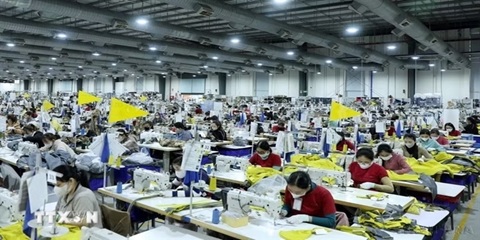
TEXTILE EXPORTS FACE DUAL CHALLENGES OF SUSTAINING ORDERS AND BOOSTING EFFICIENCY AMID GROWING COMPETITION
Data shows that the textile and garment sector maintained its growth momentum in the first nine months of this year. The industry's total export turnover reached an estimated US$35.721 billion in the first nine months of this year, up 3.3 per cent year-on-year. Despite posting encouraging export figures, Vietnamese textile and garment enterprises continue to navigate unpredictable market variables.
Events Sponsors






















