Want to be in the loop?
subscribe to
our notification
Business News
RELAX FOREIGN OWNERSHIP RESTRICTIONS, REAL ESTATE DEVELOPERS PROPOSE
al estate developers are proposing that Vietnam eases existing limits on foreign ownership to facilitate investment and reduce inventory of premium apartments.
The foreign ownership cap of 30 percent in an apartment project limits developers' ability to meet rising demand from foreigners, the Vietnam Association of Realtors (VARS) says.
Many foreigners are interested in premium projects in Hanoi and Ho Chi Minh City, which are most often too expensive for domestic residents, it says.
The unsold inventory in this segment has been increasing in recent years and more ownership room for foreigners will help reduce it, the association adds.
Vietnam allows foreigners to buy property, except land, but not more than 30 percent of a residential quarter or an apartment project, as long as the project is not located in areas deemed vital to national security.
As the country attracts rising foreign direct investment, which reached a decade-high $38 billion last year, industry insiders say there is rising demand among expats to own property in Hanoi and Ho Chi Minh City.
Su Ngoc Khuong, senior director of real estate service firm Savills Vietnam, said that there was large demand from workers of South Korean and Japanese companies that invest in Vietnam, and of the Vietnamese diaspora in Europe and the U.S.
Many apartment projects in District 2, HCMC have reached the 30 percent foreign ownership cap, he said.
"Expats who have long-term projects in Vietnam and those with Vietnamese spouses prefer buying a house to renting, while the Vietnamese diaspora with money consider property in their home country an investment," Khuong said.
Industry insiders say that a premium apartment in HCMC typically costs 20-30 percent less than Hong Kong and Singapore. Foreign investors see Vietnam as one of the fastest-growing economies in the region with potential for development in various sectors including manufacturing and tourism.
"As Vietnam seeks more foreign direct investment, it should give high-skilled foreign laborers more opportunity to own property," Khuong said.
But the ownership cap is limiting developers in making this happen, said Han Suk Jung, CEO of HCMC-based SonKim Land.
He said that the 30 percent ratio makes it challenging for the company to meet foreigners’ demand, which has been rising in recent years. He proposed that the ratio be increased to 49 percent.
Since the latest foreign ownership law took effect in July 2015, just 800 foreign individuals and companies had registered ownership of properties in the country as of November last year, according to a National Assembly report.
Although there are concerns that more foreign ownership means less opportunities for local residents to own property, Tran Minh Hoang, deputy director of VARS, said that Vietnamese and foreigners have different real estate interests.
Most Vietnamese look for affordable real estate, while foreigners are more into the premium and luxury segment, he said.
Vietnam is seeing an oversupply in the premium segment. A recent report by the Ministry of Construction says that although up to 80 percent of buyers’ demand is for affordable property, there is a shortage of supply in this segment, while there is an oversupply of premium properties.
The report also estimates unsold real estate inventory nationwide, dominated by the high-end segment, at VND104 trillion ($4.4 billion).
"Selling property to foreigners does not mean that there will be less asset for locals. They are different groups of customers," Hoang said.
Other industry insiders said that as foreigners are already buying property via proxies, an increase in the cap will help increase transparency in the market.
Meanwhile, some industry insiders have also expressed need for caution with the proposal to allow increased foreign ownership.
A senior leader of the Ho Chi Minh City Real Estate Association (HoREA), who asked not to be identified, said that there could be national security implications if there were too many foreigners living in an apartment project.
Furthermore, too much investment in the premium segment can take away capital from the affordable segment that’s much needed for Vietnamese citizens, he said.
Source: Vnexpress
Related News

INFRASTRUCTURE / CONSTRUCTION / LOGISTIC / PORT
VIỆT NAM-CAMBODIA TRADE GATHERS PACE TOWARDS $20 BILLION TARGET
Trade between Việt Nam and Cambodia continues to grow, remaining a bright spot and a key pillar of bilateral cooperation as the two countries aim to raise two-way trade to US$20 billion in the coming years. After setting a record of more than $11.3 billion last year, bilateral trade reached about $8.7 billion in the first eight months of this year, up 8.3 per cent year on year.
TECHNOLOGY
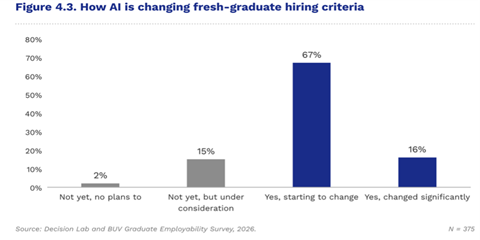
AI BEGINNING TO RESHAPE RECRUITMENT CRITERIA
Digital literacy is the only capability area in which fresh graduates meet employers’ expectations, according to a new report. Yet, it is also the standard rising fastest, as businesses increasingly expect new hires to use AI effectively in the workplace. Some 83 per cent of employers say AI has changed, or is beginning to change, their hiring criteria, while 94 per cent report higher expectations for digital and AI capabilities than they had two to three years ago.

INFRASTRUCTURE / CONSTRUCTION / LOGISTIC / PORT
ĐÀ NẴNG GREEN-LIGHTS US$105 MILLION THAI DEVELOPMENT DEAL
The central city has approved an investment proposal by Thailand’s WHA Group to develop infrastructure for the 400ha WHA Đà Nẵng Industrial Park project on two communes of Thăng Bình and Đồng Dương, with an investment of more than VNĐ2.7 trillion (US$105 million). The city said it approved WHA Industrial Development International's status as an investor in the project, which is expected to take place between 2027 and 2034.

VIETNAM ECONOMY INVESTMENT
MOBILE PHONE EXPORTS RISE 20% TO $51.8 BILLION IN FIRST NINE MONTHS
Exports of mobile phones and components rose 20 per cent year-on-year to nearly US$51.8 billion in the first nine months of 2026, with China, the US and Republic of Korea accounting for more than half of the total. Shipments to the three markets reached a combined $26.18 billion, or 50.6 per cent of total exports of the product group during the period, according to data from the Vietnam Department of Customs under the Ministry of Finance.

VIETNAM ECONOMY INVESTMENT
FRUIT AND VEGETABLE EXPORTS POISED TO HIT $10 BILLION IN 2026
Fruit and vegetable exports are on track to reach nearly US$10 billion in 2026, after rising 19.9 per cent year on year to nearly US$7.4 billion in the first nine months, driven by strong seasonal demand and abundant tropical fruit supplies. The Ministry of Agriculture and Environment said the growth reflected stronger international demand for fresh produce and processed agricultural products.
GARMENT / TEXTILE
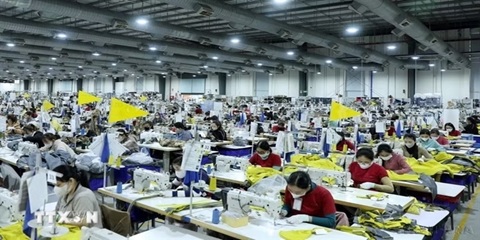
TEXTILE EXPORTS FACE DUAL CHALLENGES OF SUSTAINING ORDERS AND BOOSTING EFFICIENCY AMID GROWING COMPETITION
Data shows that the textile and garment sector maintained its growth momentum in the first nine months of this year. The industry's total export turnover reached an estimated US$35.721 billion in the first nine months of this year, up 3.3 per cent year-on-year. Despite posting encouraging export figures, Vietnamese textile and garment enterprises continue to navigate unpredictable market variables.
Events Sponsors






















