Want to be in the loop?
subscribe to
our notification
Business News
REMITTANCES TO VIETNAM ESTIMATED AT US$12.5 BILLION THIS YEAR
Incoming remittances to Vietnam would rise 10% year-on-year to some US$12.5 billion this year, the Foreign Exchange Management Department under the State Bank of Vietnam (SBV) announced at a press conference yesterday, December 28.
The figure is much lower than the World Bank’s (WB) forecast of US$18 billion.
A representative of the Foreign Exchange Management Department said the WB’s figure is just a forecast and often differs from SBV’s data.
“SBV’s figure is based on the official data of transactions through credit institutions, remittance companies and post offices,” he said.
“Despite the Covid-19 pandemic, remittances to Vietnam still grew steadily in 2020 and 2021. This is an important source for the country’s foreign currency market and reserves,” he added.
SBV deputy governor Dao Minh Tu said remittances were mainly sent to Vietnam through credit institutions. Of the balance, some 28% were sent through remittance companies and 2% through post offices.
HCMC leads the country in terms of incoming remittances, accounting for some 30% of the country’s total. Remittances to the city came mostly from the United States, Australia, Canada and European countries.
Remittances went mainly into manufacturing and trade. Vietnamese living abroad also sent money home to help their families during the Covid-19 pandemic.
According to the Migration and Development Brief released by KNOMAD and the World Bank (WB), remittance flows to low- and middle-income countries are expected to reach US$589 billion in 2021, a 7.3% increase over 2020. Remittances now stand more than threefold above official development assistance and, excluding China, more than 50% higher than foreign direct investment.
“In all the developing regions of the world, migrants stepped up their support to families back home, especially to countries affected by the spread of the Covid-19 Delta variant. Their ability to help was enabled by a welcome pickup in economic activity and employment in major migrant destination countries,” Dilip Ratha, Lead Economist, Migration and Remittances and Head of KNOMAD, explained.
In 2021, the top five remittance recipients in current US dollar terms were India, China, Mexico, the Philippines and Egypt.
The United States was the most significant source country for remittances, followed by the United Arab Emirates, Saudi Arabia, and Switzerland.
Remittances are expected to continue growing in 2022, but there are downside risks.
“The Covid-19 crisis is far from over and poses the most crucial downside risk to the outlook for global growth, employment, and remittance flows to low- and middle-income countries. The fiscal stimulus programs in major migrant destination countries cannot continue indefinitely,” Ratha said.
Moreover, the shift from cash to digital remittance channels, which was observed at the peak of the Covid-19 crisis in 2020, has likely run its course.
The KNOMAD head suggested that policymakers continue their efforts to keep remittances flowing by lowering the cost of remittances, increasing access to banking for migrants and remittance service providers, and making policy responses to the Covid-19 crisis (in terms of access to vaccines, healthcare, housing, and education) inclusive of migrants.
Source: The Saigon Times
Related News

CHARITY / EXHIBITION / OTHER EVENTS
INVESTMENT OPPORTUNITIES IN CA MAU PROVINCE: 96 PROJECTS AND 20 STRATEGIC PROJECTS
We are pleased to share with you information on investment projects currently seeking investors in Ca Mau Province. Should your esteemed company or association be interested, we kindly invite you to review the project information and complete the registration form via the links provided. The Ho Chi Minh City Investment and Trade Promotion Centre (ITPC) will consolidate the expressions of interest and facilitate connections with the leadership of Ca Mau Province at a meeting tentatively scheduled for 13 November 2026 in Ho Chi Minh City.

MEMBER CORNER / PROMOTIONS
BẰNG KIỀU LIVESHOW - A SYMPHONY OF LOVE UNDER THE GOLDEN GLOW
A masterclass in live music that takes the audience on a soulful journey through immortal love songs, guided by the peerless artistry and emotive storytelling of renowned singer Bằng Kiều. The highlight of the night is his seamless musical chemistry with special guest Triệu Hồng Ngọc, promising passionate and deeply resonant duets inside the magnificent Grand Ballroom.
INFRASTRUCTURE / CONSTRUCTION / LOGISTIC / PORT
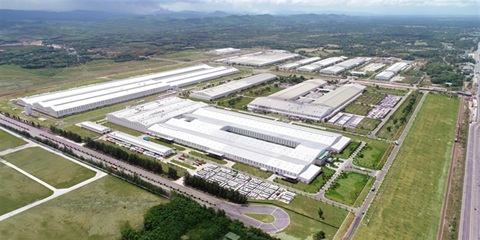
ĐÀ NẴNG GREEN-LIGHTS US$105 MILLION THAI DEVELOPMENT DEAL
The central city has approved an investment proposal by Thailand’s WHA Group to develop infrastructure for the 400ha WHA Đà Nẵng Industrial Park project on two communes of Thăng Bình and Đồng Dương, with an investment of more than VNĐ2.7 trillion (US$105 million). The city said it approved WHA Industrial Development International's status as an investor in the project, which is expected to take place between 2027 and 2034.

VIETNAM ECONOMY INVESTMENT
MOBILE PHONE EXPORTS RISE 20% TO $51.8 BILLION IN FIRST NINE MONTHS
Exports of mobile phones and components rose 20 per cent year-on-year to nearly US$51.8 billion in the first nine months of 2026, with China, the US and Republic of Korea accounting for more than half of the total. Shipments to the three markets reached a combined $26.18 billion, or 50.6 per cent of total exports of the product group during the period, according to data from the Vietnam Department of Customs under the Ministry of Finance.
INFRASTRUCTURE / CONSTRUCTION / LOGISTIC / PORT
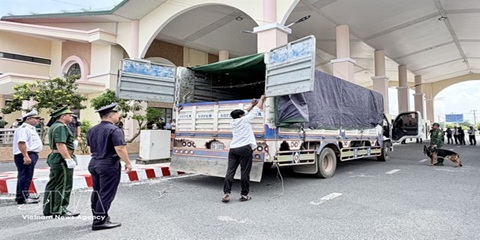
VIỆT NAM-CAMBODIA TRADE GATHERS PACE TOWARDS $20 BILLION TARGET
Trade between Việt Nam and Cambodia continues to grow, remaining a bright spot and a key pillar of bilateral cooperation as the two countries aim to raise two-way trade to US$20 billion in the coming years. After setting a record of more than $11.3 billion last year, bilateral trade reached about $8.7 billion in the first eight months of this year, up 8.3 per cent year on year.
VIETNAM ECONOMY INVESTMENT
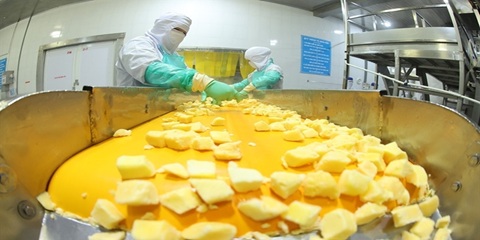
FRUIT AND VEGETABLE EXPORTS POISED TO HIT $10 BILLION IN 2026
Fruit and vegetable exports are on track to reach nearly US$10 billion in 2026, after rising 19.9 per cent year on year to nearly US$7.4 billion in the first nine months, driven by strong seasonal demand and abundant tropical fruit supplies. The Ministry of Agriculture and Environment said the growth reflected stronger international demand for fresh produce and processed agricultural products.
Events Sponsors






















