Want to be in the loop?
subscribe to
our notification
Business News
RESTRUCTURING CONSTRUCTION BUSINESSES
One of the key tasks of the Ministry of Construction is restructuring State-owned enterprises (SOEs) in 2018. Wherein, accelerating the equitisation of SOEs and divesting from equitised enterprises is a priority.
In the past 10 years, like other ministries, the Ministry of Construction has focused on restructuring and equitising SOEs, divesting and reorganising them to achieve planned production and business targets. So far, these changes have brought many positive results. The construction materials industry has developed strongly to meet domestic demand and export markets. In addition, the improving business environment and easier administrative procedures are also helpers.
The SOE restructuring and reorganisation towards market-based operations has forced many businesses to focus on key industries and specific strengths. Up to now, many road and underground construction companies with specific strengths have extraordinary development in levels and technology.
Many construction companies have mastered advanced designing and construction technologies in the world, such as high-rise buildings, large-span bridges, underground works and constructions on complicatedly geological grounds. At present, most of major national projects are carried out by Vietnamese companies, even Vietnamese overseas investment projects.
The outstanding growth in competencies and construction technologies is expressed in large-scaled projects like Dung Quat Industrial Park, Son La Hydropower Plant, Lai Chau Hydropower Plant, Ca Mau Gas - Power - Fertiliser Plant, National Conference Centre, National Assembly House and new Ba Dinh Conference Hall. Administration capacity, even EPC contract management, investment management in BOT, BT, BOO forms has made great progress.
To meet development demands and equitisation process and carry out the Government instructions, the Ministry of Construction has resolutely restructured SOEs and partially State-owned firms where State ownership is represented by the ministry. After a period of transforming into a new model, many units have grown their strengths.
In 2018, the ministry has markedly completed the equitisation of two giant construction firms - Song Da Corporation and Idico Corporation - into joint stock companies. The conversion to joint stock firms brought in a capital surplus of VND4,601.60 billion, of which VND4,082.60 billion was already paid to the State Budget.
The transformation into a joint stock company is considered a great success for Idico because it still suffered long year-on-year losses until 2010. But after 15 years, Idico developed into a well-organised system after the State partially divested its ownership.
Mr Ninh Manh Hong, Board Chairman of Idico Corporation, said, the decision to reduce State ownership in Idico to 36 per cent is very reasonable as it has caught the fancy of investors. According to the roadmap, Idico will complete State fund divestment in 2018.
In addition, the Ministry of Construction completed State capital divestment in many other corporations such as Bach Dang Construction Corporation (paid VND538.55 billion of capital surplus to the State Budget), Viglacera Corporation, Vietnam National Construction Consultants Corporation (VNCC), Hanoi Construction Corporation (Hancorp), FiCO Corporation, Lilama Corporation, Construction Corporation No. 1 (CC1), Vietnam Water and Environment Investment Corporation (Viwaseen), Construction Machinery Corporation (Coma) and Song Hong Holdings Corporation.
Construction Minister Pham Hong Ha said that SOE restructuring and equitisation help improve management capacity, competitiveness and performance of enterprises; and develop traditional and key professions by building leading specialised products and services.
Besides, State and corporate interests must be maximised; legitimate employee interests must be ensured; stable and sustainable development of enterprises must be ensured; and State capital is protected and developed during and after equitisation. Another very important factor is lawful restructuring and equitisation and serious fight against corruption and embezzlement in SOE restructuring, especially equitisation and divestment, stressed Minister Pham Hong Ha.
The story of restructuring Ha Long Cement and Song Thao Cement at Vietnam Cement Industry Corporation (Vicem) is cited by Minister Ha as a good example of effective leadership of authorities. Particularly, Vicem not only performs well but also demonstrates its calibre, ability and strength in accepting and restructuring successfully two cement plants in trouble and at financial loss.
The Ministry of Construction advocates divesting State capital flexibly and encourages corporations to do this without imposing any minimum rate as per Decision 1232/QD-TTg dated August 17, 2017 of the Prime Minister. Regarding the goal of capital withdrawal for the period of 2017 - 2020, the ministry will ensure fulfilling the Prime Minister's objectives in the whole period.
Thus, 2018 will be the peak year as the divestment at SOEs representatively owned by the Ministry of Construction is accelerated. The ministry will do this job seriously according to State policies and Party guidelines.
Source: VCCI
Related News

MEMBER CORNER / PROMOTIONS
HCMC | CERTIFIED SUSTAINABILITY PROFESSIONAL (CSP) TRAINING | REGISTRATION OPEN
As sustainability becomes deeply embedded in corporate strategy and supply-chain operations across Vietnam, Hong Kong Business Association Vietnam is pleased to endorse the upcoming Certified Sustainability Professional (CSP) training program by the Asia Institute for Sustainability (AIS) - a premier internationally recognized ESG credential in Vietnam.
VIETNAM ECONOMY INVESTMENT
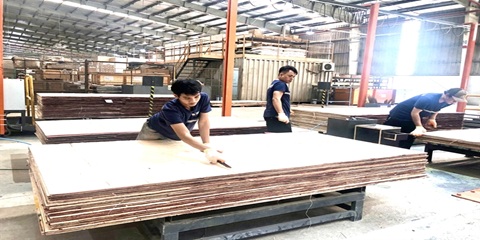
HCM CITY SAYS HOW IT PLANS TO ACHIEVE 10-11% ANNUAL EXPORT GROWTH FOR REST OF DECADE
The southern economic hub aims to strengthen its role as the country’s largest import-export centre while developing into a regional transhipment centre in Southeast Asia, supported by green and digital transformation and a circular economy. HCM City has outlined measures to expand production capacity, cut logistics costs, diversify export markets, and help businesses meet increasingly stringent international standards as it targets average annual export growth of 10-11 per cent through 2030.
VIETNAM ECONOMY INVESTMENT
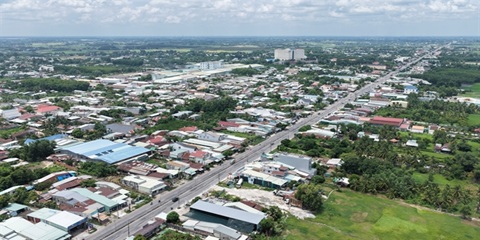
HCM CITY LEADS ECONOMIC RESTRUCTURING IN SOUTHEAST REGION
According to Associate Professor, Dr Vũ Tuấn Hưng, director of the Institute of Social Sciences of the Southern Region, the Southeast is a strategically important socio-economic space in Việt Nam’s development given its advantages in location, industry, trade, services, logistics, science and technology, urbanisation and human resources.
TECHNOLOGY
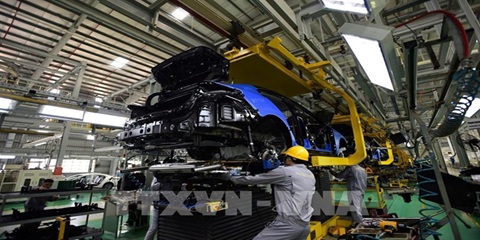
DIGITAL TRANSFORMATION TURNED INTO PRACTICAL TOOLS FOR PEOPLE, BUSINESSES
Việt Nam is moving its digital transformation agenda beyond policy frameworks and individual technology platforms towards practical applications that address everyday needs, as authorities seek measurable outcomes from science, technology and innovation. Under Politburo Resolution No. 57-NQ/TW issued on December 22, 2024, the implementation is increasingly shifting from simply completing assigned tasks towards developing concrete products and services for citizens and businesses.
TECHNOLOGY
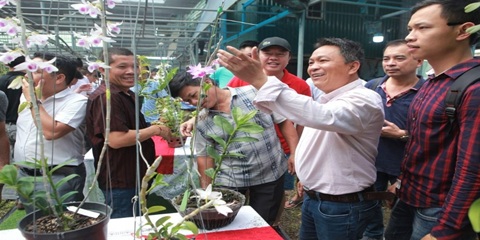
APPLYING TECHNOLOGY FOR ECONOMIC TRANSFORMATION
Having completed its new rural development program, Hanoi is shifting its focus toward improving development quality and building smart, sustainable rural areas. The transformation of Dong La orchid-growing village in An Khanh, a western commune of Hanoi, shows how digital technology is becoming a driver of production, market expansion, and higher incomes for local residents.
MEMBER CORNER / PROMOTIONS
VIGLACERA HONORED AS THE "LEADING GREEN INDUSTRIAL REAL ESTATE DEVELOPER 2026"
Organized by the Vietnam Investment Review, this prestigious awards program recognizes industry pioneers advancing eco-industrial parks, clean energy transition, and rigorous ESG standards. Outperforming competitors through a rigorous evaluation, Viglacera Corporation – JSC proudly ranked among the Top 5 highest-positioned enterprises in the Leading Green Industrial Real Estate Developers 2026 category, reinforcing its premier position in Vietnam’s industrial real estate sector.
Events Sponsors






















