Want to be in the loop?
subscribe to
our notification
Business News
SCALING UP THE ECO-INDUSTRIAL PARK MODEL IN VIETNAM
Eco-industrial parks (EIPs) are increasingly viewed as an optimal solution for transitioning industrial development toward sustainability, aligned with the goals of reducing emissions, developing the circular economy and enhancing national competitiveness. Beyond supporting international environmental commitments, the EIP model is becoming a key criterion for attracting foreign investors.
Currently, the EIP model is being incorporated into various long-term national development strategies like the Green Growth Strategy for 2021-2030 with a vision to 2050, the Strategy for Sustainable Production and Consumption to 2030, and Vietnam’s Nationally Determined Contributions (NDC) Action Program. More importantly, the development and replication of EIPs contribute directly to Vietnam’s commitments to achieving net-zero emissions by 2050 as announced at COP26 Conference.
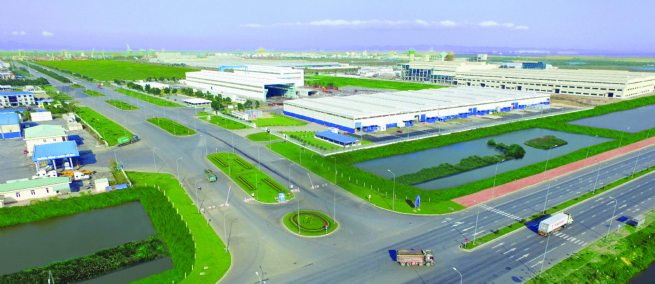
This demonstrates not only the strong political will of the Vietnamese government in addressing climate change but also opens up significant opportunities to mobilize international resources, including climate finance fund, energy transition partnerships, green development banks and technical assistance from such organizations as UNIDO, GIZ and JICA.
Traditional industrial park models are posing clear limitations, including high energy consumption, substantial waste generation, insufficient inter-firm linkages, and mounting pressure on the natural environment and local communities. Transitioning to EIPs is thus not only an environmental requirement but also a critical condition for improving the operational efficiency and sustainability of EIPs.
Ms. Le Thi Thanh Thao, Country Representative of the United Nations Industrial Development Organization (UNIDO) in Vietnam, said that EIPs exemplify an industrial approach that respects the limits of nature. She noted that the model helps businesses minimize environmental impacts while delivering tangible economic benefits by reducing production costs, optimizing resource use and boosting competitiveness. Especially as global investment and consumption trends shift toward environmentally friendly products and production models, the early adoption of EIPs will enable Vietnam to capture a new wave of high-quality FDI.
Despite their benefits, the development and transition to EIPs in Vietnam still face a lot of challenges. One of the most pressing issues is the lack of coherence in the legal framework, particularly regarding water reuse regulations, waste treatment and circularity, and technical standards for industrial symbiosis. The absence of unified guidelines from relevant ministries and agencies causes confusion for local authorities and businesses during implementation.
Moreover, the high upfront costs such as investments in water and gas treatment infrastructure, resource monitoring systems, and advanced technical solutions pose significant barriers to businesses, especially small and medium ones.
In this context, Vuong Thi Minh Hieu, Deputy Director of the Foreign Investment Agency (Ministry of Finance), emphasized the need for a comprehensive set of systemic solutions to accelerate the transition. First and foremost, it is essential to raise awareness and strengthen political commitment among all levels of government and the business community regarding the role of the circular economy within industrial parks. Next is enhancing commitment and collaboration between infrastructure developers and tenant businesses to build robust industrial symbiosis networks.
Notably, bold incentive policies need to be in place, including corporate income tax reductions or exemptions, preferential access to green credit, technology innovation support, and land lease reductions for businesses participating in or investing in EIPs. Alongside these efforts, Vietnam must actively mobilize resources from international financial institutions, development partners, commercial banks and climate support funds.
The development of industrial parks (IPs) and economic zones (EZs) not only meets economic growth demands but also ensures environmental sustainability, social equity and global competitiveness. According to the government’s strategic direction, by 2030, Vietnam aims to establish a stable and modern IP-EZ system that harmonizes economic development with environmental protection and social well-being. Expanding the EIP model is a critical step toward that goal, aiming to ensure that Vietnam's industrial growth is not only rapid but also sustainable. This approach affirms Vietnam’s role in the global value chain and demonstrates its capacity to fulfill sustainable development commitments to the international community.
Source: VCCI
Related News

INFRASTRUCTURE / CONSTRUCTION / LOGISTIC / PORT
VIỆT NAM-CAMBODIA TRADE GATHERS PACE TOWARDS $20 BILLION TARGET
Trade between Việt Nam and Cambodia continues to grow, remaining a bright spot and a key pillar of bilateral cooperation as the two countries aim to raise two-way trade to US$20 billion in the coming years. After setting a record of more than $11.3 billion last year, bilateral trade reached about $8.7 billion in the first eight months of this year, up 8.3 per cent year on year.
TECHNOLOGY
AI BEGINNING TO RESHAPE RECRUITMENT CRITERIA
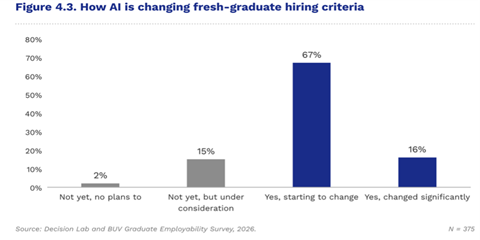
Digital literacy is the only capability area in which fresh graduates meet employers’ expectations, according to a new report. Yet, it is also the standard rising fastest, as businesses increasingly expect new hires to use AI effectively in the workplace. Some 83 per cent of employers say AI has changed, or is beginning to change, their hiring criteria, while 94 per cent report higher expectations for digital and AI capabilities than they had two to three years ago.

INFRASTRUCTURE / CONSTRUCTION / LOGISTIC / PORT
ĐÀ NẴNG GREEN-LIGHTS US$105 MILLION THAI DEVELOPMENT DEAL
The central city has approved an investment proposal by Thailand’s WHA Group to develop infrastructure for the 400ha WHA Đà Nẵng Industrial Park project on two communes of Thăng Bình and Đồng Dương, with an investment of more than VNĐ2.7 trillion (US$105 million). The city said it approved WHA Industrial Development International's status as an investor in the project, which is expected to take place between 2027 and 2034.

VIETNAM ECONOMY INVESTMENT
MOBILE PHONE EXPORTS RISE 20% TO $51.8 BILLION IN FIRST NINE MONTHS
Exports of mobile phones and components rose 20 per cent year-on-year to nearly US$51.8 billion in the first nine months of 2026, with China, the US and Republic of Korea accounting for more than half of the total. Shipments to the three markets reached a combined $26.18 billion, or 50.6 per cent of total exports of the product group during the period, according to data from the Vietnam Department of Customs under the Ministry of Finance.

VIETNAM ECONOMY INVESTMENT
FRUIT AND VEGETABLE EXPORTS POISED TO HIT $10 BILLION IN 2026
Fruit and vegetable exports are on track to reach nearly US$10 billion in 2026, after rising 19.9 per cent year on year to nearly US$7.4 billion in the first nine months, driven by strong seasonal demand and abundant tropical fruit supplies. The Ministry of Agriculture and Environment said the growth reflected stronger international demand for fresh produce and processed agricultural products.
GARMENT / TEXTILE
TEXTILE EXPORTS FACE DUAL CHALLENGES OF SUSTAINING ORDERS AND BOOSTING EFFICIENCY AMID GROWING COMPETITION
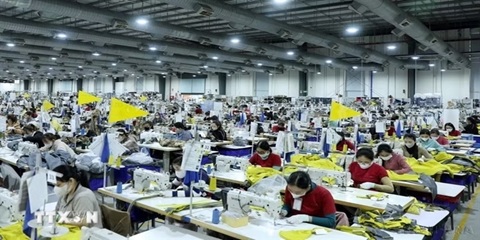
Data shows that the textile and garment sector maintained its growth momentum in the first nine months of this year. The industry's total export turnover reached an estimated US$35.721 billion in the first nine months of this year, up 3.3 per cent year-on-year. Despite posting encouraging export figures, Vietnamese textile and garment enterprises continue to navigate unpredictable market variables.
Events Sponsors






















