Want to be in the loop?
subscribe to
our notification
Business News
SEEKING TECHNOLOGICAL SOLUTIONS FOR VIETNAM GARMENT AND TEXTILE INDUSTRY
Improving manufacturing technologies, localising input materials and cooperating with countries with developed manufacturing technologies is considered a right direction for the garment and textile industry to take advantage of preferential tariff treatments.
This information was released at the “Belgian Technology Solutions for Vietnamese Textile Industry” roadshow which was recently held in Hanoi by the Vietnam Textile and Apparel Association (Vitas) in coordination with the Flanders Investment & Trade Agency (FIT) and the Belgian Textile Machinery Association (Symatex).
Vietnam now has about 4,000 garment and textile companies, including 650 foreign-invested firms. Specifically, 70 per cent are garment companies, 17 per cent are textile companies, 6 per cent are spinning companies, 4 per cent are dyeing companies and 3 per cent are supporting companies. This structure is disproportionate! This shows that Vietnam is very strong in the final stages of “cutting - sewing” while it is very weak in spinning, weaving and dyeing and is unable to supply enough of inputs for domestic garment and textile companies.
According to information at the forum, the domestic garment and textile industry needs about 10 billion square metres of fabric but it can produce just over 3 billion square metres a year due to weak capacity and technology. Applying advanced manufacturing technologies, increasing localisation ratio and improving productivity is vital for the industry to control material resources and take advantage of tariff preferences generated by free trade agreements (FTAs).
Mr Truong Van Cam, Vice President of Vitas, said that Vietnam has signed several FTAs, including very important ones like the EU - Vietnam FTA (EVFTA) and the Trans-Pacific Partnership (TPP). The garment and textile industry has been seen as a top beneficiary of these FTAs when tariffs are brought to zero. Nevertheless, to be beneficial, domestic enterprises must meet the complex rules of origin, e.g. “fabric forward” in EVFTA and “yarn forward” in TPP. Meanwhile, the industry is importing 80 per cent of materials from foreign countries, mostly from non-TPP and non-EVFTA nations. Improving product quality and increasing localisation ratio is the core issue of Vietnam's garment and textile sector.
He added that Vietnam has attracted many new foreign-invested garment and textile projects while domestic companies have spent more in the sector too. However, he noted that they face many land-related difficulties when they invest in Vietnam. Most localities turn down dyeing textile projects on fears of considerable environmental pollution.
Remarking on Belgian textile technologies, he pointed out that Belgian textile technologies are now not strange since many Vietnamese businesses are using them, especially textile equipment. The Flanders region produces the world's fastest air jet looms and always pioneers in electronic and digital technologies applied in garment and textile production inspection, monitoring and control.
Mr Joroen Vist, Director of Symatex, added that Belgium has established cooperation in garment and textile technologies with Vietnam for over 10 years and the country now wants to expand the presence in the Vietnamese market amid rising demand in this industry, especially when Vietnam joins new generation free trade agreements, including EVFTA.
Sharing this point of view, Mr Wouter Vanhees, Trade Counsellor of Flanders Investment and Trade Agency of Belgium (FIT), affirmed that the Belgian textile machinery industry is mainly engaged in production of interior cloths (floor coverings, carpet, upholstery, velvet, tablecloths), textile fabrics and technical textiles. Flanders textile machinery manufacturers always pursue cutting-edge technology strategies. As a result, they are always ranked Top 5 companies with most patents.
In addition to applying advanced technologies and cooperating with countries with advanced garment and textile technologies such as Belgium, delegates to the forum also underscored that Vietnam needs an appropriate dyeing textile development plan for localities. The formation of textile industry clusters will help increase the localisation ratio and reduce costs. Localities also need to prepare good infrastructure for industrial zones like land fund, water drainage and water supply systems.
Also at the forum, Vietnamese companies were informed of the latest development and solutions for weaving and Jacquard weaving, finishing and coating devices, weft insertion systems, production management and garment and textile parts.
Source: VCCI
Related News

INFRASTRUCTURE / CONSTRUCTION / LOGISTIC / PORT
VIỆT NAM-CAMBODIA TRADE GATHERS PACE TOWARDS $20 BILLION TARGET
Trade between Việt Nam and Cambodia continues to grow, remaining a bright spot and a key pillar of bilateral cooperation as the two countries aim to raise two-way trade to US$20 billion in the coming years. After setting a record of more than $11.3 billion last year, bilateral trade reached about $8.7 billion in the first eight months of this year, up 8.3 per cent year on year.
TECHNOLOGY
AI BEGINNING TO RESHAPE RECRUITMENT CRITERIA
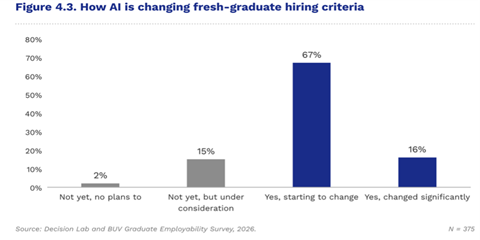
Digital literacy is the only capability area in which fresh graduates meet employers’ expectations, according to a new report. Yet, it is also the standard rising fastest, as businesses increasingly expect new hires to use AI effectively in the workplace. Some 83 per cent of employers say AI has changed, or is beginning to change, their hiring criteria, while 94 per cent report higher expectations for digital and AI capabilities than they had two to three years ago.

INFRASTRUCTURE / CONSTRUCTION / LOGISTIC / PORT
ĐÀ NẴNG GREEN-LIGHTS US$105 MILLION THAI DEVELOPMENT DEAL
The central city has approved an investment proposal by Thailand’s WHA Group to develop infrastructure for the 400ha WHA Đà Nẵng Industrial Park project on two communes of Thăng Bình and Đồng Dương, with an investment of more than VNĐ2.7 trillion (US$105 million). The city said it approved WHA Industrial Development International's status as an investor in the project, which is expected to take place between 2027 and 2034.

VIETNAM ECONOMY INVESTMENT
MOBILE PHONE EXPORTS RISE 20% TO $51.8 BILLION IN FIRST NINE MONTHS
Exports of mobile phones and components rose 20 per cent year-on-year to nearly US$51.8 billion in the first nine months of 2026, with China, the US and Republic of Korea accounting for more than half of the total. Shipments to the three markets reached a combined $26.18 billion, or 50.6 per cent of total exports of the product group during the period, according to data from the Vietnam Department of Customs under the Ministry of Finance.

VIETNAM ECONOMY INVESTMENT
FRUIT AND VEGETABLE EXPORTS POISED TO HIT $10 BILLION IN 2026
Fruit and vegetable exports are on track to reach nearly US$10 billion in 2026, after rising 19.9 per cent year on year to nearly US$7.4 billion in the first nine months, driven by strong seasonal demand and abundant tropical fruit supplies. The Ministry of Agriculture and Environment said the growth reflected stronger international demand for fresh produce and processed agricultural products.
GARMENT / TEXTILE
TEXTILE EXPORTS FACE DUAL CHALLENGES OF SUSTAINING ORDERS AND BOOSTING EFFICIENCY AMID GROWING COMPETITION
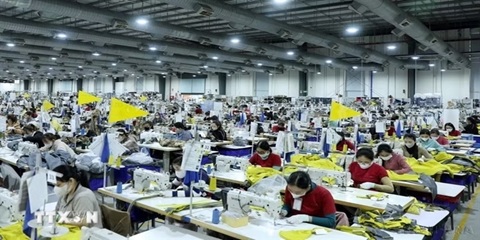
Data shows that the textile and garment sector maintained its growth momentum in the first nine months of this year. The industry's total export turnover reached an estimated US$35.721 billion in the first nine months of this year, up 3.3 per cent year-on-year. Despite posting encouraging export figures, Vietnamese textile and garment enterprises continue to navigate unpredictable market variables.
Events Sponsors






















