Want to be in the loop?
subscribe to
our notification
Business News
SMART-CITY DEVELOPMENT MUST BE LINKED WITH DIGITAL TRANSFORMATION PROCESS
Smart-city development in Việt Nam must be linked with the digital transformation process in localities.
Deputy Minister of Information and Communications Nguyễn Huy Dũng made the statement at the online ASOCIO Smart City Summit held on Tuesday morning.
The five-day summit was organised by the Asian-Oceanian Computing Industry Organisation (ASOCIO) and the Việt Nam Software and IT Services (VINASA). The summit will discuss modern technology trends applied in smart cities with five sessions on digital Government; smart real estate; smart industrial parks; digital platforms and solutions for smart cities; and start-ups.
Dũng said that smart-city development was an issue that had received the attention of many localities across the country.
Some localities had started to apply the smart city model and achieved initial results, he said.
“However, I think it is still a new model not only for Việt Nam but also for countries that applied the model before us,” he said.
It required us to constantly study, exchange experiences and draw lessons both domestically and internationally to serve the development of smart cities in Việt Nam, he said.
During the COVID-19 pandemic, some smart cities around the world failed to protect people's lives and health against the spread of the disease, he said.
The pandemic had given us an expensive but very valuable lesson to seriously review the limitations and then set directions for the deployment of smart cities in the future, he said.
Dũng also said the information and communications ministry, with the mission of leading and orienting the process of national digital transformation, including information and communications technology (ICT) for smart-city development, had made efforts to coordinate with relevant ministries, localities and international agencies to promote the deployment of smart cities in Việt Nam.
The ministry already issued guiding documents to create a legal framework for smart-city development, including the ICT Reference Framework, the Key Performance Indicators (KPIs) for Smart Cities and the guidance of the IT application to provide services and utilities in the smart city, he said.
Việt Nam was accelerating the national digital transformation process, he said.
“We believe that smart-city development is also the implementation of the digital transformation in localities,” he said.
Urgent demand
Speaking at the summit’s opening ceremony, Nguyễn Văn Khoa, President of VINASA, said that building smart cities was not only an inevitable trend but also an urgent demand in Việt Nam and in the world.
The pandemic over the past two years had been promoting the process of building and developing smart cities with many issues from data collection and management; solutions for pandemic prevention and control as well as the smart city's operation and management during the recovery period, he said.
Along with digital transformation, smart cities were becoming a new development trend of cities in the smart era, helping the cities to optimise resources, develop sustainably, bring more safety and convenience for people and contribute to socio-economic development, he said.
The summit was more meaningful as participants discussed recovery and growth while countries were struggling with the pandemic, of which, cities and urban areas suffered the most, he said.
In Việt Nam, the Government issued Decision No 950/QĐ-TTg in 2018, approving the Project of Sustainable Smart City Development in Việt Nam in 2018-25, with a vision towards 2030.
The Politburo issued Resolution No 52-NQ/TW in 2019 on a number of guidelines and policies to actively participate in the fourth industrial revolution. The resolution sets a target that by 2025 there will be at least three smart cities in the three key economic regions of the North, the South and Central.
By 2030, a number of smart cities will be formed in three regions and gradually connecting to the smart city network in the region and the world.
Source: VNS
Related News

CHARITY / EXHIBITION / OTHER EVENTS
INVESTMENT OPPORTUNITIES IN CA MAU PROVINCE: 96 PROJECTS AND 20 STRATEGIC PROJECTS
We are pleased to share with you information on investment projects currently seeking investors in Ca Mau Province. Should your esteemed company or association be interested, we kindly invite you to review the project information and complete the registration form via the links provided. The Ho Chi Minh City Investment and Trade Promotion Centre (ITPC) will consolidate the expressions of interest and facilitate connections with the leadership of Ca Mau Province at a meeting tentatively scheduled for 13 November 2026 in Ho Chi Minh City.

MEMBER CORNER / PROMOTIONS
BẰNG KIỀU LIVESHOW - A SYMPHONY OF LOVE UNDER THE GOLDEN GLOW
A masterclass in live music that takes the audience on a soulful journey through immortal love songs, guided by the peerless artistry and emotive storytelling of renowned singer Bằng Kiều. The highlight of the night is his seamless musical chemistry with special guest Triệu Hồng Ngọc, promising passionate and deeply resonant duets inside the magnificent Grand Ballroom.
INFRASTRUCTURE / CONSTRUCTION / LOGISTIC / PORT
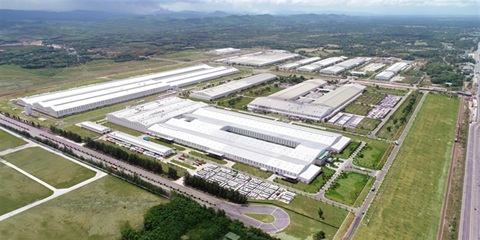
ĐÀ NẴNG GREEN-LIGHTS US$105 MILLION THAI DEVELOPMENT DEAL
The central city has approved an investment proposal by Thailand’s WHA Group to develop infrastructure for the 400ha WHA Đà Nẵng Industrial Park project on two communes of Thăng Bình and Đồng Dương, with an investment of more than VNĐ2.7 trillion (US$105 million). The city said it approved WHA Industrial Development International's status as an investor in the project, which is expected to take place between 2027 and 2034.
VIETNAM ECONOMY INVESTMENT
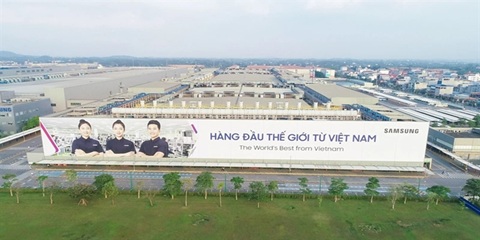
MOBILE PHONE EXPORTS RISE 20% TO $51.8 BILLION IN FIRST NINE MONTHS
Exports of mobile phones and components rose 20 per cent year-on-year to nearly US$51.8 billion in the first nine months of 2026, with China, the US and Republic of Korea accounting for more than half of the total. Shipments to the three markets reached a combined $26.18 billion, or 50.6 per cent of total exports of the product group during the period, according to data from the Vietnam Department of Customs under the Ministry of Finance.
INFRASTRUCTURE / CONSTRUCTION / LOGISTIC / PORT
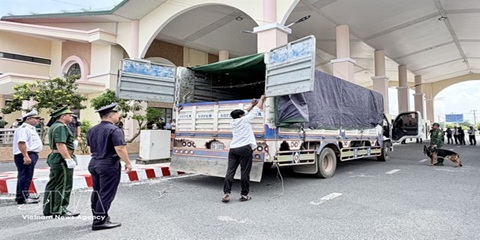
VIỆT NAM-CAMBODIA TRADE GATHERS PACE TOWARDS $20 BILLION TARGET
Trade between Việt Nam and Cambodia continues to grow, remaining a bright spot and a key pillar of bilateral cooperation as the two countries aim to raise two-way trade to US$20 billion in the coming years. After setting a record of more than $11.3 billion last year, bilateral trade reached about $8.7 billion in the first eight months of this year, up 8.3 per cent year on year.
VIETNAM ECONOMY INVESTMENT
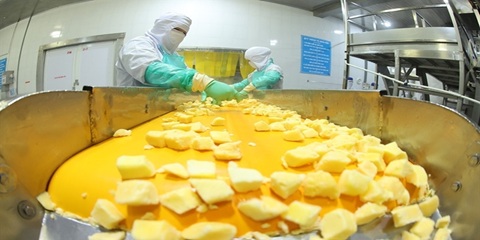
FRUIT AND VEGETABLE EXPORTS POISED TO HIT $10 BILLION IN 2026
Fruit and vegetable exports are on track to reach nearly US$10 billion in 2026, after rising 19.9 per cent year on year to nearly US$7.4 billion in the first nine months, driven by strong seasonal demand and abundant tropical fruit supplies. The Ministry of Agriculture and Environment said the growth reflected stronger international demand for fresh produce and processed agricultural products.
Events Sponsors






















