Want to be in the loop?
subscribe to
our notification
Business News
SUPPORTIVE SOLUTIONS NEEDED FOR ENTERPRISES
Supportive solutions for businesses need to be implemented faster and stronger to improve the capacity of businesses and increase linkage among them, according to experts.
In the context of a pandemic-disrupted supply chain and political conflict, support from the Government and organisations for the linkage among businesses is significant.
According to the Việt Nam Association of Supporting Industries (VASI), to improve the capacity of Vietnamese enterprises, it is necessary to have supportive policies to reduce costs, easy access to credit and preferential interest rates for businesses in investment activities and production. There are also solutions for training and improvement of management.
Many parts suppliers for motorcycle production want to have new investment but face large capital obstacles because there is no available collateral after two years of fighting COVID-19.
Đào Phan Long, chairman of the Việt Nam Association of Mechanical Enterprises (VAMI), said that the market is important. The supply has met the demand in the motorbike industry, while the electronics and automobile industries are facing difficulties due to requirements for large investment and high technology. Therefore, few enterprises dare to put investment in production expansion.
Long said ministries and sectors should quickly provide solutions to support domestic enterprises and encourage foreign direct investment (FDI) companies to implement localisation with tax, labour, and research and development activities incentives.
Ministries and branches should also create favourable conditions to promote support and linkages between Vietnamese manufacturing enterprises and foreign companies.
Nguyễn Văn Đoàn, the representative of SKD Vietnam Precision Mechanic Company, said now the company was a part supplier for Samsung and had a linkage in production with Japanese enterprises. The pandemic and political tensions made it difficult to connect and find raw materials. Meanwhile, the company had poor finance and management experience, so it was looking forward to receiving support to strengthen cooperation and expand production.
According to VAMI, the demand for Việt Nam's machinery and equipment is very large, with a value of US$300 billion by 2030.
To participate in this potential market, besides the business efforts, it is necessary to have support from the State with a synchronous and stable policy system for sustainable development. The business community has overcome the pandemic. They have not recovered, so they need more practical and open policies.
The Ministry of Industry and Trade said to support the enterprises, the ministry would continue to strengthen and improve the operational efficiency of centres on support for industrial development in the North and the South. Now, these centres were actively cooperating with FDI companies in Việt Nam, such as Toyota, Mitsubishi and Canon, in finding suitable suppliers to participate in the value chains of these firms.
Nguyễn Quốc Việt, deputy director of the Việt Nam Institute for Economic and Policy Research (VEPR), said the most important thing was to institutionalise policies to promote stronger participation of domestic enterprises in the global value/production/supply chains.
To help the domestic small and medium-sized enterprises (SMEs) improve their competitiveness, the State should continue to promote the reduction of business costs for enterprises and prevent acts that generate unofficial costs for businesses. This would improve the quality of the business environment, Việt said.
There should be a mechanism to support connecting businesses who are finding domestic supply chains to domestic enterprises to increase localisation and have technical support to improve the capacity of domestic enterprises.
Besides that, the State should create favourable conditions for domestic private enterprises to improve productivity and efficiency of production and business, and gain experience in operation and management from foreign enterprises.
Meanwhile, the private enterprises need to innovate themselves, establish a supporting industry ecosystem and cooperate with large foreign technology groups to participate more in the global value chains.
Challenge
According to VASI, about 300 enterprises are participating in the production supply chain for foreign companies in Việt Nam, of which the motorcycle industry has a high rate of localisation, while the electronics and automobile industries have a low rate of localisation.
Việt Nam is still importing about 90 per cent of electronic parts. For the automobile industry, Việt Nam has 60 enterprises as part suppliers at level 1 for foreign partners and approximately 145 enterprises as part suppliers at level 2. It must import more than 70 per cent of components for the supporting industry.
Trương Thị Chí Bình, vice chairwoman and general secretary of the Việt Nam Supporting Industries Association, said that linking with foreign enterprises was the fastest way for domestic enterprises to participate in global supply chains. However, the COVID-19 pandemic and political conflicts had made the connection more difficult.
According to foreign organisations on consulting and supporting business associations, Vietnamese enterprises have not yet met quality, price, and delivery time requirements.
"Enterprises must ensure competitive prices, transparency, flexibility, and delivery time to meet requirements of the supply chains. However, if they meet the quality, the competitive price is still difficult for Vietnamese enterprises because their prices are at least 20 per cent higher than the prices of other existing suppliers," Bình said.
When entering Việt Nam, large manufacturing corporations have their suppliers. These suppliers are experienced and have advanced production networks with low cost and large output. Meanwhile, domestic enterprises have weak management and no advanced production, leading to low price competitiveness.
VAMI chairman Long said that over the years, a series of limitations in management mechanisms and policies of the State and weakness of enterprises had caused the mechanical engineering industry not to develop, so it had not yet met the requirements of the world market.
With the pandemic, the supply of goods and materials was disrupted, and the linkages between businesses were loose, causing the firms to stop production and leave the market.
In the domestic market, mechanical engineering enterprises also found it difficult to compete with foreign companies. Many large industries mainly used imported mechanical products or made by FDI enterprises, including sectors of construction, transportation, irrigation works, oil and gas, marine economy, shipbuilding, automobiles, and motorbikes.
Nguyễn Trung Hiếu, Head of Business Planning and External Relations Department, Toyota Motor Vietnam Company, said that Việt Nam was weak in producing raw materials such as steel and plastic, had low technical production and small market scale. These factors caused component production costs to rise, a barrier to supply chain linkages.
Source: VNS
Related News

CHARITY / EXHIBITION / OTHER EVENTS
INVESTMENT OPPORTUNITIES IN CA MAU PROVINCE: 96 PROJECTS AND 20 STRATEGIC PROJECTS
We are pleased to share with you information on investment projects currently seeking investors in Ca Mau Province. Should your esteemed company or association be interested, we kindly invite you to review the project information and complete the registration form via the links provided. The Ho Chi Minh City Investment and Trade Promotion Centre (ITPC) will consolidate the expressions of interest and facilitate connections with the leadership of Ca Mau Province at a meeting tentatively scheduled for 13 November 2026 in Ho Chi Minh City.

MEMBER CORNER / PROMOTIONS
BẰNG KIỀU LIVESHOW - A SYMPHONY OF LOVE UNDER THE GOLDEN GLOW
A masterclass in live music that takes the audience on a soulful journey through immortal love songs, guided by the peerless artistry and emotive storytelling of renowned singer Bằng Kiều. The highlight of the night is his seamless musical chemistry with special guest Triệu Hồng Ngọc, promising passionate and deeply resonant duets inside the magnificent Grand Ballroom.
INFRASTRUCTURE / CONSTRUCTION / LOGISTIC / PORT
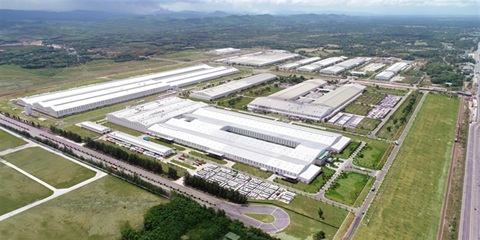
ĐÀ NẴNG GREEN-LIGHTS US$105 MILLION THAI DEVELOPMENT DEAL
The central city has approved an investment proposal by Thailand’s WHA Group to develop infrastructure for the 400ha WHA Đà Nẵng Industrial Park project on two communes of Thăng Bình and Đồng Dương, with an investment of more than VNĐ2.7 trillion (US$105 million). The city said it approved WHA Industrial Development International's status as an investor in the project, which is expected to take place between 2027 and 2034.
VIETNAM ECONOMY INVESTMENT
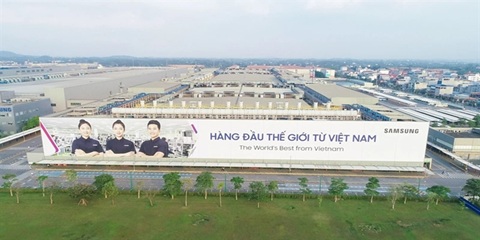
MOBILE PHONE EXPORTS RISE 20% TO $51.8 BILLION IN FIRST NINE MONTHS
Exports of mobile phones and components rose 20 per cent year-on-year to nearly US$51.8 billion in the first nine months of 2026, with China, the US and Republic of Korea accounting for more than half of the total. Shipments to the three markets reached a combined $26.18 billion, or 50.6 per cent of total exports of the product group during the period, according to data from the Vietnam Department of Customs under the Ministry of Finance.
INFRASTRUCTURE / CONSTRUCTION / LOGISTIC / PORT
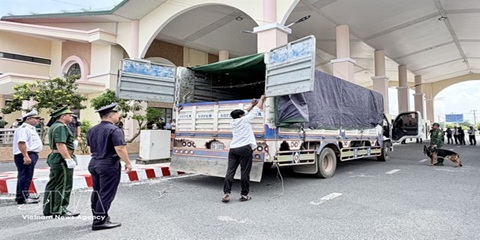
VIỆT NAM-CAMBODIA TRADE GATHERS PACE TOWARDS $20 BILLION TARGET
Trade between Việt Nam and Cambodia continues to grow, remaining a bright spot and a key pillar of bilateral cooperation as the two countries aim to raise two-way trade to US$20 billion in the coming years. After setting a record of more than $11.3 billion last year, bilateral trade reached about $8.7 billion in the first eight months of this year, up 8.3 per cent year on year.
VIETNAM ECONOMY INVESTMENT
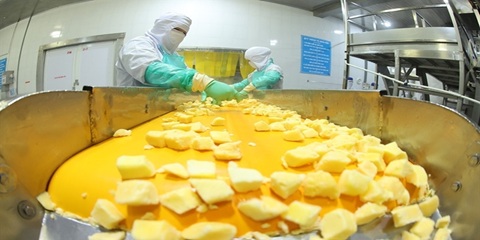
FRUIT AND VEGETABLE EXPORTS POISED TO HIT $10 BILLION IN 2026
Fruit and vegetable exports are on track to reach nearly US$10 billion in 2026, after rising 19.9 per cent year on year to nearly US$7.4 billion in the first nine months, driven by strong seasonal demand and abundant tropical fruit supplies. The Ministry of Agriculture and Environment said the growth reflected stronger international demand for fresh produce and processed agricultural products.
Events Sponsors






















