Want to be in the loop?
subscribe to
our notification
Business News
TARIFF CUT LEADS TO LOWER PRICES OF IMPORTED CBU AUTOS
Several auto firms have adjusted down prices of completely-built-up (CBU) autos imported from regional markets following an import tax reduction this year in line with a roadmap of the ASEAN Trade in Goods Agreement (ATIGA).
Toyota Vietnam has lowered the selling price of Yaris G cars by VND47 million to VND642 million per unit and Yaris E by VND44 million to VND592 million. Both models are imported from Thailand.
Honda Vietnam now retails an Accord auto made in Thailand for VND1.39 billion, down VND80 million from last year.
Car importers credited the lower prices of cars imported from regional markets to the duty on CBU autos being slashed to 30% this year from 40% in 2016 under the ATIGA. They said cars assembled in Thailand and Indonesia make a majority of autos imported into Vietnam from the ASEAN region.
An auto trading firm calculated a reduction of 10 percentage points will lead to a decline of 6-7% in the retail price of an imported car if new taxes and fees are not slapped on it.
Other auto firms have not announced their new selling prices but market watchers said they would have to follow suit soon if they wanted to retain their market shares and keep their sales stable.
Experts noted not many types of imported cars would be sold at lower prices this year since auto joint ventures would not bring in autos that can compete with the models they manufacture in this market. Favored car models of Toyota, Ford, Honda and Isuzu are assembled in Vietnam as components are subject to import tariffs of 15-25%, lower than those on CBU autos.
Currently, most CBU autos imported from ASEAN markets are pick-up products including Toyota Hilux, Ford Ranger, Nissan Navara, Chevrolet Colorado, Isuzu D-Max, and Mitsubishi Triton. These imports are entitled to a duty of 5% so a further tax cut will not result in a significant fall in their selling prices on the domestic market.
Experts said if the duty on CBU auto imports from regional countries is slashed from 30% to 0% in January 1 next year, Yaris cars will retail for less than VND500 million a unit, down VND130-140 billion compared to the current price.
From 2018, the special consumption tax for autos with engine capacity of 1.5 liters or smaller will slide to 35% from the current 40%, leading prices of such imported CBU autos to be lower than those of locally-assembled autos. Therefore, it is difficult for domestic cars to compete with imported ones if their prices are not adjusted down.
The tariffs on autos imported from other markets outside ASEAN have fallen as Vietnam committed when joining the World Trade Organization (WTO). Accordingly, the duties on 4-wheel-drive cars, sport utility vehicles (SUV) and autos with engines of more than 3.0 liters have been cut to 58% from 70%, to 47% from 51%, and to 58% from 61% since January 1 this year.
This is the reason why Toyota Vietnam has revised down the price of Lexus LX570 imported from Japan by VND210 million to VND7.81 billion, Lexus LS460L and Lexus GX460 by VND140 million to VND7.54 billion and VND5.06 billion respectively.
Currently, Lexus RX350 AWD, Lexus GS350 and Lexus ES350 retail for VND3.81 billion, VND4.39 billion and VND3.21 billion, representing respective decreases of VND100 million, VND80 million and VND50 million.
Toyota Vietnam sells Land Prado TXL and Toyota Land Cruiser VX imported from Japan at prices that are VND164 million and VND70 million lower than last year.
However, other auto firms have not reduced prices despite lower import duties in accordance with the country’s commitments to the WTO.
Source: The Saigon Times
Related News
VIETNAM ECONOMY INVESTMENT
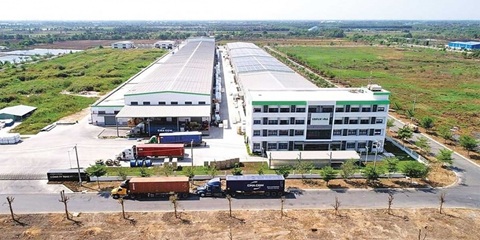
FOREIGN INVESTORS SEEKING A SYNCHRONISED MANUFACTURING ECOSYSTEM
Instead of focusing only on land costs and incentives as usual, foreign investors are seeking a synchronised manufacturing ecosystem, from stable power supply and logistics to shared infrastructure and the convenience of completing residence procedures for experts to serve their long-term investment in the country.
INFRASTRUCTURE / CONSTRUCTION / LOGISTIC / PORT
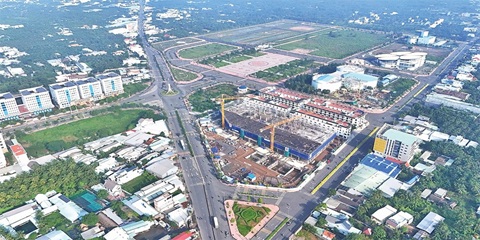
DONG THAP PROVINCE STEPS UP INDUSTRIAL EXPANSION AND INFRASTRUCTURE CONNECTIVITY
Accelerating public investment, strengthening inter-regional connectivity, and expanding industrial land are helping Dong Thap efficiently bolster competitiveness and drive economic growth. Following the 2025 merger of the former Dong Thap and Tien Giang provinces, the expanded Dong Thap province in the Mekong Delta faces mounting pressure to accelerate infrastructure development and strengthen connectivity among local economic zones, urban areas, industrial parks (IPs), and production centres.
PROPERTY / INDUSTRIAL ZONE
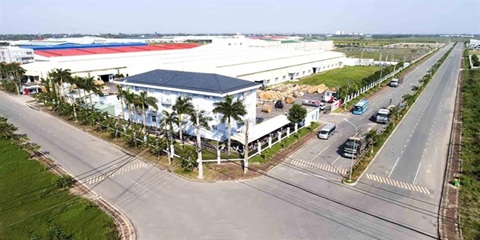
HCM CITY ATTRACTS US$5.7 BILLION INTO EXPORT PROCESSING AND INDUSTRIAL ZONES
HCM City attracted US$5.7 billion in domestic and foreign investment into its export processing and industrial zones during the first nine months of 2026. The figure exceeded the city's full-year target by 31 per cent, highlighting strong momentum in high-quality industrial investment under Resolution No.10-NQ/TW. Total investment reached 131 per cent of the 2026 target of $4.25 billion and represented a 29 per cent increase compared with the same period in 2025, according to the city's Export Processing and Industrial Zones Authority (HEPZA).

BANKING / FINANCE / INSURANCE / TAX
REMITTANCES TO HCM CITY RISE NEARLY 40% IN Q3
Remittances to HCM City reached more than US$2.83 billion in the third quarter of this year, up 39.5 per cent from the previous quarter and 3.6 per cent year-on-year. This was the first quarter showing positive annual growth this year, helping narrow the decline in remittance inflows over the first nine months. According to the State Bank of Vietnam (SBV)’s Regional Branch 2, remittances transferred to HCM City through credit institutions and economic organisations totalled $2.835 billion in Q3, an increase of more than $802 million from the previous quarter.
VIETNAM ECONOMY INVESTMENT
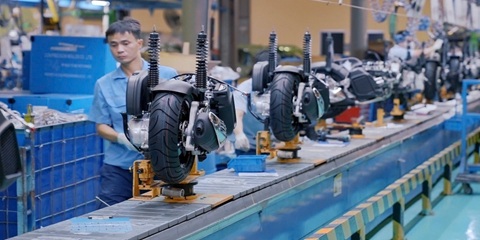
LOCALITIES REPORT BREAKTHROUGH RESULTS IN FDI IN FIRST NINE MONTHS
In Ho Chi Minh City, total registered capital reached $17.2 billion in the first nine months, up 4.2 times from the same period last year. The figure included more than $9.35 billion in newly registered capital and over $4.9 billion in additional capital for existing projects. Foreign investors also registered more than $2.9 billion through capital contributions and share purchases.

TECHNOLOGY
TECH SECTOR GROWTH OPENS UP OPPORTUNITIES FOR VIỆT NAM TO GO GLOBAL
The growth of the electronics, semiconductor and high-tech sectors worldwide is opening up a variety of opportunities for Vietnamese enterprises to integrate more deeply into the global supply chain. However, to become suppliers for these corporations, domestic enterprises must meet rigorous standards regarding quality, technology, productivity and order fulfilment capabilities.
Events Sponsors






















