Want to be in the loop?
subscribe to
our notification
Business News
TAX, CUSTOMS POLICY DIALOGUE CONFERENCE WITH BUSINESSES:THOROUGH RESOLUTION SET FORTH
[09-12-2016] The Vietnam Chamber of Commerce and Industry (VCCI) has recently collaborated with the General Department of Vietnam Customs and the General Department of Taxation (under the Ministry of Finance) to organise the Tax and Customs Policy Dialogue Conference with businesses in 2016, drawing over 400 domestic and foreign enterprises.
This annual conference brought together financial policymakers and enforcement agencies with the business community.
Many new points in business support
Most attending companies praised reform efforts of tax and customs authorities to facilitate business operations. Mr Cao Anh Tuan, Deputy General Director of the General Department of Taxation, said, tax policies have been revised and supplemented to match new economic changes of the country and global integration trends since October 2015 and this move has helped solve a lot of difficulties facing taxpayers. Specifically, the Ministry of Finance submitted to the Government and the National Assembly to introduce Law No. 106/2016/QH13 dated April 6, 2016 on amendments and supplements to some articles of the Law on VAT, the Law on Special Consumption Tax and the Law on Tax Administration, effective from July 1, 2016; Decree No. 100/2016/ND-CP of the Government dated July 1, 2016 on detailed guides on the implementation of some articles of the Law on amendments and supplements to some articles of to the Law on VAT, the Law on Special Consumption Tax and the Law on Tax Administration, effective from July 1, 2016.
Besides, the General Department of Taxation has sped up administrative reform and raised taxpayer satisfaction. Since early this year, some tax administrative procedures have been standardised and reduced from 385 procedures to 300. The authority will continue to review, amend and supplement procedures and rules on tax administration. The General Department issued decisions to amend and supplement 51 out of 70 processes and rules. With respect to electronic tax declaration, all localities nationwide have implemented electronic tax declaration for businesses. In 2016, tax authorities have continued to expand online tax service for individuals, with landlords being the first to enjoy this method, Mr Tuan said. Regarding electronic tax payment, the General Department of Taxation signed agreements with 45 commercial banks to implement electronic tax payment in all 63 provinces and cities, thus reducing the tax payment time by 420 hours (from 537 hours to 117 hours). The total value of taxes paid via the electronic portal of the General Department of Taxation was VND370 billion in the first 10 months of 2016.
As for the customs sector, Mr Vu Ngoc Anh, Deputy General Director of the General Department of Customs, said, the customs sector continued to review, simplify and specify procedures. Currently, all 168 customs administrative procedures are performed via the VNACCS/VCIS system. As of August 29, 2016, ten ministries officially got connected with the National Single Window. In September 2015, the National Single Window stood ready to connect with the ASEAN Single Window, which became operational in 2016. The customs sector signed cooperation agreements to collect export and import duties with 30 banks. VND145,895 billion of taxes was collected via registered banks (from January 1, 2016 to August 15, 2016.)
Timely solution
Representing the business community, VCCI Vice President Hoang Quang Phong proposed some contents related to tax and customs fields. As for tax field, he suggested shortening the time of tax settlement for corporate bankruptcy. As for customs field, current HS regulations are still inadequate and troublesome for enterprises, for example, weak synchronisation of digital signatures and actual requirements in tax refund procedures and long overlapping post-clearance audits, which require businesses to spend more time on these works.
The conference addressed a number of requests raised by businesses. Traphaco Joint Stock Company said that it has 20 branches with separate seals, tax codes and equal VAT rates but they are obliged to use dependent accounting. Mr Cao Anh Tuan cited that Circular 219 stating this regulation: A company can archive VAT invoices and delivery invoices and the transportation of goods must have delivery invoices.
A representative of LPD Advanced Sunstone Joint Stock Company said his company directly imported exclusive technology and engines from Italia, with some meeting Vietnamese standards and some not meeting them. Therefore, the company must frequently re-export its engines out of standard, thus causing a lot of its expenses. In 2016, its re-export costs accounted for 40 per cent of its import costs. The company has requested authorities to impose immunity to his company case or accept foreign standards. In this regard, Mr Vu Ngoc Anh of the General Department of Customs, said, this request should be sent to the Ministry of Science and Technology to ask for the treatment it sought.
At the dialogue, officials from the Ministry of Finance answered a lot of questions about automotive business. Mr Pham Dinh Thi, Director of the Tax Policy Department under the Ministry of Finance, explained that, changes in automobile import tax rates are resulted from the enactment of the Law on Special Consumption Tax effective on July 1, 2016, adding that the Government govern the issue according to harmonious interests of all stakeholders.
Source: VCCI
Related News
VIETNAM ECONOMY INVESTMENT
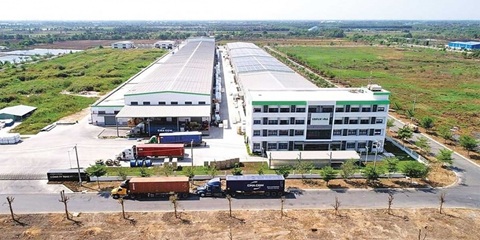
FOREIGN INVESTORS SEEKING A SYNCHRONISED MANUFACTURING ECOSYSTEM
Instead of focusing only on land costs and incentives as usual, foreign investors are seeking a synchronised manufacturing ecosystem, from stable power supply and logistics to shared infrastructure and the convenience of completing residence procedures for experts to serve their long-term investment in the country.
INFRASTRUCTURE / CONSTRUCTION / LOGISTIC / PORT
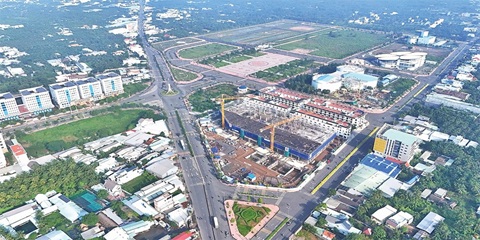
DONG THAP PROVINCE STEPS UP INDUSTRIAL EXPANSION AND INFRASTRUCTURE CONNECTIVITY
Accelerating public investment, strengthening inter-regional connectivity, and expanding industrial land are helping Dong Thap efficiently bolster competitiveness and drive economic growth. Following the 2025 merger of the former Dong Thap and Tien Giang provinces, the expanded Dong Thap province in the Mekong Delta faces mounting pressure to accelerate infrastructure development and strengthen connectivity among local economic zones, urban areas, industrial parks (IPs), and production centres.
PROPERTY / INDUSTRIAL ZONE
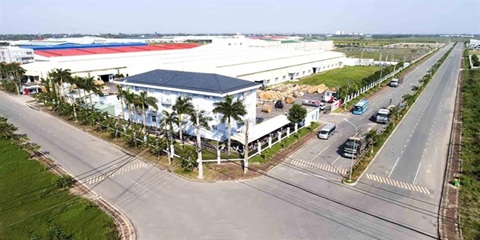
HCM CITY ATTRACTS US$5.7 BILLION INTO EXPORT PROCESSING AND INDUSTRIAL ZONES
HCM City attracted US$5.7 billion in domestic and foreign investment into its export processing and industrial zones during the first nine months of 2026. The figure exceeded the city's full-year target by 31 per cent, highlighting strong momentum in high-quality industrial investment under Resolution No.10-NQ/TW. Total investment reached 131 per cent of the 2026 target of $4.25 billion and represented a 29 per cent increase compared with the same period in 2025, according to the city's Export Processing and Industrial Zones Authority (HEPZA).

BANKING / FINANCE / INSURANCE / TAX
REMITTANCES TO HCM CITY RISE NEARLY 40% IN Q3
Remittances to HCM City reached more than US$2.83 billion in the third quarter of this year, up 39.5 per cent from the previous quarter and 3.6 per cent year-on-year. This was the first quarter showing positive annual growth this year, helping narrow the decline in remittance inflows over the first nine months. According to the State Bank of Vietnam (SBV)’s Regional Branch 2, remittances transferred to HCM City through credit institutions and economic organisations totalled $2.835 billion in Q3, an increase of more than $802 million from the previous quarter.

VIETNAM ECONOMY INVESTMENT
LOCALITIES REPORT BREAKTHROUGH RESULTS IN FDI IN FIRST NINE MONTHS
In Ho Chi Minh City, total registered capital reached $17.2 billion in the first nine months, up 4.2 times from the same period last year. The figure included more than $9.35 billion in newly registered capital and over $4.9 billion in additional capital for existing projects. Foreign investors also registered more than $2.9 billion through capital contributions and share purchases.

TECHNOLOGY
TECH SECTOR GROWTH OPENS UP OPPORTUNITIES FOR VIỆT NAM TO GO GLOBAL
The growth of the electronics, semiconductor and high-tech sectors worldwide is opening up a variety of opportunities for Vietnamese enterprises to integrate more deeply into the global supply chain. However, to become suppliers for these corporations, domestic enterprises must meet rigorous standards regarding quality, technology, productivity and order fulfilment capabilities.
Events Sponsors






















