Want to be in the loop?
subscribe to
our notification
Business News
TAX SECTOR APPROACHING FOURTH INDUSTRIAL REVOLUTION TO ENHANCE NATIONAL COMPETITIVENESS
By carrying out consistent technology solutions, the tax sector is actively approaching the Fourth Industrial Revolution to accelerate administrative reform and enhance national competitiveness.
In 2017, up to 99.64 per cent of companies declared taxes on electronic means and 97.9 per cent paid taxes online. Over VND392,160 billion of taxes and over 2.4 million electronic tax transactions were made online in the year. As many as 2,155 companies declared tax refund claims as of October 29, 2017, accounting for 31.94 per cent out of the total of 6,747 companies registered. The sector received 5,295 claim forms requesting a refund of VND30,451 billion. The electronic system settled 1,629 records with a total refund value of VND10,369 billion.
The Government issued Resolution 19/NQ-CP on implementation of major tasks and solutions for better business environment and stronger national competitiveness. The Government requested an accelerated application of information technology to solve administrative procedures and provide online public services. By the end of 2018, most popular public services at Level 3 and Level 4 will be provided online.
Enforcing the governmental resolution, the tax sector has gradually stepped up information technology modernisation, especially making use of advanced technological achievements in the Fourth Industrial Revolution.
Currently, information technology is being widely applied to all tax fields to simplify administrative procedures, reduce costs for businesses and people and boost revenue growth rapidly and sustainably.
In the past years, electronic tax transactions, tax payment, tax declaration and tax refund largely benefited taxpayers, created breakthroughs in administrative reform, and produced very positive effects on people and society. The tax sector has created a convenient environment by constantly trying to reform administrative procedures and apply information technology in tax transactions.
At present, the sector has basically launched electronic tax declaration, payment and refund services in most localities throughout the country. In addition, it continues to build its own database for e-commerce business management, information on performance of tax obligations, and information on financial situations.
The sector has also fully implemented the information exchange regime with national tax authorities who signed tax avoidance agreements with Vietnam in order to capture information on revenue and income of organisations and individuals doing business in Vietnam, thus defining tax obligations and preventing fraudulent acts and tax evasion.
In the coming time, the tax sector will continue to accelerate research and application of achievements of the Fourth Industrial Revolution to reform administration and enhance national competitiveness.
Source: VCCI
Related News

TECHNOLOGY
TECH SECTOR GROWTH OPENS UP OPPORTUNITIES FOR VIỆT NAM TO GO GLOBAL
The growth of the electronics, semiconductor and high-tech sectors worldwide is opening up a variety of opportunities for Vietnamese enterprises to integrate more deeply into the global supply chain. However, to become suppliers for these corporations, domestic enterprises must meet rigorous standards regarding quality, technology, productivity and order fulfilment capabilities.
INFRASTRUCTURE / CONSTRUCTION / LOGISTIC / PORT
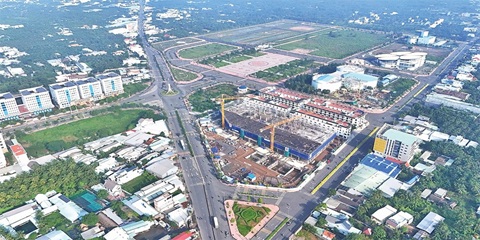
DONG THAP PROVINCE STEPS UP INDUSTRIAL EXPANSION AND INFRASTRUCTURE CONNECTIVITY
Accelerating public investment, strengthening inter-regional connectivity, and expanding industrial land are helping Dong Thap efficiently bolster competitiveness and drive economic growth. Following the 2025 merger of the former Dong Thap and Tien Giang provinces, the expanded Dong Thap province in the Mekong Delta faces mounting pressure to accelerate infrastructure development and strengthen connectivity among local economic zones, urban areas, industrial parks (IPs), and production centres.
PROPERTY / INDUSTRIAL ZONE
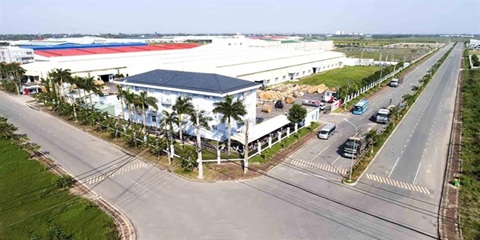
HCM CITY ATTRACTS US$5.7 BILLION INTO EXPORT PROCESSING AND INDUSTRIAL ZONES
HCM City attracted US$5.7 billion in domestic and foreign investment into its export processing and industrial zones during the first nine months of 2026. The figure exceeded the city's full-year target by 31 per cent, highlighting strong momentum in high-quality industrial investment under Resolution No.10-NQ/TW. Total investment reached 131 per cent of the 2026 target of $4.25 billion and represented a 29 per cent increase compared with the same period in 2025, according to the city's Export Processing and Industrial Zones Authority (HEPZA).

BANKING / FINANCE / INSURANCE / TAX
REMITTANCES TO HCM CITY RISE NEARLY 40% IN Q3
Remittances to HCM City reached more than US$2.83 billion in the third quarter of this year, up 39.5 per cent from the previous quarter and 3.6 per cent year-on-year. This was the first quarter showing positive annual growth this year, helping narrow the decline in remittance inflows over the first nine months. According to the State Bank of Vietnam (SBV)’s Regional Branch 2, remittances transferred to HCM City through credit institutions and economic organisations totalled $2.835 billion in Q3, an increase of more than $802 million from the previous quarter.
VIETNAM ECONOMY INVESTMENT
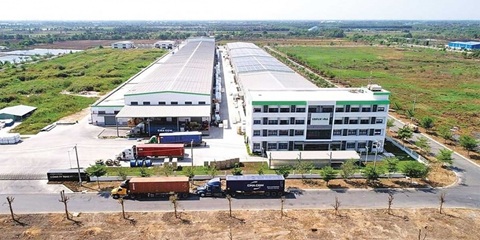
FOREIGN INVESTORS SEEKING A SYNCHRONISED MANUFACTURING ECOSYSTEM
Instead of focusing only on land costs and incentives as usual, foreign investors are seeking a synchronised manufacturing ecosystem, from stable power supply and logistics to shared infrastructure and the convenience of completing residence procedures for experts to serve their long-term investment in the country.
VIETNAM ECONOMY INVESTMENT
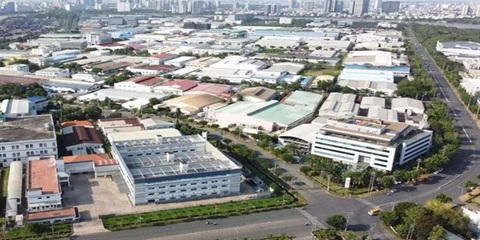
HCM CITY ADDRESSES MANUFACTURING, LAND HURDLES FOR Q4 GROWTH PUSH
HCM City is adjusting growth scenarios for lagging sectors and removing key bottlenecks in manufacturing and industrial land pricing to achieve a 13.23 per cent expansion in the fourth quarter of 2026. This sharp fourth-quarter acceleration is required to secure the city's full-year double-digit targets, following a 9.06 per cent GRDP growth recorded in the first nine months.
Events Sponsors






















