Want to be in the loop?
subscribe to
our notification
Business News
TAX TWEAK PUTS STRAIN ON APPAREL MAKERS
On-spot exports are now not subject to duty exemption, possibly derailing the recovery of textile and footwear companies.
The government issued Decree No.18/2021/ND-CP on March 11, amending a previous 2016 decree to implement the Law on Export and Import Taxes. Now, products traded on spot are not eligible for import duty exemptions.
Goods exported or imported on the spot are goods which are produced in Vietnam and sold to foreign traders right on Vietnamese territory.
The regulation could adversely affect foreign-invested enterprises (FIEs). One foreign footwear producer told VIR that it calculated it may have to pay an estimated advance tax of VND320 billion ($13.9 million).
In addition to FIEs, local textile and footware producers are voicing their concerns about the new regulation, which could see then having to pay tax for the same kind of product.
The impact on each company varies depending on the number of their imported materials. Tran Nhu Tung, chairman of the board at Thanh Cong Textile Garment Investment Trading JSC told VIR, “The new regulation directly affects the cashflow of the company, which has to borrow bank loans to make duty payments and pay interest for 7-12 months before tax refund. At present, we are assigning employees to monitor and prepare the documents for tax finalisation and refund.”
The regulation is being deemed a step backwards for the government’s efforts to support textile and garment firms by joining numerous free trade agreements (FTAs) such as the EU-Vietnam FTA and the Comprehensive and Progressive Agreement for Trans-Pacific Partnership (CPTPP), according to Tung.
“Businesses need to meet the yarn-forward rule of origin for the CPTPP and the fabric-forward rule of origin for the EVFTA to enjoy tariff reductions. However, the new regulation does not encourage companies to use locally-sourced materials,” he added. “They will prefer to purchase materials overseas rather than investing in local material production.”
He also worried about the rising tax-based fees to lower the financial capacity and competitiveness of local players in the international market, especially with higher prices for finished products. Thanh Cong is exporting its products to the United States, South Korea, and Europe, which are the key export markets for Vietnam’s textile and garment industry.
“We have yet to access any COVID-19 relief packages from the government,” Tung added. “With additional duty payment, Thanh Cong has to balance its investments while mobilising other resources to minimise the impact of the pandemic. Following the recent flare up of cases in the north, Thanh Cong has social distancing practices to ensure the safety of nearly 8,000 workers.”
Under Decree 18, both exporters and importers have to pay duty rates for on-spot import-export goods. Nguyen Bao Tran, general director of Tex-Giang, said that the company has received the guidance of the General Department of Vietnam Customs on the implementation of Decree 18. With the new decree, it means businesses will not receive any support from the government in terms of administrative reform, which will make production and business activities more difficult and expensive.
According to Tran, the immediate duty payment fails to encourage companies to switch from outsourcing to free-on-board production to increase the added value. Moreover, it often takes around one year for companies to import materials for production as well as complete documents on export and tax refund. The one-year suspension for duty refunds creates a huge financial waste for businesses.
Indeed, Decree 18 aimed to target a few local material producers but it now affects 95 per cent of garment and footwear firms. The decree does not encourage exported goods, causing inequality between outsouring production and export activities.
As the pandemic rumbles on, textile and footwear organisations have made objections to the new rules (see quotes). The industry had previously proposed the removal of the 10 per cent VAT payment for the purchase of domestic raw materials. However, it has yet to receive the green light. This, coupled with the additional duty for on-spot export, creates more challenges for businesses.
The prime minister issued a directive to review overlapping and inadequate documents causing difficulties for businesses earlier this month.
The textile and footwear industry generates employment for about five million workers. Leaders of business associations are calling for the government’s attention to the issuance of Decree 18 to address the policymaking process. In particular, review of the regulations will help attract more foreign manufacturers to relocate their businesses to Vietnam.
Source: VIR
Related News

INFRASTRUCTURE / CONSTRUCTION / LOGISTIC / PORT
VIỆT NAM-CAMBODIA TRADE GATHERS PACE TOWARDS $20 BILLION TARGET
Trade between Việt Nam and Cambodia continues to grow, remaining a bright spot and a key pillar of bilateral cooperation as the two countries aim to raise two-way trade to US$20 billion in the coming years. After setting a record of more than $11.3 billion last year, bilateral trade reached about $8.7 billion in the first eight months of this year, up 8.3 per cent year on year.
TECHNOLOGY
AI BEGINNING TO RESHAPE RECRUITMENT CRITERIA
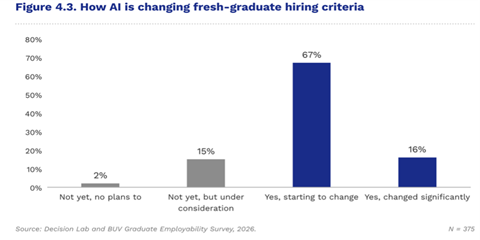
Digital literacy is the only capability area in which fresh graduates meet employers’ expectations, according to a new report. Yet, it is also the standard rising fastest, as businesses increasingly expect new hires to use AI effectively in the workplace. Some 83 per cent of employers say AI has changed, or is beginning to change, their hiring criteria, while 94 per cent report higher expectations for digital and AI capabilities than they had two to three years ago.

INFRASTRUCTURE / CONSTRUCTION / LOGISTIC / PORT
ĐÀ NẴNG GREEN-LIGHTS US$105 MILLION THAI DEVELOPMENT DEAL
The central city has approved an investment proposal by Thailand’s WHA Group to develop infrastructure for the 400ha WHA Đà Nẵng Industrial Park project on two communes of Thăng Bình and Đồng Dương, with an investment of more than VNĐ2.7 trillion (US$105 million). The city said it approved WHA Industrial Development International's status as an investor in the project, which is expected to take place between 2027 and 2034.

VIETNAM ECONOMY INVESTMENT
MOBILE PHONE EXPORTS RISE 20% TO $51.8 BILLION IN FIRST NINE MONTHS
Exports of mobile phones and components rose 20 per cent year-on-year to nearly US$51.8 billion in the first nine months of 2026, with China, the US and Republic of Korea accounting for more than half of the total. Shipments to the three markets reached a combined $26.18 billion, or 50.6 per cent of total exports of the product group during the period, according to data from the Vietnam Department of Customs under the Ministry of Finance.

VIETNAM ECONOMY INVESTMENT
FRUIT AND VEGETABLE EXPORTS POISED TO HIT $10 BILLION IN 2026
Fruit and vegetable exports are on track to reach nearly US$10 billion in 2026, after rising 19.9 per cent year on year to nearly US$7.4 billion in the first nine months, driven by strong seasonal demand and abundant tropical fruit supplies. The Ministry of Agriculture and Environment said the growth reflected stronger international demand for fresh produce and processed agricultural products.
GARMENT / TEXTILE
TEXTILE EXPORTS FACE DUAL CHALLENGES OF SUSTAINING ORDERS AND BOOSTING EFFICIENCY AMID GROWING COMPETITION
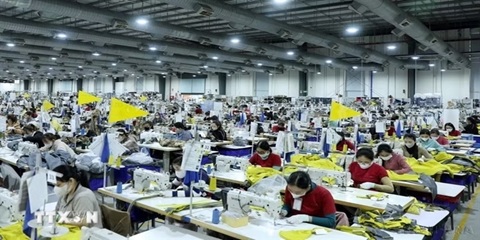
Data shows that the textile and garment sector maintained its growth momentum in the first nine months of this year. The industry's total export turnover reached an estimated US$35.721 billion in the first nine months of this year, up 3.3 per cent year-on-year. Despite posting encouraging export figures, Vietnamese textile and garment enterprises continue to navigate unpredictable market variables.
Events Sponsors






















