Want to be in the loop?
subscribe to
our notification
Business News
TURNING TARIFF CHALLENGES INTO LEVERAGE
Vietnam is affirming its strong export position in the United States, with two-way trade reaching US$80 billion and a trade surplus of US$64.8 billion as of May 2025, ranking fifth globally. On July 2, U.S. President Donald Trump announced on Truth Social that Vietnamese goods are subject to a 20% tariff - significantly lower than Thailand’s and Cambodia’s 36%, Laos’s 40%, and China’s 54% (20% base plus 34% reciprocal), giving Vietnam a distinct competitive advantage.
However, the risk of a 40% tariff on “transshipped” goods (those merely packaged or relabeled in Vietnam) and strict technical barriers require Vietnamese businesses to restructure their supply chains, increase localization rates, and capitalize on free trade agreements (FTAs) to maintain their foothold in the world’s largest market.
Mr. Do Ngoc Hung, Vietnam's Trade Counselor in the U.S., warned: “The U.S. remains a key destination for global exporters. However, with tariff-increasing policies on foreign goods, the cost of entering this market is rising, directly affecting both importers and American consumers.” If products fail to meet the “substantial transformation” criteria, Vietnamese goods, especially pangasius, apparels, and electronics, face the risk of being subject to 40% tariffs.
Key export sectors are actively adapting
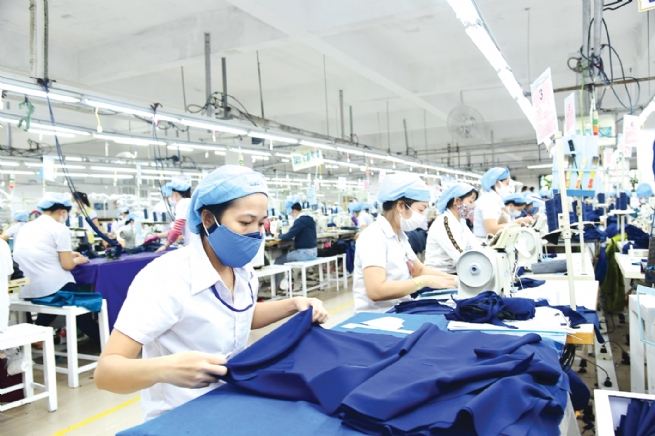
The apparel and footwear sector, which contributes nearly US$50 billion annually, is under pressure to meet stringent origin requirements. According to the Vietnam Textile and Apparel Association (VITAS), imports of raw materials dropped by 6-12% in May 2025 while exports surged. Chairman of VITAS Vu Duc Giang said: “Many large companies are quickly diversifying sources of fabric, leather, and accessories from Thailand, Pakistan, Indonesia, and others. At the same time, exporters are investing in automated production lines, raising the localization rate to over 50%.”
The electronics sector, ranking fifth globally in exports, is under pressure due to reliance on imported components. Ms. Do Thi Thuy Huong, Executive Board Member of the Vietnam Electronic Industries Association (VEIA), cautioned: “The high proportion of imported components risks classifying electronic goods as transshipping, leading the sector’s exports to a difficult position.”
“To overcome these challenges and strengthen their role in the global value chain, Vietnamese electronics companies must continue diversifying supply chains, investing in R&D, and restructuring production,” she stressed.
The agriculture sector reached US$33.84 billion in export value in the first half of 2025, up 15.5% year on year. Stateside pangasius shipments valued US$158 million, but the 40% tariff threat still looms. Experts warn that the new reciprocal tariffs (20% and 40%) might reduce Vietnam’s total export value of agricultural, forestry, and fishery products by around 20% in the second half of the year. The wood industry is accelerating FSC certification while agricultural producers are applying QR and blockchain technologies to ensure traceable origins.
Diversification and digitalization strategies
To benefit from the 20% tariff and avoid the 40% risk on transshipping in the US market, according to experts, Vietnamese companies must focus on three core strategies: Diversifying supply chains, enhancing value-added content, and digitizing management. These strategies not only help navigate tariff barriers but also bolster long-term competitiveness.
Mr. Do Ngoc Hung recommended: “Businesses need to reinforce resilience and diversify supply chains, reduce dependence on raw materials and intermediate goods concentrated in a single market, and promote exports with high intellectual and domestic value-added content, which will enhance the economy’s resilience to external shocks.”
On digitalization, economic expert Nguyen Minh Phong emphasized: “Businesses must quickly increase localization rates, improve supply chain management, and digitize documentation to withstand increasingly tight technical and trade barriers.” The application of QR and blockchain technologies to ensure product traceability, along with leveraging e-commerce platforms such as Amazon and Wayfair, and participating in trade shows in New York, Los Angeles, and Chicago, will help businesses tap into niche segments like organic goods and high-end furniture. The government is also providing strong support through VAT deferral policies, stable interest rates, and improved logistics infrastructure.
United Overseas Bank (UOB)’s July 2025 report forecasts a 5% increase in Vietnam’s exports to the U.S., driven by a tariff reduction from 46% to 20% on key items such as electronics, apparel, wooden products, and processed agricultural goods. However, UOB noted that this growth is not yet a breakthrough due to weak U.S. consumer demand and ongoing policy uncertainty. Rising competition from Bangladesh and India, along with the U.S.’s “nearshoring” strategy favoring Mexico, presents major challenges. Vietnamese businesses must continuously innovate to maintain their competitive edge.
Source: VCCI
Related News

CHARITY / EXHIBITION / OTHER EVENTS
INVESTMENT OPPORTUNITIES IN CA MAU PROVINCE: 96 PROJECTS AND 20 STRATEGIC PROJECTS
We are pleased to share with you information on investment projects currently seeking investors in Ca Mau Province. Should your esteemed company or association be interested, we kindly invite you to review the project information and complete the registration form via the links provided. The Ho Chi Minh City Investment and Trade Promotion Centre (ITPC) will consolidate the expressions of interest and facilitate connections with the leadership of Ca Mau Province at a meeting tentatively scheduled for 13 November 2026 in Ho Chi Minh City.

MEMBER CORNER / PROMOTIONS
BẰNG KIỀU LIVESHOW - A SYMPHONY OF LOVE UNDER THE GOLDEN GLOW
A masterclass in live music that takes the audience on a soulful journey through immortal love songs, guided by the peerless artistry and emotive storytelling of renowned singer Bằng Kiều. The highlight of the night is his seamless musical chemistry with special guest Triệu Hồng Ngọc, promising passionate and deeply resonant duets inside the magnificent Grand Ballroom.

INFRASTRUCTURE / CONSTRUCTION / LOGISTIC / PORT
ĐÀ NẴNG GREEN-LIGHTS US$105 MILLION THAI DEVELOPMENT DEAL
The central city has approved an investment proposal by Thailand’s WHA Group to develop infrastructure for the 400ha WHA Đà Nẵng Industrial Park project on two communes of Thăng Bình and Đồng Dương, with an investment of more than VNĐ2.7 trillion (US$105 million). The city said it approved WHA Industrial Development International's status as an investor in the project, which is expected to take place between 2027 and 2034.

VIETNAM ECONOMY INVESTMENT
MOBILE PHONE EXPORTS RISE 20% TO $51.8 BILLION IN FIRST NINE MONTHS
Exports of mobile phones and components rose 20 per cent year-on-year to nearly US$51.8 billion in the first nine months of 2026, with China, the US and Republic of Korea accounting for more than half of the total. Shipments to the three markets reached a combined $26.18 billion, or 50.6 per cent of total exports of the product group during the period, according to data from the Vietnam Department of Customs under the Ministry of Finance.

INFRASTRUCTURE / CONSTRUCTION / LOGISTIC / PORT
VIỆT NAM-CAMBODIA TRADE GATHERS PACE TOWARDS $20 BILLION TARGET
Trade between Việt Nam and Cambodia continues to grow, remaining a bright spot and a key pillar of bilateral cooperation as the two countries aim to raise two-way trade to US$20 billion in the coming years. After setting a record of more than $11.3 billion last year, bilateral trade reached about $8.7 billion in the first eight months of this year, up 8.3 per cent year on year.

VIETNAM ECONOMY INVESTMENT
FRUIT AND VEGETABLE EXPORTS POISED TO HIT $10 BILLION IN 2026
Fruit and vegetable exports are on track to reach nearly US$10 billion in 2026, after rising 19.9 per cent year on year to nearly US$7.4 billion in the first nine months, driven by strong seasonal demand and abundant tropical fruit supplies. The Ministry of Agriculture and Environment said the growth reflected stronger international demand for fresh produce and processed agricultural products.
Events Sponsors






















