Want to be in the loop?
subscribe to
our notification
Business News
UNLISTED PUBLIC COMPANY MARKET PROMISES INVESTORS BETTER PERFORMANCE
The Unlisted Public Company Market (UPCoM) has grown over the last 10 years and become more transparent, attracting increased interest from investors.
UPCoM began operation on June 24, 2009 after the Government and market regulators realised the free-trading stock market had been highly risky for investors.
The launch of UPCoM aimed to tighten the free market and expand the size of the Government-controlled market to gather unlisted companies and make their stocks more transparent, secure and safer for investors.
Since then, many policies have been issued to improve the market's operation.
For example, Decree 60/2015/NĐ-CP eyes better protection of investors’ benefits by requiring public companies to trade shares on UPCoM, while Circular 115/2016/TT-BTC requires State-owned enterprises to both sell State capital and trade their shares on UPCoM.
The improvement of the legal framework has been a boost to the market's performance. In the first six years of operation, there were only 169 companies on UPCoM with average daily trading value of VND15 billion (US$544,300).
In the last four years, the number of UPCoM-traded firms has increased five-fold to 833 and average trading value has increased 18 times to VND250 billion.
Market capitalisation also rocketed to VND945.8 trillion in the same period. Foreign trading rose to VND16.9 trillion in 2018 from VND157 billion six years before.
According to a Stock Exchange of Thailand official, the development of UPCoM was a lesson for many regional markets.
UPCoM helped public companies test their stocks before moving to the main listed markets (the Ho Chi Minh and Hà Nội stock exchanges) and was a place for SOEs to offload State capital in the most efficient way, he said.
However, UPCoM has encountered some incidents that have raised public concern about the market’s transparency and ability to protect investors.
The worst case involved the Central Mining Joint Stock Company, which used to trade shares on UPCoM under code MTM.
The former leaders of the company falsified its trading portfolio and earned dozens of billions of đồng by selling company shares to investors.
That case forced the market regulator to release a list of good-quality stocks and those that were at risk to protect investors.
According to Nguyễn Thành Long, chairman of the management board at the Hà Nội Stock Exchange, UPCoM requirements on companies’ stock trading were not that strict, so about half of UPCoM-traded firms had low levels of transparency.
There were still many small companies recording poor business results and lacking transparency in terms of information disclosure, he told tinnhanhchungkhoan.vn.
The northern market regulator, besides drawing up a warning list on low-quality stocks, has implemented a scoring mechanism to highlight companies with high quality of information disclosure and transparency, he added.
The Hà Nội Stock Exchange plans to ask the State Securities Commission to allow investors and securities companies to do marginal trading on good-quality UPCoM-traded firms to increase the market’s liquidity and prove the market's transparency to investors.
Source: VNS
Related News

INFRASTRUCTURE / CONSTRUCTION / LOGISTIC / PORT
VIỆT NAM-CAMBODIA TRADE GATHERS PACE TOWARDS $20 BILLION TARGET
Trade between Việt Nam and Cambodia continues to grow, remaining a bright spot and a key pillar of bilateral cooperation as the two countries aim to raise two-way trade to US$20 billion in the coming years. After setting a record of more than $11.3 billion last year, bilateral trade reached about $8.7 billion in the first eight months of this year, up 8.3 per cent year on year.
TECHNOLOGY
AI BEGINNING TO RESHAPE RECRUITMENT CRITERIA
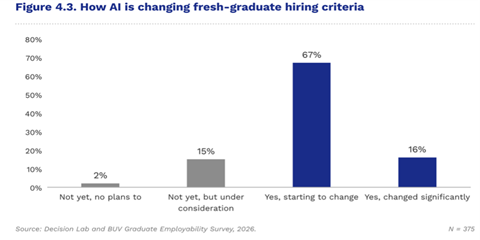
Digital literacy is the only capability area in which fresh graduates meet employers’ expectations, according to a new report. Yet, it is also the standard rising fastest, as businesses increasingly expect new hires to use AI effectively in the workplace. Some 83 per cent of employers say AI has changed, or is beginning to change, their hiring criteria, while 94 per cent report higher expectations for digital and AI capabilities than they had two to three years ago.
INFRASTRUCTURE / CONSTRUCTION / LOGISTIC / PORT
ĐÀ NẴNG GREEN-LIGHTS US$105 MILLION THAI DEVELOPMENT DEAL
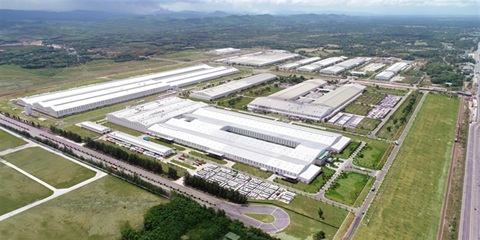
The central city has approved an investment proposal by Thailand’s WHA Group to develop infrastructure for the 400ha WHA Đà Nẵng Industrial Park project on two communes of Thăng Bình and Đồng Dương, with an investment of more than VNĐ2.7 trillion (US$105 million). The city said it approved WHA Industrial Development International's status as an investor in the project, which is expected to take place between 2027 and 2034.
VIETNAM ECONOMY INVESTMENT
MOBILE PHONE EXPORTS RISE 20% TO $51.8 BILLION IN FIRST NINE MONTHS
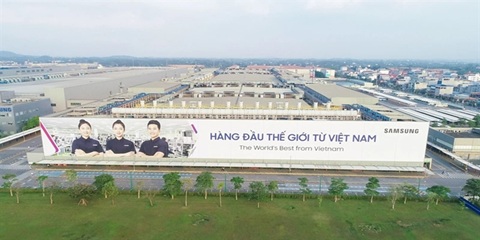
Exports of mobile phones and components rose 20 per cent year-on-year to nearly US$51.8 billion in the first nine months of 2026, with China, the US and Republic of Korea accounting for more than half of the total. Shipments to the three markets reached a combined $26.18 billion, or 50.6 per cent of total exports of the product group during the period, according to data from the Vietnam Department of Customs under the Ministry of Finance.
VIETNAM ECONOMY INVESTMENT
FRUIT AND VEGETABLE EXPORTS POISED TO HIT $10 BILLION IN 2026
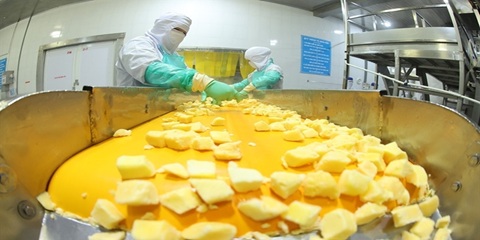
Fruit and vegetable exports are on track to reach nearly US$10 billion in 2026, after rising 19.9 per cent year on year to nearly US$7.4 billion in the first nine months, driven by strong seasonal demand and abundant tropical fruit supplies. The Ministry of Agriculture and Environment said the growth reflected stronger international demand for fresh produce and processed agricultural products.
GARMENT / TEXTILE
TEXTILE EXPORTS FACE DUAL CHALLENGES OF SUSTAINING ORDERS AND BOOSTING EFFICIENCY AMID GROWING COMPETITION
Data shows that the textile and garment sector maintained its growth momentum in the first nine months of this year. The industry's total export turnover reached an estimated US$35.721 billion in the first nine months of this year, up 3.3 per cent year-on-year. Despite posting encouraging export figures, Vietnamese textile and garment enterprises continue to navigate unpredictable market variables.
Events Sponsors






















