Want to be in the loop?
subscribe to
our notification
Business News
UNLOCK TRANSPORT POTENTIAL TO ACCELERATE MEKONG DELTA GROWTH: PM
Prime Minister Pham Minh Chinh called for “faster, bolder and greater” action in Mekong Delta transport infrastructure development, stating that each year must be better than the last, and each term must surpass the one before.
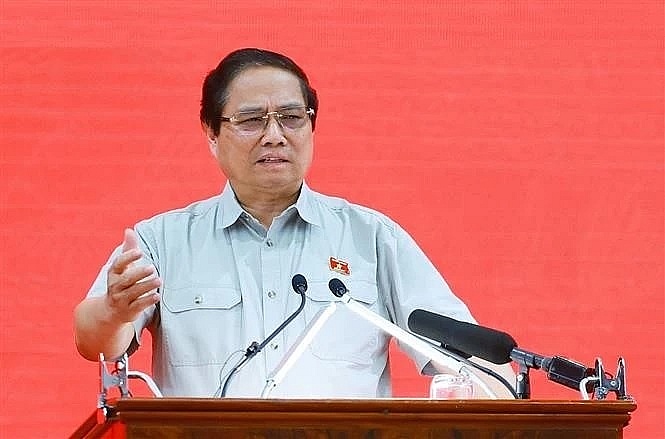
Prime Minister Pham Minh Chinh addresses the conference. (Photo: VNA)
Can Tho - Unlocking all modes of transport, including road, air, maritime, inland waterway, and rail, is key to lifting the Mekong Delta out of poverty and propelling its growth, Prime Minister Pham Minh Chinh has said.
Addressing a conference in Can Tho city on April 21 to review the progress of major transport infrastructure projects in the south, PM Chinh underlined that each generation must contribute to achieving this overarching goal.
According to the road network plan for 2021–2030 with a vision to 2050, the region will have 1,256km of roads, comprising three vertical and three horizontal expressways.
Currently, 121km of vertical expressways have been completed, including Ben Luc – Trung Luong – My Thuan (91km), My Thuan – Can Tho (23km) and My Thuan 2 Bridge (7km). From 2021 to 2025, ten additional expressway projects totalling 432km are being implemented. A further 703km are planned for the coming time, including the 90km Ca Mau – Dat Mui route.
With strong Government oversight and local cooperation, issues such as land clearance and the supply of construction materials have been largely resolved, allowing smoother implementation.
Key projects include Can Tho – Ca Mau (110km), which is scheduled to complete by 2025; Chau Doc – Can Tho – Soc Trang (191km), expected to finish in July 2026; and Cao Lanh – An Huu, to be completed by 2027. Meanwhile, the My An – Cao Lanh project's construction will begin June 2025, the Cao Lanh – Lo Te and Lo Te – Rach Soi projects have their construction deadlines in 2025, and the Ho Chi Minh Road (Rach Soi – Ben Nhat, Go Quao – Vinh Thuan) and Rach Mieu 2 Bridge are all scheduled for completion this year.
In aviation, the region currently has four airports: Can Tho, Ca Mau, Rach Gia and Phu Quoc. A high-speed rail line connecting Ho Chi Minh City and Can Tho (174km) is planned for investment before 2030, with a future extension to Ca Mau under review.
The maritime network includes 12 seaports across all delta localities, while a comprehensive system of inland waterways and logistics corridors is being developed.
PM Chinh affirmed that in special circumstances, with extraordinary efforts and methods, exceptional results have been achieved, surpassing initial targets.
He outlined three key requirements for all infrastructure projects: completion on time or ahead of schedule, high quality, and no cost overruns, adding there must be zero corruption and strict adherence to environmental standards.
The PM instructed the Ministry of Construction to issue guidance next week on adopting advanced technologies to accelerate construction.
With building materials now largely secured, he called on relevant ministries to expedite the reallocation of sand and the transfer of mining rights between projects to ensure resource efficiency. The Ministry of Finance was tasked with guaranteeing sufficient funding.
Drawing inspiration from the Great Spring 1975 Victory, the PM called for “faster, bolder and greater” action in transport infrastructure development, stating that each year must be better than the last, and each term must surpass the one before. He stressed a long-term vision that prioritises national interests above all.
By the end of the current term, the region is expected to have 600km of expressways, with a goal of at least 1,300km by 2030 - 100km more than initially planned.
Plans are also in motion to expand Phu Quoc, Ca Mau and Rach Gia airports, with local governments responsible for land clearance. Key seaports under development include Cai Cui, Tran De and Hon Khoai.
The Government leader also underscored the need for comprehensive and inclusive development, underpinned by transparency and accountability, with clear responsibilities, clear timelines, and clear outcomes.
He reiterated the principles of ensuring the benefits of the State, the people and enterprises, and say no to corruption and wastefulness of public assets and resources.
Beyond transport, the Government plans initiatives to combat land subsidence, erosion, and salinity, and to enhance health care, education and human resources development, he stated.
Source: VIR
Related News
MEMBER CORNER / PROMOTIONS
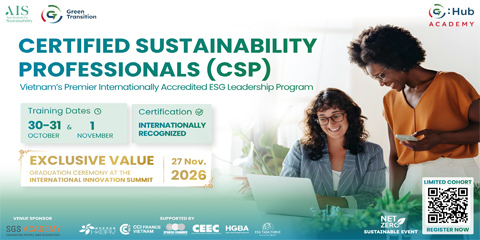
HCMC | CERTIFIED SUSTAINABILITY PROFESSIONAL (CSP) TRAINING | REGISTRATION OPEN
As sustainability becomes deeply embedded in corporate strategy and supply-chain operations across Vietnam, Hong Kong Business Association Vietnam is pleased to endorse the upcoming Certified Sustainability Professional (CSP) training program by the Asia Institute for Sustainability (AIS) - a premier internationally recognized ESG credential in Vietnam.
VIETNAM ECONOMY INVESTMENT
HCM CITY SAYS HOW IT PLANS TO ACHIEVE 10-11% ANNUAL EXPORT GROWTH FOR REST OF DECADE
The southern economic hub aims to strengthen its role as the country’s largest import-export centre while developing into a regional transhipment centre in Southeast Asia, supported by green and digital transformation and a circular economy. HCM City has outlined measures to expand production capacity, cut logistics costs, diversify export markets, and help businesses meet increasingly stringent international standards as it targets average annual export growth of 10-11 per cent through 2030.
VIETNAM ECONOMY INVESTMENT
HCM CITY LEADS ECONOMIC RESTRUCTURING IN SOUTHEAST REGION
According to Associate Professor, Dr Vũ Tuấn Hưng, director of the Institute of Social Sciences of the Southern Region, the Southeast is a strategically important socio-economic space in Việt Nam’s development given its advantages in location, industry, trade, services, logistics, science and technology, urbanisation and human resources.
TECHNOLOGY
DIGITAL TRANSFORMATION TURNED INTO PRACTICAL TOOLS FOR PEOPLE, BUSINESSES
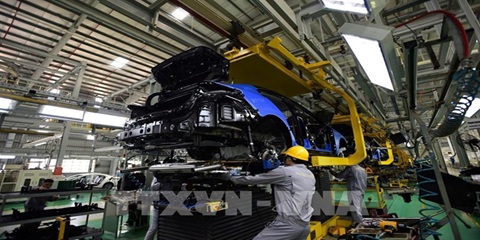
Việt Nam is moving its digital transformation agenda beyond policy frameworks and individual technology platforms towards practical applications that address everyday needs, as authorities seek measurable outcomes from science, technology and innovation. Under Politburo Resolution No. 57-NQ/TW issued on December 22, 2024, the implementation is increasingly shifting from simply completing assigned tasks towards developing concrete products and services for citizens and businesses.
TECHNOLOGY
APPLYING TECHNOLOGY FOR ECONOMIC TRANSFORMATION
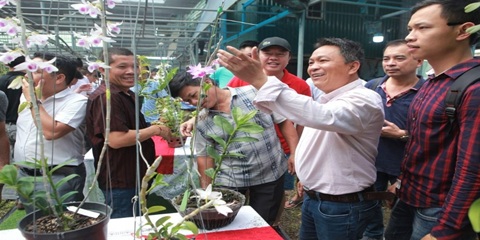
Having completed its new rural development program, Hanoi is shifting its focus toward improving development quality and building smart, sustainable rural areas. The transformation of Dong La orchid-growing village in An Khanh, a western commune of Hanoi, shows how digital technology is becoming a driver of production, market expansion, and higher incomes for local residents.
MEMBER CORNER / PROMOTIONS
VIGLACERA HONORED AS THE "LEADING GREEN INDUSTRIAL REAL ESTATE DEVELOPER 2026"
Organized by the Vietnam Investment Review, this prestigious awards program recognizes industry pioneers advancing eco-industrial parks, clean energy transition, and rigorous ESG standards. Outperforming competitors through a rigorous evaluation, Viglacera Corporation – JSC proudly ranked among the Top 5 highest-positioned enterprises in the Leading Green Industrial Real Estate Developers 2026 category, reinforcing its premier position in Vietnam’s industrial real estate sector.
Events Sponsors






















