Want to be in the loop?
subscribe to
our notification
Business News
UP TO 70% OF SMES IN VIETNAM OPERATE OUTSIDE THE DIGITAL ECONOMY
Up to 70% of small and medium enterprises (SMEs) in Vietnam are operating outside the digital economy and only around 20% are tentatively exploring it, Chairman of the Vietnam Association of Small and Medium Enterprises (VINASME) Nguyen Van Than said at a recent event on “Cybersecurity Awareness for SMEs in Vietnam”.
The event drew key stakeholders from Vietnam and Australia to share experiences and findings from studies on cybersecurity awareness among businesses in both countries. The organizers also announced an upcoming survey to assess the cybersecurity readiness of Vietnamese businesses.
The discussion helped identify the current gap in information security capacity, highlighting the need for skills development, workforce preparation and transformation to support Vietnam in embracing information security.
Experts at the event suggested that SMEs across Vietnam should strive to build better cybersecurity infrastructure, capabilities and culture.
According to Than, the understanding of and action toward the digital economy are still relatively slow, uneven and inconsistent among businesses. “Thus, it’s imperative and urgent to popularize the idea of the digital economy and support Vietnamese businesses on their way to embrace it. This is a vital task,” he said.
He also emphasized that cybersecurity awareness is an aspect of operating the digital economy. “I highly value the topic of today’s discussion as the experts have foreseen a downside of Industry 4.0, namely cyber risks for businesses.”
Presenting a 2021 review and 2022 forecast of the cybersecurity landscape in Vietnam, director of the Institute of Information Security Technology under the Vietnam Information Security Association and vice president of BKAV Ngo Tuan Anh revealed that Vietnam recorded about 70.7 million computer virus infections in 2021.
He considered this a red alert for the state of cybersecurity in Vietnam, adding that the damage Vietnamese computer users suffered due to viruses continued to be very high, reaching VND24.4 trillion (around US$1.06 billion) last year.
“The use of computers and smart devices in Vietnam has increased dramatically due to Covid-19, creating an ideal environment for computer viruses to break out and spread rapidly,” he said. He also pointed out that supply chain attacks have become a global trend.
“Most of the attacks last year were on a large scale and targeted globally-known organizations and businesses,” Tuan Anh said.
Sharing experiences from Australia, RMIT Senior Lecturer Dr Pham Cong Hiep drew on findings from the “2021 State of Cyber Fitness in Australian Small Businesses” whitepaper, of which RMIT University was a co-author.
The study shows that the cybersecurity readiness of Australian SMEs is not very high despite their rapid digitization during the pandemic.
Only 26% of businesses felt they had done enough to keep their business safe from cybersecurity incidents, while 33% felt they hadn’t. Notably, 77% of respondents felt directly responsible for cyber risks.
“An understanding of the factors affecting cybersecurity readiness is crucial to devise appropriate solutions for businesses to improve the current low level of cyber fitness among most SMEs,” Dr Hiep said.
Therefore, the upcoming nationwide survey conducted by RMIT University, VNISA and VINASME will look at cyber risks, technology adaptation, cybersecurity awareness, skills to prevent and confront cyber threats, and funding for cybersecurity activities.
The survey is expected to contribute toward building better cybersecurity infrastructure, capabilities, and culture in the SME community.
At the event, the RMIT Center for Cyber Security Research and Innovation also officially announced the establishment of its Vietnam Hub, led by Dr Pham Cong Hiep.
Aiming to promote a truly multidisciplinary approach to the organizational, human and technical aspects of cybersecurity, the Hub will offer many opportunities for RMIT and local organizations to collaborate on research projects and corporate training, as well as deliver joint events and workshops with cyber experts across Australia and Vietnam.
The event “Cybersecurity Awareness for SMEs in Vietnam” was held by RMIT University and the Vietnam Information Security Association, together with the Vietnam Association of Small and Medium Enterprises.
Source: The Saigon Times
Related News
VIETNAM ECONOMY INVESTMENT
VIETNAMESE COMPANIES OPTIMISTIC ON INTERNATIONAL GROWTH
Vietnamese businesses are among the most confident about the outlook for international trade, according to HSBC’s Global Trade Pulse Survey 2026, released on November 16. The survey captures the views of 10,000 senior business leaders across 26 markets on trade, tariffs, supply chains, and technology. Findings show that 94 per cent of Vietnamese businesses expect their international trade to grow over the next two years. Vietnam ranks joint top in the survey with the Philippines, compared with 86 per cent globally.
TECHNOLOGY
VIỆT NAM'S DIGITAL TECHNOLOGY INDUSTRY REVENUE SURGES 53% TO $254.6B
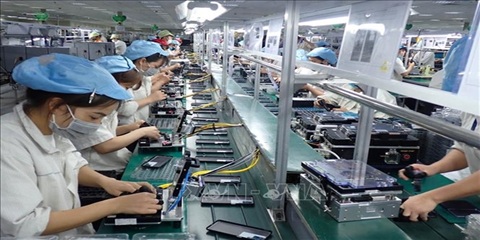
Việt Nam's digital technology industry generated an estimated US$254.6 billion in revenue in the first 10 months of 2026, up 53 per cent from a year earlier, while exports rose 46.2 per cent to $212 billion, the Ministry of Science and Technology said in its latest report. According to the report, hardware and electronics exports reached an estimated $30.681 billion in October, up 108 per cent from the same month last year.

CHARITY / EXHIBITION / OTHER EVENTS
BOCHK ‧ HKPC FUTURE VIETNAM: HANOI BUSINESS DELEGATION ON DIGITAL TRANSFORMATION AND INDUSTRIAL INNOVATION
Interested in exploring Vietnam’s latest developments in digital transformation, technology adoption and industrial innovation? Organised by the Hong Kong Productivity Council (HKPC) and fully supported by Bank of China (Hong Kong) Limited, the "Future Vietnam: Hanoi Business Delegation on Digital Transformation and Industrial Innovation” will feature visits to leading high-tech enterprises across Vietnam and engage with local chambers of commerce, industry organisations and associations. Join us to expand your high-value business network and seize emerging opportunities in the ASEAN market!
GARMENT / TEXTILE
TEXTILE, GARMENT FIRMS REFORM TO MEET CPTPP ORIGIN RULES
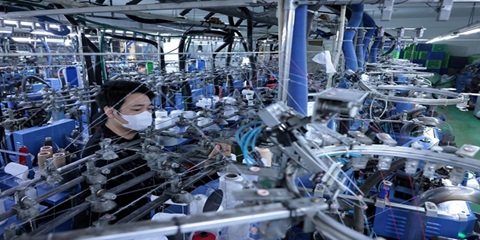
Vietnamese textile and garment manufacturers are aggressively restructuring their supply chains and diversifying material sources to unlock untapped tariff benefits. To capitalise on the Comprehensive and Progressive Agreement for Trans-Pacific Partnership (CPTPP), companies are racing to align with the pact's strict "yarn-forward" rules — a task made difficult by a shortage of raw materials within the trade bloc.
TECHNOLOGY
ĐÀ NẴNG SEEKS TO BUILD HIGH-TECH AGRICULTURE, INTEGRATED VALUE CHAINS
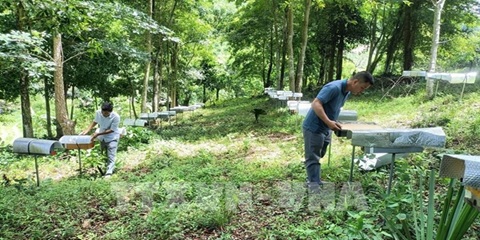
Đà Nẵng is seeking to transform its agricultural sector from a supplier of raw materials into a technology-driven, market-oriented economy, with investment opportunities spanning concentrated production areas, deep processing, logistics and agricultural product distribution. The city aims to shift from traditional agricultural production towards agricultural economic development, organising value chains and increasing the technological content and added value of products through closer links between production and processing.
INFRASTRUCTURE / CONSTRUCTION / LOGISTIC / PORT
HCM CITY ACCELERATES POWER INFRASTRUCTURE INVESTMENT TO ATTRACT HIGH-TECH CAPITAL
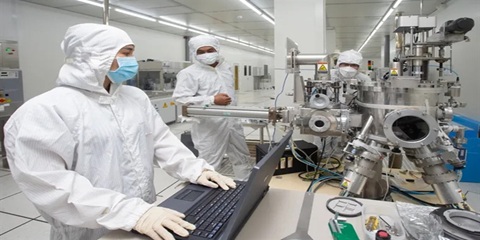
High-tech projects, particularly data centres, are not confined to SHTP but are also expanding into export processing zones and industrial parks across HCM City, driving up electricity demand. Proactively developing power infrastructure, diversifying energy supplies and expanding access to green energy are becoming essential for HCM City to maintain its competitive edge in attracting high-tech foreign direct investment (FDI).
Events Sponsors