Want to be in the loop?
subscribe to
our notification
Business News
VCCI SUGGESTS CENTRAL BANK RECONSIDER CASH LOAN PROPOSALS
The Việt Nam Chamber of Commerce and Industry (VCCI) this week suggested the State Bank of Việt Nam (SBV) reconsider a proposal on limiting unsecured personal loans in cash by consumer finance companies.
The move was made after the SBV recently released a draft circular to amend Circular No. 43/2016/TT-NHNN stipulating consumer lending by financial companies.
The proposed changes under the draft circular include limiting unsecured personal loans in cash to existing customers with good credit and no overdue debt; and limiting the maximum amount of such cash loans to 30 per cent of total loans.
In financial companies, cash loans are one of the main products besides instalment loans and credit cards. Target customers of these product packages are more than 50 per cent of the country’s population who do not have a bank account and have an average income of only VNĐ3-5 million (US$129-215) per month, depending on the requirements of each company.
As explained by the SBV, cash loans are at high risk of becoming non-performing loans (NPLs) as they don’t require collateral and declaration of borrowing purposes. With easy requirements and simple procedures, cash loans are an easy way to develop credit even though lending interest rates are much higher than those of banks.
Therefore, to ensure consumer lending for sustainable, healthy and efficient development, the SBV said cash loans should be limited to finance companies’ existing customers with good credit history and no overdue debt.
However, according to the VCCI, the SBV should explain more clearly the necessity of the regulations as no statistics on NPLs of consumer finance companies have been released yet.
Especially, VCCI noted, the application of the new regulations should be scrutinised when the Government is taking measures to fight loan sharks.
“Should the regulations be applied as it will increase costs of financial companies, making it more difficult and expensive for borrowers to access to consumer loans?” VCCI asked.
Experts also said though the proposed regulations would contribute to controlling bad debts, it would cause the Government difficulty in implementing its policy to fight loan sharks.
According to banking expert Nguyễn Trí Hiếu, without consumer loans with easy requirements from finance companies, borrowers without collateral and low income will have to depend on loan sharks.
However, in a credit outlook report released recently, the international ratings agency Moody’s Investors Service backed the SBV’s proposal. According to Moody’s, the proposal is credit positive for Vietnamese finance companies because the stricter regulations will help alleviate asset quality pressure by curbing excessive growth in the riskier consumer-loan segment, which will lead to stronger risk-adjusted returns and will support internal capital generation in the future.
Việt Nam’s consumer finance industry grew at a compound annual rate of 41 per cent between 2013 and 2017 on the back of higher personal income and greater penetration of services.
Moody’s expects growth in personal loans to slow significantly when the new regulations come into effect, after far exceeding growth over the past three years for other less-risky consumer loans, such as those for the purchase of motorcycles and durables.
The demand for consumer finance is strong and supported by the buoyant Vietnamese economy.
Now, finance companies constrained from extending new personal unsecured loans because of the new regulations will focus on growing other product segments and will benefit from increased diversification in their lending portfolios and more emphasis on lower-risk products.
Source: VCCI
Related News
VIETNAM ECONOMY INVESTMENT
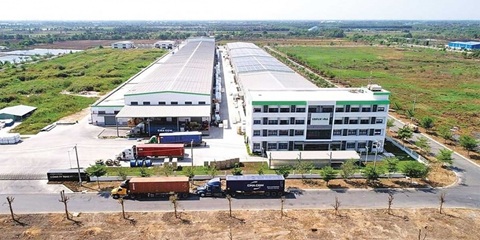
FOREIGN INVESTORS SEEKING A SYNCHRONISED MANUFACTURING ECOSYSTEM
Instead of focusing only on land costs and incentives as usual, foreign investors are seeking a synchronised manufacturing ecosystem, from stable power supply and logistics to shared infrastructure and the convenience of completing residence procedures for experts to serve their long-term investment in the country.
INFRASTRUCTURE / CONSTRUCTION / LOGISTIC / PORT
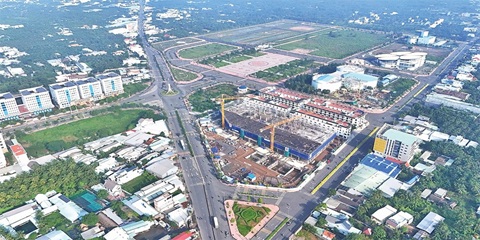
DONG THAP PROVINCE STEPS UP INDUSTRIAL EXPANSION AND INFRASTRUCTURE CONNECTIVITY
Accelerating public investment, strengthening inter-regional connectivity, and expanding industrial land are helping Dong Thap efficiently bolster competitiveness and drive economic growth. Following the 2025 merger of the former Dong Thap and Tien Giang provinces, the expanded Dong Thap province in the Mekong Delta faces mounting pressure to accelerate infrastructure development and strengthen connectivity among local economic zones, urban areas, industrial parks (IPs), and production centres.
PROPERTY / INDUSTRIAL ZONE
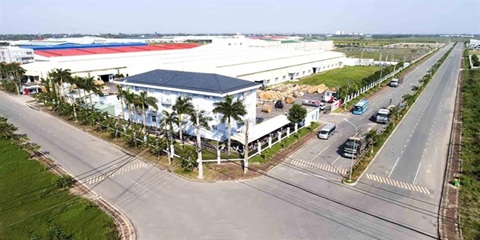
HCM CITY ATTRACTS US$5.7 BILLION INTO EXPORT PROCESSING AND INDUSTRIAL ZONES
HCM City attracted US$5.7 billion in domestic and foreign investment into its export processing and industrial zones during the first nine months of 2026. The figure exceeded the city's full-year target by 31 per cent, highlighting strong momentum in high-quality industrial investment under Resolution No.10-NQ/TW. Total investment reached 131 per cent of the 2026 target of $4.25 billion and represented a 29 per cent increase compared with the same period in 2025, according to the city's Export Processing and Industrial Zones Authority (HEPZA).

BANKING / FINANCE / INSURANCE / TAX
REMITTANCES TO HCM CITY RISE NEARLY 40% IN Q3
Remittances to HCM City reached more than US$2.83 billion in the third quarter of this year, up 39.5 per cent from the previous quarter and 3.6 per cent year-on-year. This was the first quarter showing positive annual growth this year, helping narrow the decline in remittance inflows over the first nine months. According to the State Bank of Vietnam (SBV)’s Regional Branch 2, remittances transferred to HCM City through credit institutions and economic organisations totalled $2.835 billion in Q3, an increase of more than $802 million from the previous quarter.

VIETNAM ECONOMY INVESTMENT
LOCALITIES REPORT BREAKTHROUGH RESULTS IN FDI IN FIRST NINE MONTHS
In Ho Chi Minh City, total registered capital reached $17.2 billion in the first nine months, up 4.2 times from the same period last year. The figure included more than $9.35 billion in newly registered capital and over $4.9 billion in additional capital for existing projects. Foreign investors also registered more than $2.9 billion through capital contributions and share purchases.

TECHNOLOGY
TECH SECTOR GROWTH OPENS UP OPPORTUNITIES FOR VIỆT NAM TO GO GLOBAL
The growth of the electronics, semiconductor and high-tech sectors worldwide is opening up a variety of opportunities for Vietnamese enterprises to integrate more deeply into the global supply chain. However, to become suppliers for these corporations, domestic enterprises must meet rigorous standards regarding quality, technology, productivity and order fulfilment capabilities.
Events Sponsors






















