Want to be in the loop?
subscribe to
our notification
Business News
VIỆT NAM BOOSTS RICE TRADE THROUGH 2030 WITH NEW MEASURES
Authorities are set to expand negotiations and trade deals with international partners while dismantling the logistical and regulatory snarls that have plagued the sector.
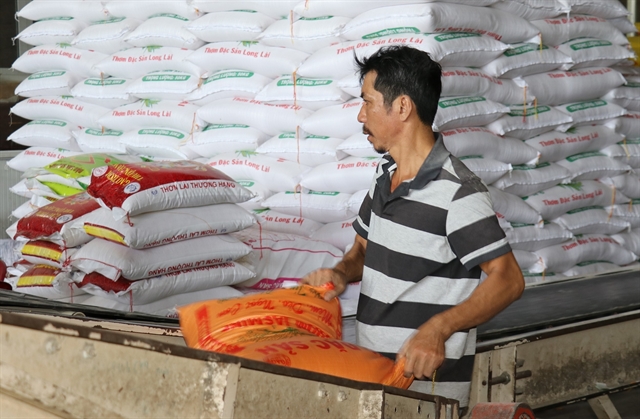
Packaging rice at a milling facility in Tiền Giang Province. — VNA/VNS Photo Hữu Chí
TIỀN GIANG — To enhance rice exports through 2030, the Ministry of Industry and Trade (MoIT) has rolled out a series of new measures focused on stricter oversight, faster implementation of the national export strategy, and stronger trade promotion efforts.
These solutions were introduced by the MoIT’s Export-Import Department during a conference held in the Mekong Delta province of Tiền Giang on Tuesday.
Authorities are set to expand negotiations and trade deals with international partners while dismantling the logistical and regulatory snarls that have plagued the sector. Local authorities were advised to restructure production and develop value chain linkages among organisations, cooperatives, and rice exporters.
Enterprises and traders were encouraged to upgrade deep processing facilities and equipment to churn out rice up to the exacting standards of discerning markets. The goal is to diversify export markets, reducing dependence on traditional buyers to mitigate associated risks.
Lưu Văn Phi, director of the provincial Department of Industry and Trade, highlighted Tiền Giang’s strategic strengths in rice production, citing its strategic location and robust transport infrastructure, including extensive road and waterway networks.
The province boasts around 200 major rice milling and processing facilities capable of grinding out three million tonnes of rice annually and generating an estimated US$100 million in export revenue.
To ensure the sector’s long-term growth, Phi stressed the need for exporters and traders to develop raw material zones, invest in factory upgrades, modernise production lines, enhance processing capabilities, and strengthen financial capacity. Building brand identity and gaining consumer trust in both domestic and foreign markets is seen as a critical step forward.
Current rice export regulations, he added, need to be revised to better keep pace with the industry’s evolving needs.
High volume, low value
According to the department, Việt Nam exported over 3.43 million tonnes of rice in the first four months of this year, raking in nearly $1.8 billion, a 8.1 per cent jump in volume but a 13.3 per cent dip in value from the same period last year.
The Philippines, as ever, remains Việt Nam’s largest rice buyer, making up 43.3 per cent of the export volume and 45.5 per cent of the value.
The average export price stood at $515 per tonne, down 19.8 per cent year-on-year. While this significant decline might seem concerning, it had been anticipated by industry experts and businesses, especially amid growing global supply.
Many Vietnamese exporters attributed the sharp decline in rice prices to the global market adjustment that began in late 2024. The lifting of India’s export ban significantly increased supply and exerted downward pressure on prices.
As India steps up exports to reduce record-high stockpiles, the global rice market is expected to remain in a low-price cycle in the near term – a development that poses challenges for Vietnamese exporters in terms of maintaining both profit margins and market share.
In its latest outlook, the United States Department of Agriculture (USDA) forecast global rice production in the 2025–26 crop year to reach a record 538.7 million tonnes, up one million tonnes from the previous season. Despite the rise in output, supply shortages may re-emerge due to an estimated increase of 6.1 million tonnes in global consumption.
Global rice trade is also projected to grow, with volumes expected to hit 60.5 million tonnes in 2025 and 61.3 million tonnes in 2026.
India is forecast to retain its dominant role, which may limit export growth opportunities for other major suppliers such as Việt Nam, Pakistan and Myanmar.
At the same conference, MoIT also sought feedback on the draft decree amending and supplementing certain provisions of Decree No 107/2018/NĐ-CP and Decree No 01/2025/NĐ-CP on rice export operations, signalling ongoing efforts to adapt Việt Nam’s regulatory framework to the shifting global landscape. — VNS
Source: VNS
Related News

CHARITY / EXHIBITION / OTHER EVENTS
INVESTMENT OPPORTUNITIES IN CA MAU PROVINCE: 96 PROJECTS AND 20 STRATEGIC PROJECTS
We are pleased to share with you information on investment projects currently seeking investors in Ca Mau Province. Should your esteemed company or association be interested, we kindly invite you to review the project information and complete the registration form via the links provided. The Ho Chi Minh City Investment and Trade Promotion Centre (ITPC) will consolidate the expressions of interest and facilitate connections with the leadership of Ca Mau Province at a meeting tentatively scheduled for 13 November 2026 in Ho Chi Minh City.

MEMBER CORNER / PROMOTIONS
BẰNG KIỀU LIVESHOW - A SYMPHONY OF LOVE UNDER THE GOLDEN GLOW
A masterclass in live music that takes the audience on a soulful journey through immortal love songs, guided by the peerless artistry and emotive storytelling of renowned singer Bằng Kiều. The highlight of the night is his seamless musical chemistry with special guest Triệu Hồng Ngọc, promising passionate and deeply resonant duets inside the magnificent Grand Ballroom.
INFRASTRUCTURE / CONSTRUCTION / LOGISTIC / PORT
ĐÀ NẴNG GREEN-LIGHTS US$105 MILLION THAI DEVELOPMENT DEAL
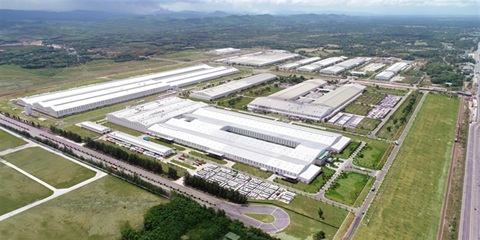
The central city has approved an investment proposal by Thailand’s WHA Group to develop infrastructure for the 400ha WHA Đà Nẵng Industrial Park project on two communes of Thăng Bình and Đồng Dương, with an investment of more than VNĐ2.7 trillion (US$105 million). The city said it approved WHA Industrial Development International's status as an investor in the project, which is expected to take place between 2027 and 2034.
VIETNAM ECONOMY INVESTMENT
MOBILE PHONE EXPORTS RISE 20% TO $51.8 BILLION IN FIRST NINE MONTHS
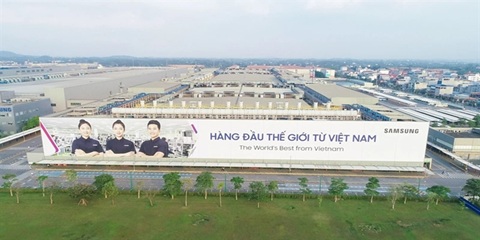
Exports of mobile phones and components rose 20 per cent year-on-year to nearly US$51.8 billion in the first nine months of 2026, with China, the US and Republic of Korea accounting for more than half of the total. Shipments to the three markets reached a combined $26.18 billion, or 50.6 per cent of total exports of the product group during the period, according to data from the Vietnam Department of Customs under the Ministry of Finance.

INFRASTRUCTURE / CONSTRUCTION / LOGISTIC / PORT
VIỆT NAM-CAMBODIA TRADE GATHERS PACE TOWARDS $20 BILLION TARGET
Trade between Việt Nam and Cambodia continues to grow, remaining a bright spot and a key pillar of bilateral cooperation as the two countries aim to raise two-way trade to US$20 billion in the coming years. After setting a record of more than $11.3 billion last year, bilateral trade reached about $8.7 billion in the first eight months of this year, up 8.3 per cent year on year.
VIETNAM ECONOMY INVESTMENT
FRUIT AND VEGETABLE EXPORTS POISED TO HIT $10 BILLION IN 2026
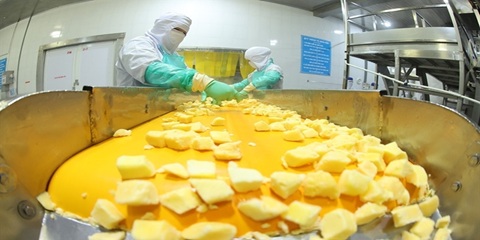
Fruit and vegetable exports are on track to reach nearly US$10 billion in 2026, after rising 19.9 per cent year on year to nearly US$7.4 billion in the first nine months, driven by strong seasonal demand and abundant tropical fruit supplies. The Ministry of Agriculture and Environment said the growth reflected stronger international demand for fresh produce and processed agricultural products.
Events Sponsors






















