Want to be in the loop?
subscribe to
our notification
Business News
VIỆT NAM EYES TO UNLOCK BORDER GATE ECONOMIC GROWTH
The development of the Mộc Bài Border Gate Economic Zone in southern Tây Ninh Province and the planned cross-border economic cooperation zone at Lào Cai International Border Gate aims to promote socioeconomic development, cross-border trade and new space for economic growth.
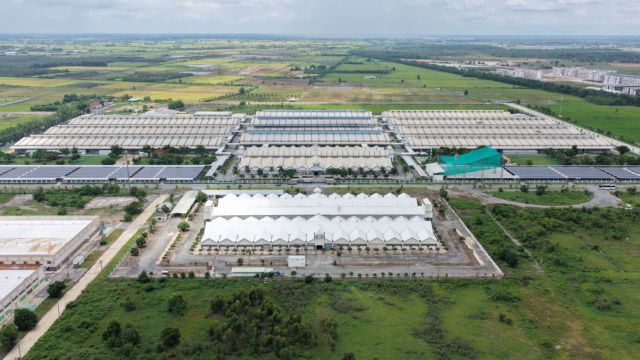
TMTC Industrial Park in the Mộc Bài Border Gate Economic Zone, Tây Ninh. — VNA/VNS Photo Minh Phú
HÀ NỘI — Deputy Prime Minister Phạm Gia Túc has urged the development of mechanisms and policies to be accelerated to promote economic acitivities at the Mộc Bài Border Gate Economic Zone in southern Tây Ninh Province and the planned cross-border economic cooperation zone at Lào Cai International Border Gate.
At a meeting on Monday, Deputy PM Túc said the two border areas, which lie along Việt Nam’s frontiers with Cambodia and China, respectively, have significant potential to expand trade, investment and economic cooperation with neighboring countries.
Lào Cai serves as a gateway linking with China's Yunnan province, while Tây Ninh has opportunities to strengthen trade with Cambodia, he said.
He called for appropriate policies, including special measures on taxation, customs and transport, to facilitate trade and business operations. He also stressed the need to improve transport infrastructure, housing and services to attract investment and support development around the border gates.
Deputy Minister of Finance Nguyễn Thị Bích Ngọc said the development of both zones aims to promote socioeconomic development, cross-border trade and new space for economic growth.
However, the ministry said efforts should focus on identifying and resolving existing bottlenecks rather than creating numerous separate policy mechanisms. Special measures should be considered only where existing laws lack effective tools, with proposals clearly identifying the problems, scope, resources and expected impact, Ngọc said.
For Mộc Bài, the Finance Ministry identified three main bottlenecks, including incomplete infrastructure and connectivity, a lack of sufficiently large projects capable of driving value chains, and limited customs, logistics and connectivity with Cambodia's Bavet border gates.
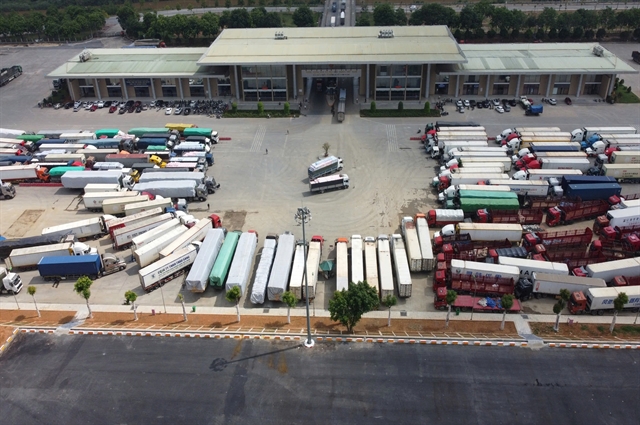
Container trucks at Kim Thành No. 2 Road Border Gate, Lào Cai Province. — VNA/VNS Photo Tuấn Khôi
For the proposed Lào Cai cross-border economic cooperation zone, Ngọc said it is necessary to clarify the pilot's scope and the conditions required for cooperation with China.
Trương Thanh Liêm, deputy chairman of the Tây Ninh People's Committee, for Mộc Bài, the province has identified priorities on improving transport connectivity, logistics and customs clearance and attraction of large-scale investment projects.
The province is working to connect the HCM-Mộc Bài Expressway with the border gate while developing logistics, digital border-gate systems and smart border gates to shorten clearance times and facilitate goods movement.
Tây Ninh proposed ministries and agencies to guide research into establishing a free trade zone within the existing planned functional areas of the economic zone.
Chairman of Lào Cai People’s Committee Nguyễn Tuấn Anh said the development of a cross-border economic cooperation zone at Lào Cai International Border Gate has been under preparation for several years.
Lào Cai and China's Yunnan province have reached a common understanding on promoting the zone, while Chinese businesses have recently explored investment opportunities in industrial parks and logistics facilities in Lào Cai.
He urged the proposal to be completed early as base for Việt Nam to engage with Yunnan on logistics development, investment attraction and improved connectivity with southwestern China.
Concluding the meeting, Deputy PM Túc said that policies already provided for by law, or expected to be covered by forthcoming laws and decrees, should not be proposed as separate mechanisms.
He said border-gate economic development was important to building peaceful, friendly and cooperative borders, but economic development must go hand in hand with national defense and security, border management and environmental protection.
The Mộc Bài Border Gate Economic Zone was established in 1998 along the Việt Nam-Cambodia border. It is intended to become a major trading hub linking the southeastern region of Việt Nam with Cambodia and the wider ASEAN region.
The zone currently has 59 valid investment projects, including 25 foreign-invested projects with combined registered capital of more than US$488 million and 34 domestic projects with registered capital exceeding VNĐ8.5 trillion ($322 million).
The Lào Cai Border Gate Economic Zone, also established in 1998 and located along the Kunming-Lào Cai-Hà Nội-Hải Phòng-Quảng Ninh economic corridor, serves as a gateway connecting Việt Nam and ASEAN countries with southwestern China. — VNS
Source: VNS
Related News

BANKING / FINANCE / INSURANCE / TAX
REMITTANCES TO HCM CITY RISE NEARLY 40% IN Q3
Remittances to HCM City reached more than US$2.83 billion in the third quarter of this year, up 39.5 per cent from the previous quarter and 3.6 per cent year-on-year. This was the first quarter showing positive annual growth this year, helping narrow the decline in remittance inflows over the first nine months. According to the State Bank of Vietnam (SBV)’s Regional Branch 2, remittances transferred to HCM City through credit institutions and economic organisations totalled $2.835 billion in Q3, an increase of more than $802 million from the previous quarter.
TECHNOLOGY
TECH SECTOR GROWTH OPENS UP OPPORTUNITIES FOR VIỆT NAM TO GO GLOBAL
The growth of the electronics, semiconductor and high-tech sectors worldwide is opening up a variety of opportunities for Vietnamese enterprises to integrate more deeply into the global supply chain. However, to become suppliers for these corporations, domestic enterprises must meet rigorous standards regarding quality, technology, productivity and order fulfilment capabilities.
VIETNAM ECONOMY INVESTMENT
FOREIGN INVESTORS SEEKING A SYNCHRONISED MANUFACTURING ECOSYSTEM
Instead of focusing only on land costs and incentives as usual, foreign investors are seeking a synchronised manufacturing ecosystem, from stable power supply and logistics to shared infrastructure and the convenience of completing residence procedures for experts to serve their long-term investment in the country.
MEMBER CORNER / PROMOTIONS
SENTRYSAFE FHW40200 – PROTECT YOUR VALUABLES, ENJOY PEACE OF MIND!
Looking for a reliable solution to protect your important documents, cash, and valuables from fire and water damage? Genuine SENTRYSAFE - Reliable protection for your valuables and peace of mind! Contact Sen Wai Vietnam for more information and personalized product recommendations.
PROPERTY / INDUSTRIAL ZONE
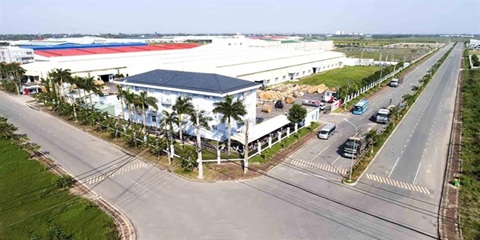
HCM CITY ATTRACTS US$5.7 BILLION INTO EXPORT PROCESSING AND INDUSTRIAL ZONES
HCM City attracted US$5.7 billion in domestic and foreign investment into its export processing and industrial zones during the first nine months of 2026. The figure exceeded the city's full-year target by 31 per cent, highlighting strong momentum in high-quality industrial investment under Resolution No.10-NQ/TW. Total investment reached 131 per cent of the 2026 target of $4.25 billion and represented a 29 per cent increase compared with the same period in 2025, according to the city's Export Processing and Industrial Zones Authority (HEPZA).
INFRASTRUCTURE / CONSTRUCTION / LOGISTIC / PORT
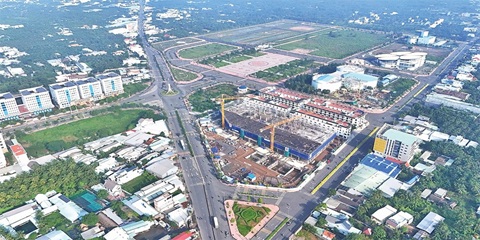
DONG THAP PROVINCE STEPS UP INDUSTRIAL EXPANSION AND INFRASTRUCTURE CONNECTIVITY
Accelerating public investment, strengthening inter-regional connectivity, and expanding industrial land are helping Dong Thap efficiently bolster competitiveness and drive economic growth. Following the 2025 merger of the former Dong Thap and Tien Giang provinces, the expanded Dong Thap province in the Mekong Delta faces mounting pressure to accelerate infrastructure development and strengthen connectivity among local economic zones, urban areas, industrial parks (IPs), and production centres.
Events Sponsors






















