Want to be in the loop?
subscribe to
our notification
Business News
VIỆT NAM SEEKS INVESTMENT IN HIGH-QUALITY, LOW-EMISSION RICE VALUE CHAIN
Investment should cover the entire value chain to help reduce production costs, improve product quality, increase added value and raise farmers' incomes.
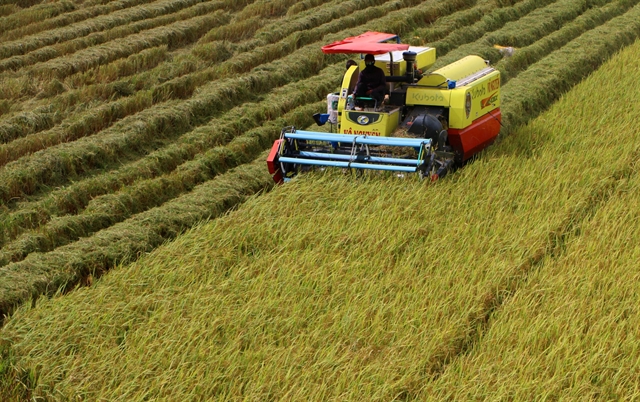
A low-emission paddy field in Vị Thuỷ Commune, Cần Thơ. The rice industry needed to shift from agricultural production towards an agricultural economy, from expanding output to increasing value, and from fragmented farming towards standardised, data-driven value chains linked to markets. — VNA/VNS Photo Duy Khương
CẦN THƠ — Việt Nam is seeking to attract more foreign investment to develop high-quality, low-emission rice value chain which is expected to support the country’s transition towards greener and more sustainable agriculture.
The push is highlighted at a forum on foreign direct investment (FDI) promotion in agriculture and rural development held in Cần Thơ City on November 23, as part of the second Vietnam International Rice Industry Festival 2026 organised by the Ministry of Agriculture and Environment and the Cần Thơ People's Committee.
Speaking at the opening, Nguyễn Đỗ Anh Tuấn, director of the ministry's Department of International Cooperation, said the green transition in rice production is not only inevitable but also offer opportunities to attract investment, introduce new technologies and increase the value of the sector.
He said investment promotion needs to move towards preparing concrete projects with clearly defined locations, scales, capital requirements, infrastructure and implementation conditions.
Investment should cover the entire value chain to help reduce production costs, improve product quality, increase added value and raise farmers' incomes, he said.
Data of the Department of Crop Production and Plant Protection showed that more than 420,000ha in the Mekong Delta applied all or part of sustainable farming practices under the one-million-ha programme for high-quality, low-emission rice production by August 2026.
Of this total, nearly 68,000ha had met all programme criteria, while more than 200,000 tonnes of rice had been labelled “Vietnamese Green, Low-Emission Rice”.
Lê Công Lý, deputy chairman of the municipal People's Committee, said the sector needed to shift from agricultural production towards an agricultural economy, from expanding output to increasing value, and from fragmented farming towards standardised, data-driven value chains linked to markets.
The city is estimated to have planted 708,000ha of rice in 2026, with output of around 4.66 million tonnes, which provides a strong foundation for linking regional raw-material production with research, processing, logistics and markets, he said.
Cần Thơ was looking to attract investment in high-quality rice varieties, mechanisation, precision agriculture, digitalisation, traceability, water management, storage, deep processing and the utilisation of rice by-products.
The city would continue improving its investment climate, information transparency as well as effort to connect investors with raw-material areas, cooperatives, research institutions and infrastructure, Lý said.
Nguyễn Văn Bé Hai, general director of Vietnam Rice Co Ltd (Vinarice), said the development of rice value chain continues to face challenges, including inadequate water management infrastructure, limited cooperative capacity and the costs of measuring emissions. Meanwhile, markets has yet to establish stable price premiums for low-emission rice, he said.
These bottlenecks needed to be addressed to ensure existing models could be sustained and replicated on a larger scale.
Within the framework of the forum, the Partnership for Sustainable Agriculture in Vietnam (PSAV) and the Philanthropy Asia Alliance (PAA) signed a memorandum of understanding to strengthen partnerships, share knowledge, promote public-private cooperation and mobilise resources for sustainable rice value chains. — VNS
Source: VNS
Related News
VIETNAM ECONOMY INVESTMENT
CÀ MAU PRODUCERS STEP UP EFFORTS TO MEET HCM CITY MARKET DEMANDS
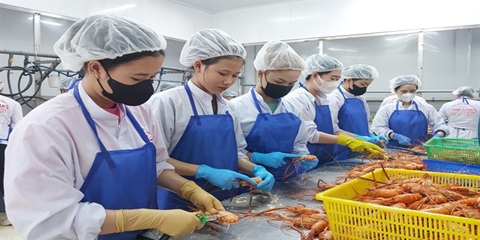
Co-operatives and local producers in Cà Mau Province are improving product quality, production standards and traceability to meet growing demand in HCM City. The Cửu Long (Mekong) Delta province is well known for its diverse agricultural products, especially shrimp and mud crab. At the Trúc Thương Co-operative in Đầm Dơi Commune, efforts to improve product quality focus on processed products made from đất shrimp – a species harvested from the wild rather than farmed – and black tiger shrimp.
GARMENT / TEXTILE
SUSTAINABLE PRODUCTION ESSENTIAL FOR VIỆT NAM'S TEXTILE AND GARMENT INDUSTRY
Việt Nam's National Action Plan on Sustainable Production and Consumption for 2021-2030, approved under Prime Ministerial Decision 889/QD-TTg issued on June 24, 2020, targets a 7-10 per cent reduction in raw material, fuel and supply consumption from 2026 to 2030 across key manufacturing industries, including textiles and garments.
VIETNAM ECONOMY INVESTMENT
RISING PANGASIUS PRICES BRING HIGHER PROFITS, BUT STABLE SUPPLY NEEDED
Prices of raw pangasius in the Mekong Delta are rising, bringing higher profits to fish farmers. To sustain growth and maintain its export market share in 2027, this billion-dollar industry needs to secure a stable supply of raw materials, strengthen disease control and increase the value of processed products. Pangasius farmers in several provinces across the Mekong Delta are welcoming record-high prices for market-ready fish, currently at around VNĐ38,000 (US$1.50) per kilogramme after recent periods of market volatility.
PROPERTY / INDUSTRIAL ZONE
HẢI PHÒNG EARMARKS 466 HECTARES OF INDUSTRIAL LAND FOR PRIORITY BUSINESSES
The northern port city of Hải Phòng has earmarked 465.89 hectares of industrial land for high-tech firms, small and medium-sized enterprises (SMEs) and innovative start-ups across 32 industrial parks, the city's Economic Zones Management Board said on Tuesday. The land allocation is intended to help priority business groups secure production sites and expand operations in the city.
VIETNAM ECONOMY INVESTMENT
VIỆT NAM BUILDS DOMESTIC COMMODITY EXCHANGE TO BOOST FARM PRODUCE
In a bid to move from a major agricultural producer to a global price-setter, Việt Nam is laying the groundwork for a domestic commodity derivatives market. Robusta coffee will be the first physical commodity listed, helping local businesses hedge against price volatility while elevating Vietnamese farm produce on the world stage.
PROPERTY / INDUSTRIAL ZONE
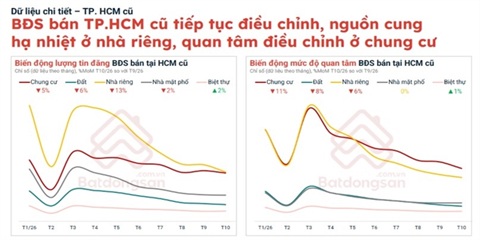
HCM CITY PROPERTY MARKET SEES MIXED SALES AND RENTAL TRENDS
The HCM City residential property market saw subdued buying interest in October, with searches declining across most major segments, particularly apartments, land plots, and private houses, according to data from property technology platform Batdongsan.com.vn. In the former HCM City area, property sale listings fell across almost all segments.
Events Sponsors