Want to be in the loop?
subscribe to
our notification
Business News
VIETNAM BECOMES SOUTH KOREA’S TOP EXPORT MARKET IN ASEAN
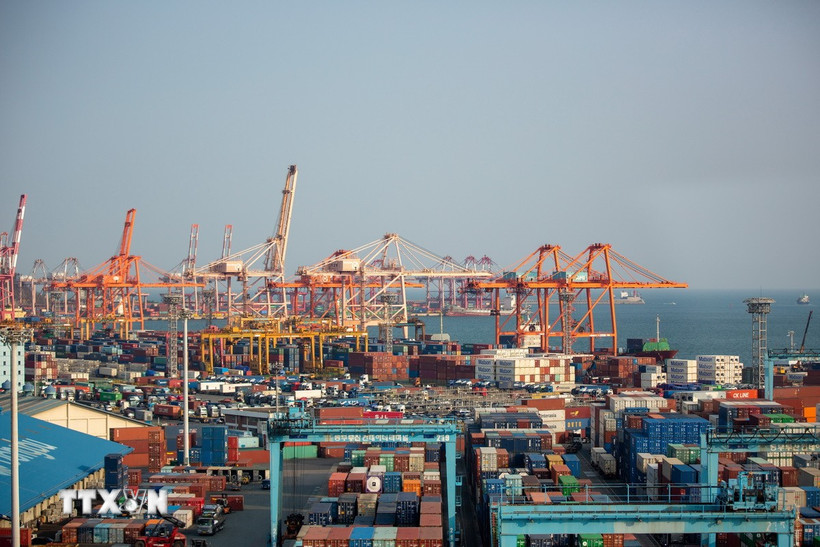
Shipping containers are seen at Busan Port in South Korea - PHOTO: VNA
HCMC – South Korea’s exports to Vietnam reached US$62.8 billion in 2025, up 7.6% from a year earlier, making Vietnam its most important export market in ASEAN, the Vietnam News Agency reported, citing South Korean trade data.
South Korea’s imports from Vietnam also rose strongly, climbing 11.7% to US$31.8 billion, according to figures released on January 26 by the Ministry of Trade, Industry and Energy (MOTIE) of South Korea and the Korea International Trade Association (KITA).
Total two-way trade increased 9% to US$94.5 billion, from US$86.8 billion in 2024. The value was equal to about 35% of South Korea’s trade with China, its largest partner, and 48% of its trade with the United States.
By export growth rate, Vietnam ranked second among South Korea’s major markets, behind Taiwan (China), where demand surged due to artificial intelligence-related chip consumption.
South Korea posted a trade surplus of US$31 billion with Vietnam in 2025, up from US$29.9 billion in 2024. Vietnam was the second-largest contributor to South Korea’s trade surplus, after the United States.
Vietnam ranked first in 2022 and has held second place for the past three years. Growth has been driven mainly by semiconductors, South Korea’s key export, which reached a record US$173.4 billion globally in 2025 amid rising demand linked to AI and data centers.
In Vietnam, semiconductors were South Korea’s largest export item, totaling US$24.7 billion in 2025, up 36.7% year-on-year.
Vietnam is a core market within ASEAN for South Korea to diversify trade, a MOTIE representative was quoted by the Vietnam News Agency as saying. The South Korean government pledged continued support to expand bilateral trade in semiconductors and consumer goods.
Since diplomatic ties were established in 1992, bilateral trade has expanded nearly 190 times from US$500 million. Trade has shifted from labor-intensive goods such as textiles to higher value-added products, including semiconductors and wireless communication equipment.
After the Vietnam–Korea Free Trade Agreement (VKFTA) took effect in December 2015, bilateral trade tripled, lifting Vietnam from South Korea’s eighth-largest trading partner to third.
Trade ties are structured around complementary production. South Korean companies invest in Vietnam, export intermediate goods to local factories, and Vietnam exports finished products back to South Korea. More than half of the smartphones Samsung makes globally come from Vietnam.
Samsung is Vietnam’s largest foreign investor and accounts for about one-fifth of the country’s total exports. The group opened a large research and development center in Hanoi City in 2022.
Exports of South Korean beauty and food products to Vietnam have also risen, supported by Korean pop culture.
From Vietnam’s perspective, South Korea remains a key partner. Data from the Department of Vietnam Customs showed South Korea was Vietnam’s second-largest import market and fourth-largest export destination in the first 11 months of 2025.
Source: The Saigon Times
Related News
MEMBER CORNER / PROMOTIONS
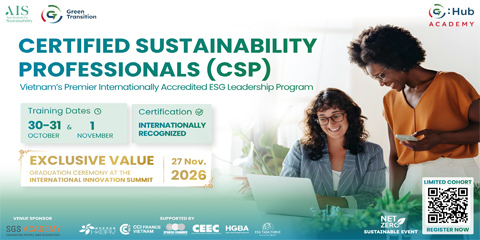
HCMC | CERTIFIED SUSTAINABILITY PROFESSIONAL (CSP) TRAINING | REGISTRATION OPEN
As sustainability becomes deeply embedded in corporate strategy and supply-chain operations across Vietnam, Hong Kong Business Association Vietnam is pleased to endorse the upcoming Certified Sustainability Professional (CSP) training program by the Asia Institute for Sustainability (AIS) - a premier internationally recognized ESG credential in Vietnam.
VIETNAM ECONOMY INVESTMENT
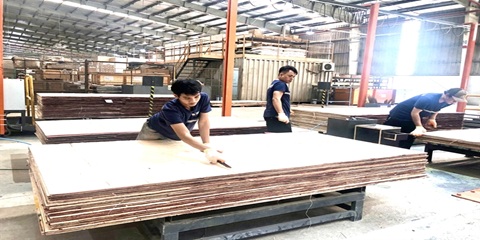
HCM CITY SAYS HOW IT PLANS TO ACHIEVE 10-11% ANNUAL EXPORT GROWTH FOR REST OF DECADE
The southern economic hub aims to strengthen its role as the country’s largest import-export centre while developing into a regional transhipment centre in Southeast Asia, supported by green and digital transformation and a circular economy. HCM City has outlined measures to expand production capacity, cut logistics costs, diversify export markets, and help businesses meet increasingly stringent international standards as it targets average annual export growth of 10-11 per cent through 2030.
VIETNAM ECONOMY INVESTMENT
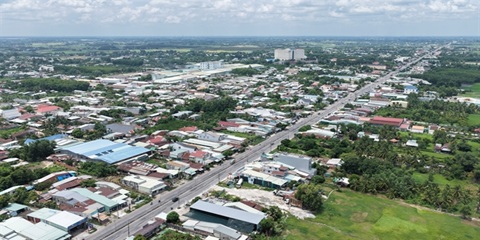
HCM CITY LEADS ECONOMIC RESTRUCTURING IN SOUTHEAST REGION
According to Associate Professor, Dr Vũ Tuấn Hưng, director of the Institute of Social Sciences of the Southern Region, the Southeast is a strategically important socio-economic space in Việt Nam’s development given its advantages in location, industry, trade, services, logistics, science and technology, urbanisation and human resources.
TECHNOLOGY
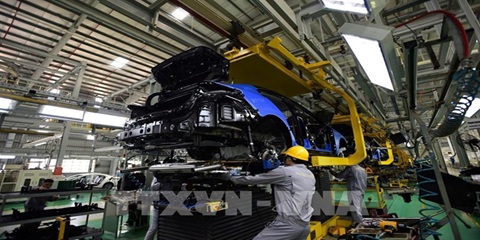
DIGITAL TRANSFORMATION TURNED INTO PRACTICAL TOOLS FOR PEOPLE, BUSINESSES
Việt Nam is moving its digital transformation agenda beyond policy frameworks and individual technology platforms towards practical applications that address everyday needs, as authorities seek measurable outcomes from science, technology and innovation. Under Politburo Resolution No. 57-NQ/TW issued on December 22, 2024, the implementation is increasingly shifting from simply completing assigned tasks towards developing concrete products and services for citizens and businesses.
TECHNOLOGY
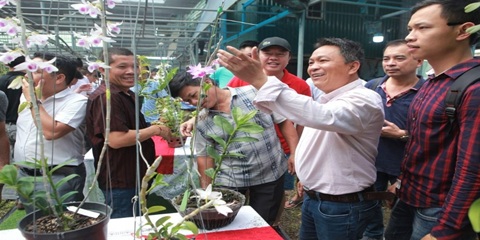
APPLYING TECHNOLOGY FOR ECONOMIC TRANSFORMATION
Having completed its new rural development program, Hanoi is shifting its focus toward improving development quality and building smart, sustainable rural areas. The transformation of Dong La orchid-growing village in An Khanh, a western commune of Hanoi, shows how digital technology is becoming a driver of production, market expansion, and higher incomes for local residents.
MEMBER CORNER / PROMOTIONS
VIGLACERA HONORED AS THE "LEADING GREEN INDUSTRIAL REAL ESTATE DEVELOPER 2026"
Organized by the Vietnam Investment Review, this prestigious awards program recognizes industry pioneers advancing eco-industrial parks, clean energy transition, and rigorous ESG standards. Outperforming competitors through a rigorous evaluation, Viglacera Corporation – JSC proudly ranked among the Top 5 highest-positioned enterprises in the Leading Green Industrial Real Estate Developers 2026 category, reinforcing its premier position in Vietnam’s industrial real estate sector.
Events Sponsors






















