Want to be in the loop?
subscribe to
our notification
Business News
VIETNAM FORECAST TO BECOME SECOND-LARGEST ECONOMY IN SOUTHEAST ASIA BY 2036
Vietnam is forecast to become the second-largest economy in Southeast Asia after Indonesia and the 20th-largest economy in the world by 2036, according to the World Economic League Table 2022 report by the Center for Economic and Business Research (CEBR).
The report pointed out that, as of 2021, Vietnam is estimated to have a purchasing power parity adjusted GDP per capita of $11,608.
Vietnam’s economic growth story has been nothing short of a miracle, with the doi moi reform in the mid-1980’s, coupled with favourable global trends, enabling the nation to achieve rapid economic growth and propelling the country from a poor country to a lower-middle-class country.
The economy employs five-year plans for its economic outlook, with the current plan running from 2021 to 2025, emphasising the continuation of the current economic development model. Growth is to be facilitated via manufacturing, supported by further integration into global supply chains, and through the pursuit of trade partnerships and export diversification.
Underpinning the robust GDP growth in 2021 has been a resilient labour market. In 2021, the unemployment rate fell by 0.6 percentage points to 2.7 per cent.
Government debt as a share of GDP reached 47.9 per cent in 2021, compared to 46.3 per cent the previous year. This increase is attributable to the impact of the pandemic on government spending and tax receipts.
Vietnam aspires to attain a high-income status by 2045. For this to happen, it must grow at an annual average rate of approximately 5 per cent per capita. Vietnam’s ongoing five-year plan currently estimates growth to average 6.5 per cent annually for the coming decade, keeping it on track with its aspirations.
Nonetheless, it faces key challenges on its path to becoming a high-income country. With global trade declining and its population ageing, it needs to improve its policy implementation performance drastically, particularly in sectors that will be severely affected by automation and climate change.
Between 2021 and 2036, CEBR forecasts that the position of Vietnam in the World Economic League Table will improve considerably, with its ranking rising from 41st to 20th by 2036.
At that time, Vietnam will rank second in Southeast Asia, only after Indonesia. Meanwhile, Thailand will be ranked third in Southeast Asia and 22nd in the world.
According to the IMF, by 2025, Vietnam will rise to the third position in Southeast Asia in terms of economic size with a GDP of $571.12 billion, trailing behind Indonesia ($1.63 trillion) and Thailand ($632.45 billion) while surpassing Malaysia ($556 billion), the Philippines ($523.53 billion), and Singapore ($496.81 billion).
By 2027, the GDP of Thailand and Vietnam will be on par at more than $690 (Thailand $692.6 billion and Vietnam $690.11 billion). After 2028, it is forecasted that Vietnam's economy will officially surpass Thailand's.
If CEBR's forecast is correct, by 2036, Vietnam's economy will surpass Poland, Switzerland, Sweden, Belgium, and Australia.
Source: VIR
Related News

CHARITY / EXHIBITION / OTHER EVENTS
INVESTMENT OPPORTUNITIES IN CA MAU PROVINCE: 96 PROJECTS AND 20 STRATEGIC PROJECTS
We are pleased to share with you information on investment projects currently seeking investors in Ca Mau Province. Should your esteemed company or association be interested, we kindly invite you to review the project information and complete the registration form via the links provided. The Ho Chi Minh City Investment and Trade Promotion Centre (ITPC) will consolidate the expressions of interest and facilitate connections with the leadership of Ca Mau Province at a meeting tentatively scheduled for 13 November 2026 in Ho Chi Minh City.

MEMBER CORNER / PROMOTIONS
BẰNG KIỀU LIVESHOW - A SYMPHONY OF LOVE UNDER THE GOLDEN GLOW
A masterclass in live music that takes the audience on a soulful journey through immortal love songs, guided by the peerless artistry and emotive storytelling of renowned singer Bằng Kiều. The highlight of the night is his seamless musical chemistry with special guest Triệu Hồng Ngọc, promising passionate and deeply resonant duets inside the magnificent Grand Ballroom.
INFRASTRUCTURE / CONSTRUCTION / LOGISTIC / PORT
ĐÀ NẴNG GREEN-LIGHTS US$105 MILLION THAI DEVELOPMENT DEAL
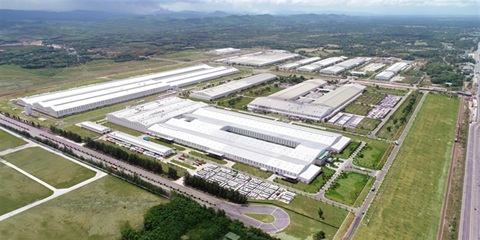
The central city has approved an investment proposal by Thailand’s WHA Group to develop infrastructure for the 400ha WHA Đà Nẵng Industrial Park project on two communes of Thăng Bình and Đồng Dương, with an investment of more than VNĐ2.7 trillion (US$105 million). The city said it approved WHA Industrial Development International's status as an investor in the project, which is expected to take place between 2027 and 2034.
VIETNAM ECONOMY INVESTMENT
MOBILE PHONE EXPORTS RISE 20% TO $51.8 BILLION IN FIRST NINE MONTHS
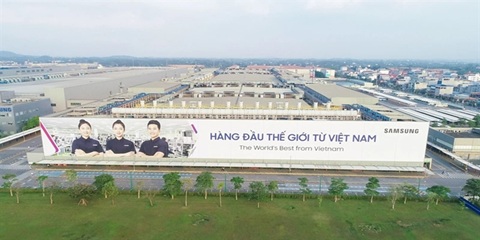
Exports of mobile phones and components rose 20 per cent year-on-year to nearly US$51.8 billion in the first nine months of 2026, with China, the US and Republic of Korea accounting for more than half of the total. Shipments to the three markets reached a combined $26.18 billion, or 50.6 per cent of total exports of the product group during the period, according to data from the Vietnam Department of Customs under the Ministry of Finance.

INFRASTRUCTURE / CONSTRUCTION / LOGISTIC / PORT
VIỆT NAM-CAMBODIA TRADE GATHERS PACE TOWARDS $20 BILLION TARGET
Trade between Việt Nam and Cambodia continues to grow, remaining a bright spot and a key pillar of bilateral cooperation as the two countries aim to raise two-way trade to US$20 billion in the coming years. After setting a record of more than $11.3 billion last year, bilateral trade reached about $8.7 billion in the first eight months of this year, up 8.3 per cent year on year.
VIETNAM ECONOMY INVESTMENT
FRUIT AND VEGETABLE EXPORTS POISED TO HIT $10 BILLION IN 2026
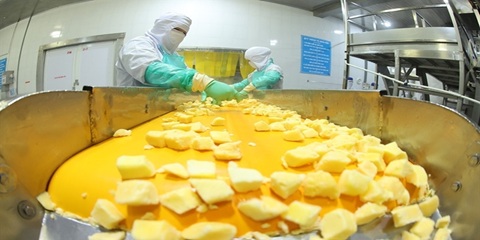
Fruit and vegetable exports are on track to reach nearly US$10 billion in 2026, after rising 19.9 per cent year on year to nearly US$7.4 billion in the first nine months, driven by strong seasonal demand and abundant tropical fruit supplies. The Ministry of Agriculture and Environment said the growth reflected stronger international demand for fresh produce and processed agricultural products.
Events Sponsors






















