Want to be in the loop?
subscribe to
our notification
Business News
VIETNAM REAL ESTATE MARKET: LACK OF ACCURATE INFORMATION, TRANSPARENCY
Vietnam's real estate market is now intransparent in planning, investor selection, project assignment and transactions. Limited information on the market and inaccuracy are causing certain difficulties for real estate investment activities.
Lack of transparent information
In a recent meeting with the representative of the World Bank, Mr. Nguyen Tran Nam, Chairman of Vietnam Real Estate Association, said: “Very little and inaccurate information is one weakness of the Vietnamese real estate market. Although the database can be collected from the government and the Association and this is defined in the Housing Law and the Real Estate Business Law, it is still very poorly implemented in reality.”
According to the 'Global Real Estate Transparency Index 2018' of Jones Lang LaSalle (JLL), Vietnam's real estate market is ranked 61 out of 100 global real estate markets in terms of transparency, leading the "Poor transparency" group.
Besides, the statistics of the Ministry of Construction shows that Vietnam currently has no synchronous statistics system of real estate ownership and transactions to meet the needs of the State management from Central to local authorities as well as quickly and accurately provide market movements and prices so that people and real estate brokers can determine the right investment direction. Meanwhile, the most regular quarterly and annual reports still come from foreign real estate companies doing business in Vietnam. However, this information is difficult to verify and is often local, oriented to the interests of the business, and not objective and comprehensive.
Because of this lack of transparent information, consumers are required to consult different sources to avoid falling into a real estate investment trap. The Real Estate Business Law requires the investor to disclose the real estate project information on the business website including the detailed plan of the project, the number of houses/apartments for sale, and the number of remaining units. But in fact, the investors do not perform it properly but mainly post information and polish products to sell as many properties as possible. The lack of transparent information caused a virtual fever of land prices and complicated developments in the real estate market recently. Brokers, storks and even some real estate businesses can take advantage of ignorance or lack of customer information to push prices up.
Many agricultural land, rubber land and lands not planned to be residential land have been illegally divided into land plots for sale, cheating many people, causing great damage and disruption in the local development planning, disrupting the real estate market, and creating obstacles in attracting large and feasible investment projects.
Prerequisites for the development of the real estate market
Currently, with the deep integration into international and regional economies, Vietnam is expected to increase the attraction of foreign direct investment (FDI), including FDI into the real estate. Besides the favorable investment environment, and the stable political situation, it is extremely important to provide complete and transparent information. Foreign investors pay more attention to the benefits they earn from investing in Vietnam's real estate market and other countries in the region such as Indonesia, Singapore, Malaysia, etc. One weakness of the real estate market of Vietnam is not transparent, which will hinder the investment process of foreign investors into the market. Therefore, the information must be transparent to attract more investment from foreign investors, as well as create trust of consumers and investors.
Currently, the Department of Housing and Real Estate Market Management (Ministry of Construction) is also actively coordinating with the Vietnam Real Estate Association to publish the real estate statistics in the six provinces and cities, including Hanoi, Ho Chi Minh City, Da Nang, Hai Phong, Khanh Hoa and Can Tho. The six provinces and cities account for 80-90% of the transactions in the country. Accordingly, the State will provide the number of licensed projects to forecast the short-term supply and demand published quarterly.
This project is expected to become an official information channel to meet the requirements of the government in the management, helping businesses in strategic planning as well as guiding people to make the correct purchasing decisions. More specifically, projects provide the press accurate information on the media to stabilize the market.
“The clearer and more transparent the information is, the more stable and sustainable is market development. This requires the coordination between the management unit with non-governmental organizations and the Association to be able to implement the project early and successfully,”said Mr. Do Viet Chien, General Secretary of Vietnam Real Estate Association.
Source: VCCI
Related News

INFRASTRUCTURE / CONSTRUCTION / LOGISTIC / PORT
VIỆT NAM-CAMBODIA TRADE GATHERS PACE TOWARDS $20 BILLION TARGET
Trade between Việt Nam and Cambodia continues to grow, remaining a bright spot and a key pillar of bilateral cooperation as the two countries aim to raise two-way trade to US$20 billion in the coming years. After setting a record of more than $11.3 billion last year, bilateral trade reached about $8.7 billion in the first eight months of this year, up 8.3 per cent year on year.
TECHNOLOGY
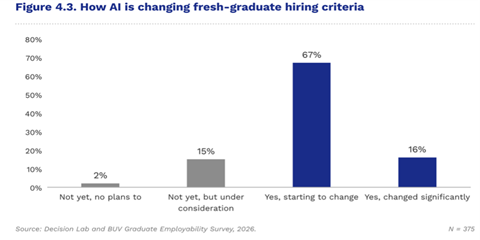
AI BEGINNING TO RESHAPE RECRUITMENT CRITERIA
Digital literacy is the only capability area in which fresh graduates meet employers’ expectations, according to a new report. Yet, it is also the standard rising fastest, as businesses increasingly expect new hires to use AI effectively in the workplace. Some 83 per cent of employers say AI has changed, or is beginning to change, their hiring criteria, while 94 per cent report higher expectations for digital and AI capabilities than they had two to three years ago.

INFRASTRUCTURE / CONSTRUCTION / LOGISTIC / PORT
ĐÀ NẴNG GREEN-LIGHTS US$105 MILLION THAI DEVELOPMENT DEAL
The central city has approved an investment proposal by Thailand’s WHA Group to develop infrastructure for the 400ha WHA Đà Nẵng Industrial Park project on two communes of Thăng Bình and Đồng Dương, with an investment of more than VNĐ2.7 trillion (US$105 million). The city said it approved WHA Industrial Development International's status as an investor in the project, which is expected to take place between 2027 and 2034.

VIETNAM ECONOMY INVESTMENT
MOBILE PHONE EXPORTS RISE 20% TO $51.8 BILLION IN FIRST NINE MONTHS
Exports of mobile phones and components rose 20 per cent year-on-year to nearly US$51.8 billion in the first nine months of 2026, with China, the US and Republic of Korea accounting for more than half of the total. Shipments to the three markets reached a combined $26.18 billion, or 50.6 per cent of total exports of the product group during the period, according to data from the Vietnam Department of Customs under the Ministry of Finance.

VIETNAM ECONOMY INVESTMENT
FRUIT AND VEGETABLE EXPORTS POISED TO HIT $10 BILLION IN 2026
Fruit and vegetable exports are on track to reach nearly US$10 billion in 2026, after rising 19.9 per cent year on year to nearly US$7.4 billion in the first nine months, driven by strong seasonal demand and abundant tropical fruit supplies. The Ministry of Agriculture and Environment said the growth reflected stronger international demand for fresh produce and processed agricultural products.
GARMENT / TEXTILE
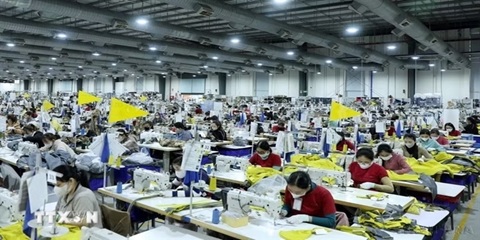
TEXTILE EXPORTS FACE DUAL CHALLENGES OF SUSTAINING ORDERS AND BOOSTING EFFICIENCY AMID GROWING COMPETITION
Data shows that the textile and garment sector maintained its growth momentum in the first nine months of this year. The industry's total export turnover reached an estimated US$35.721 billion in the first nine months of this year, up 3.3 per cent year-on-year. Despite posting encouraging export figures, Vietnamese textile and garment enterprises continue to navigate unpredictable market variables.
Events Sponsors






















