Want to be in the loop?
subscribe to
our notification
Business News
VIETNAM’S ECONOMIC OUTLOOK OPTIMISTIC YET NECESSARILY PRUDENT
The Asian Development Bank (ADB) maintained its growth forecasts for Vietnam at 6.0% and 6.2% in 2024 and 2025, respectively, on the back of strong growth in the first half of 2024. However, the trade-related manufacturing - one of the main drivers of recovery - is expected to slow down in the coming time while domestic demand will remain subdued. Inflation is projected to stabilize at 4% in 2024 and 2025.
Mr. Shantanu Chakraborty, ADB Country Director for Vietnam, “Vietnam's economy was quite impressive in the first half of 2024, with GDP growth at 6.4% compared to the same period of last year. This was mainly driven by a strong trade recovery, where exports grew by 14.5% and imports by 17% year on year. However, the domestic segment remained sluggish, with final consumption growing by only 5.8%.
“Vietnam can maintain its growth momentum in 2024 through sustained trade recovery in export-led manufacturing, positive inflows of FDI and remittances, while making more efforts to restore service growth, stable agriculture production and domestic consumption recovery”, he said.
Although the economy is expected to post solid growth this year and grow at a slightly higher pace next year, Vietnam still faces several external downside risks that could slow down its growth momentum, including softened global demand caused by slow economic recovery among its trading partners and continued geopolitical tensions, he added. These two factors will slow down the recovery of Vietnam's export-led growth.
In addition, the lower pace of normalization of interest rates in the United States and other advanced economies will continue to put pressure on the exchange rate. Growth in 2024 also depends on effective enforcement of the government’s fiscal measures and public investment.
Moreover, extreme weather phenomena (El Nino causes heavy rains and floods) will affect agriculture and crops.
Shantanu Chakraborty said, the relative slowdown in growth in recent years has exposed the risks of structural fragilities in the Vietnamese economy, such as the reliance on FDI-led export manufacturing, show disbursement of public investment, and overreliance on bank credit among others. If these risks are addressed in a timely manner, Vietnam may achieve stronger growth. Therefore, the Government needs to continue to reform more strongly in the short and long terms to foster growth in the next period. Vietnam's economic outlook is optimistic but necessarily prudent.
According to the Asian Development Outlook (ADO) report, ADB has also slightly raised its economic growth forecast for developing Asia and the Pacific this year to 5% from a previous projection of 4.9%, as rising regional exports complement resilient domestic demand. The growth outlook for next year is maintained at 4.9%. Inflation is forecast to ease gradually to 2.9% this year amid lower global food prices and the lingering impact of higher interest rates.
After a post-pandemic recovery that was driven mainly by domestic demand, exports are rebounding strongly and helping propel the region’s economic growth. Strong global demand for electronics, particularly semiconductors used for high-technology and artificial intelligence applications, is boosting exports from several Asian economies.
Mr. Alberk Park, ADB Chief Economist, said: "Most of Asia and the Pacific is seeing faster economic growth compared with the second half of last year. The region’s fundamentals remain strong, but policymakers still need to pay attention to a number of risks that could affect the outlook, from uncertainty related to election outcomes in major economies to interest rate decisions and geopolitical tensions.”
Source: VCCI
Related News
VIETNAM ECONOMY INVESTMENT
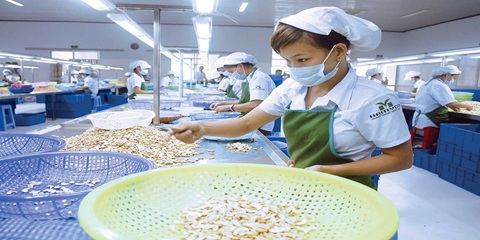
VIETNAMESE COMPANIES OPTIMISTIC ON INTERNATIONAL GROWTH
Vietnamese businesses are among the most confident about the outlook for international trade, according to HSBC’s Global Trade Pulse Survey 2026, released on November 16. The survey captures the views of 10,000 senior business leaders across 26 markets on trade, tariffs, supply chains, and technology. Findings show that 94 per cent of Vietnamese businesses expect their international trade to grow over the next two years. Vietnam ranks joint top in the survey with the Philippines, compared with 86 per cent globally.
TECHNOLOGY
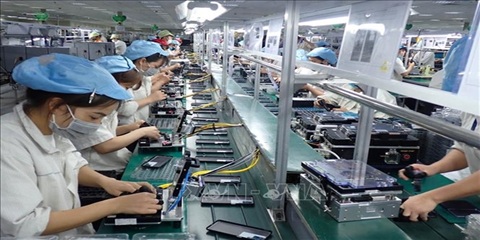
VIỆT NAM'S DIGITAL TECHNOLOGY INDUSTRY REVENUE SURGES 53% TO $254.6B
Việt Nam's digital technology industry generated an estimated US$254.6 billion in revenue in the first 10 months of 2026, up 53 per cent from a year earlier, while exports rose 46.2 per cent to $212 billion, the Ministry of Science and Technology said in its latest report. According to the report, hardware and electronics exports reached an estimated $30.681 billion in October, up 108 per cent from the same month last year.
CHARITY / EXHIBITION / OTHER EVENTS
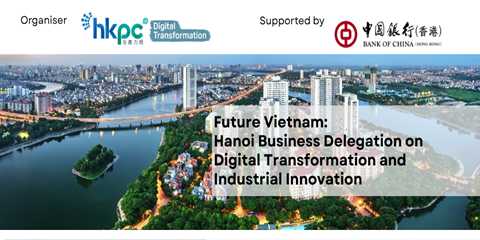
BOCHK ‧ HKPC FUTURE VIETNAM: HANOI BUSINESS DELEGATION ON DIGITAL TRANSFORMATION AND INDUSTRIAL INNOVATION
Interested in exploring Vietnam’s latest developments in digital transformation, technology adoption and industrial innovation? Organised by the Hong Kong Productivity Council (HKPC) and fully supported by Bank of China (Hong Kong) Limited, the "Future Vietnam: Hanoi Business Delegation on Digital Transformation and Industrial Innovation” will feature visits to leading high-tech enterprises across Vietnam and engage with local chambers of commerce, industry organisations and associations. Join us to expand your high-value business network and seize emerging opportunities in the ASEAN market!
GARMENT / TEXTILE
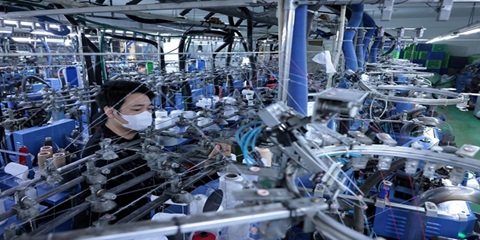
TEXTILE, GARMENT FIRMS REFORM TO MEET CPTPP ORIGIN RULES
Vietnamese textile and garment manufacturers are aggressively restructuring their supply chains and diversifying material sources to unlock untapped tariff benefits. To capitalise on the Comprehensive and Progressive Agreement for Trans-Pacific Partnership (CPTPP), companies are racing to align with the pact's strict "yarn-forward" rules — a task made difficult by a shortage of raw materials within the trade bloc.
TECHNOLOGY
ĐÀ NẴNG SEEKS TO BUILD HIGH-TECH AGRICULTURE, INTEGRATED VALUE CHAINS
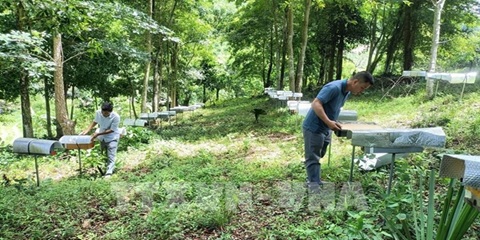
Đà Nẵng is seeking to transform its agricultural sector from a supplier of raw materials into a technology-driven, market-oriented economy, with investment opportunities spanning concentrated production areas, deep processing, logistics and agricultural product distribution. The city aims to shift from traditional agricultural production towards agricultural economic development, organising value chains and increasing the technological content and added value of products through closer links between production and processing.
INFRASTRUCTURE / CONSTRUCTION / LOGISTIC / PORT
HCM CITY ACCELERATES POWER INFRASTRUCTURE INVESTMENT TO ATTRACT HIGH-TECH CAPITAL
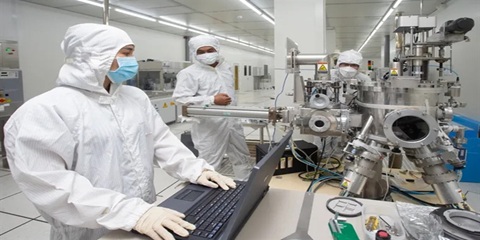
High-tech projects, particularly data centres, are not confined to SHTP but are also expanding into export processing zones and industrial parks across HCM City, driving up electricity demand. Proactively developing power infrastructure, diversifying energy supplies and expanding access to green energy are becoming essential for HCM City to maintain its competitive edge in attracting high-tech foreign direct investment (FDI).
Events Sponsors






















