Want to be in the loop?
subscribe to
our notification
Business News
VIETNAM’S FRUIT AND VEGETABLE EXPORTS HIT RECORD US$8.6 BILLION IN 2025

A durian farmer in the Mekong Delta region – PHOTO: TRUNG CHANH
HCMC – Vietnam’s fruit and vegetable exports reached a record US$8.6 billion in 2025, marking the third consecutive year of all-time highs, driven largely by durian and a shift toward stricter quality control and market compliance.
The result came despite mounting pressure early in the year. Major markets such as China and the EU tightened technical standards, while U.S. tariff policies remained uncertain. China’s stricter controls on residues of auramine O and cadmium disrupted durian exports, the sector’s largest revenue source, causing a sharp decline in export revenue in the first half of the year.
In response, exporters reviewed their entire supply chains, from growing areas and packing facilities to testing and traceability systems. Rather than expanding output, the industry shifted its focus to quality control and process standardization to meet higher market requirements.
Exports began to recover from June 2025 as durian shipments resumed. Growth accelerated between August and October during the peak harvest season in the Central Highlands, helping the sector regain momentum. Alongside durian, exports of bananas, mangoes and jackfruit posted steady gains, while pomelo and coconut emerged as new growth drivers.
Durian remained the backbone of the industry, generating an estimated US$4 billion in export revenue, up about US$800 million from 2024.
Market access played a key role in the sector’s performance. In 2025 alone, Vietnam and China signed five export protocols, including those covering passion fruit and fresh jackfruit. Fresh pomelo was also officially approved for export to Australia, a market known for strict technical standards.
China continued to be Vietnam’s largest and most strategic market, importing an estimated US$78 billion worth of fruit annually. Vietnam’s share remains below US$5 billion, highlighting significant growth potential.
Industry players are increasingly looking beyond durian. Bananas are seen as the next major growth segment. According to Pham Quoc Liem, chairman of U&I Agricultural JSC (Unifarm), the global banana market is projected to reach US$21 billion by 2030, while Vietnam’s banana exports currently stand at around US$380 million.
Vietnam’s average banana export value is less than US$2,500 per hectare per year. Raising this figure to US$25,000 per hectare, as achieved by some large-scale producers, could lift banana exports to US$3.8 billion in the future, Liem said.
Looking ahead, growth is expected to rely less on expanding acreage and more on improving quality, standardizing growing areas, strengthening traceability and promoting deep processing. If market discipline is maintained and key products such as durian, bananas, pomelo and coconut are developed through integrated value chains, Vietnam’s fruit and vegetable exports could approach US$10 billion next year.
Source: The Saigon Times
Related News

INFRASTRUCTURE / CONSTRUCTION / LOGISTIC / PORT
VIỆT NAM-CAMBODIA TRADE GATHERS PACE TOWARDS $20 BILLION TARGET
Trade between Việt Nam and Cambodia continues to grow, remaining a bright spot and a key pillar of bilateral cooperation as the two countries aim to raise two-way trade to US$20 billion in the coming years. After setting a record of more than $11.3 billion last year, bilateral trade reached about $8.7 billion in the first eight months of this year, up 8.3 per cent year on year.
TECHNOLOGY
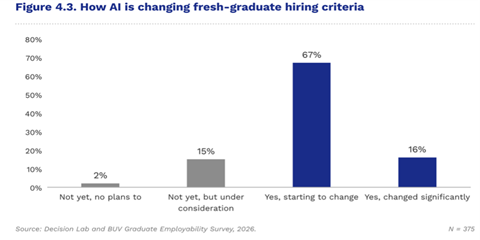
AI BEGINNING TO RESHAPE RECRUITMENT CRITERIA
Digital literacy is the only capability area in which fresh graduates meet employers’ expectations, according to a new report. Yet, it is also the standard rising fastest, as businesses increasingly expect new hires to use AI effectively in the workplace. Some 83 per cent of employers say AI has changed, or is beginning to change, their hiring criteria, while 94 per cent report higher expectations for digital and AI capabilities than they had two to three years ago.

INFRASTRUCTURE / CONSTRUCTION / LOGISTIC / PORT
ĐÀ NẴNG GREEN-LIGHTS US$105 MILLION THAI DEVELOPMENT DEAL
The central city has approved an investment proposal by Thailand’s WHA Group to develop infrastructure for the 400ha WHA Đà Nẵng Industrial Park project on two communes of Thăng Bình and Đồng Dương, with an investment of more than VNĐ2.7 trillion (US$105 million). The city said it approved WHA Industrial Development International's status as an investor in the project, which is expected to take place between 2027 and 2034.

VIETNAM ECONOMY INVESTMENT
MOBILE PHONE EXPORTS RISE 20% TO $51.8 BILLION IN FIRST NINE MONTHS
Exports of mobile phones and components rose 20 per cent year-on-year to nearly US$51.8 billion in the first nine months of 2026, with China, the US and Republic of Korea accounting for more than half of the total. Shipments to the three markets reached a combined $26.18 billion, or 50.6 per cent of total exports of the product group during the period, according to data from the Vietnam Department of Customs under the Ministry of Finance.

VIETNAM ECONOMY INVESTMENT
FRUIT AND VEGETABLE EXPORTS POISED TO HIT $10 BILLION IN 2026
Fruit and vegetable exports are on track to reach nearly US$10 billion in 2026, after rising 19.9 per cent year on year to nearly US$7.4 billion in the first nine months, driven by strong seasonal demand and abundant tropical fruit supplies. The Ministry of Agriculture and Environment said the growth reflected stronger international demand for fresh produce and processed agricultural products.
GARMENT / TEXTILE
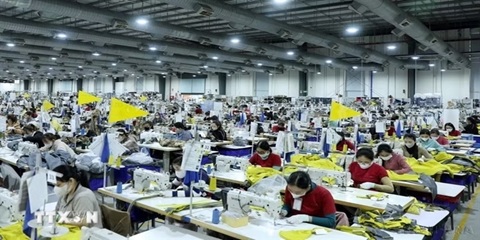
TEXTILE EXPORTS FACE DUAL CHALLENGES OF SUSTAINING ORDERS AND BOOSTING EFFICIENCY AMID GROWING COMPETITION
Data shows that the textile and garment sector maintained its growth momentum in the first nine months of this year. The industry's total export turnover reached an estimated US$35.721 billion in the first nine months of this year, up 3.3 per cent year-on-year. Despite posting encouraging export figures, Vietnamese textile and garment enterprises continue to navigate unpredictable market variables.
Events Sponsors






















