Want to be in the loop?
subscribe to
our notification
Business News
VIETNAM’S LEATHER-FOOTWEAR INDUSTRY SEES DOUBLE-DIGIT EXPORT GROWTH IN H1
Vietnam's leather and footwear industry posted more than $14 billion in total export value in the first six months of the year, reaffirming its resilience and strategic position in the global supply chain.
According to data from the National Statistics Office, the leather and footwear industry witnessed over a 10 per cent jump on-year in export growth.
Footwear alone accounted for around $12 billion, up 10.1 per cent on-year, while handbags, suitcases, and umbrellas contributed nearly $2.2 billion, marking an 11.6 per cent increase.
Vietnam is currently the third-largest producer of leather and footwear globally, manufacturing 1.4 billion pairs of shoes annually, behind only China and India.
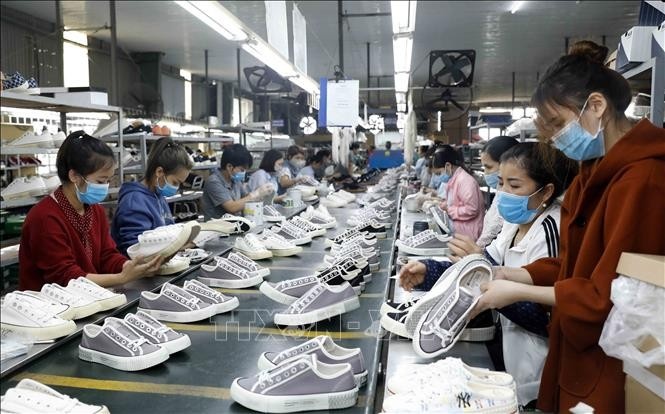
In terms of exports, the country ranks second worldwide with 1.3 billion pairs exported each year, trailing only China.
The sector’s competitiveness stems from its effective utilisation of tariff advantages under 16 free trade agreements (FTAs) with major markets, combined with a large and cost-efficient labour force, where average monthly wages range between $181 and $200.
Despite challenges in 2024, ranging from pricing pressures and rising input costs to sustainability requirements and labour shortages, the leather-footwear sector still generated an impressive $26 billion in revenue, representing nearly a 10 per cent jump compared to 2023.
Looking to 2025, the industry has set its sights on 10 per cent on-year export growth, aiming to reach $29 billion in total export value.
To achieve this ambitious target, companies are accelerating the shift towards green and circular production models, enhancing environmental sustainability, and increasing the localisation rate of raw materials to meet increasingly stringent standards in key markets such as the EU and the United States.
Vietnamese footwear and handbags are exported primarily to core markets including the US, the EU, South Korea, China, and the UK. Among them, the US remains the largest importer, with 2024 export turnover reaching nearly $8.3 billion, a remarkable 15.6 per cent increase. Over the years, Vietnamese footwear has been subject to a 10 per cent export tax when entering the US market.
The US presence in Vietnam’s footwear manufacturing sector is notable, with many American brands operating production facilities in the country.
For example, Nike, one of the world’s largest sportswear companies, has made Vietnam its main global production hub.
Of the approximately 600 million pairs of shoes Nike produces annually, half are made in Vietnam.
At a conference in late May held by the Ministry of Industry and Trade, with the participation of an executive representative from the Vietnam Leather, Footwear, and Handbag Association, discussions focused on both the opportunities and challenges facing the industry.
The participants put forward a series of critical recommendations aimed at enhancing the sector’s competitiveness and export market diversification.
A recurring theme was the importance of human resource development, with a special emphasis on professional training in marketing and design, viewed as two core competencies for the industry to transition from contract manufacturing to owning products and building global brands.
To support this transformation, proposals referred to inviting international experts in fashion trends, consumer behaviour, and product design to Vietnam for direct training and consultancy.
Simultaneously, digital transformation in trade promotion was deemed essential. Applying technology to improve product traceability and information transparency is now vital to meet evolving demands from global consumers and regulators.
Another strategic priority is developing a more resilient domestic supply chain. This includes building specialised industrial parks to foster the supporting industries needed for leather and footwear production.
The objective is to reduce dependency on imported materials, and fully leverage the preferential tariffs provided under free trade agreements.
Source: VIR
Related News

INFRASTRUCTURE / CONSTRUCTION / LOGISTIC / PORT
VIỆT NAM-CAMBODIA TRADE GATHERS PACE TOWARDS $20 BILLION TARGET
Trade between Việt Nam and Cambodia continues to grow, remaining a bright spot and a key pillar of bilateral cooperation as the two countries aim to raise two-way trade to US$20 billion in the coming years. After setting a record of more than $11.3 billion last year, bilateral trade reached about $8.7 billion in the first eight months of this year, up 8.3 per cent year on year.
TECHNOLOGY
AI BEGINNING TO RESHAPE RECRUITMENT CRITERIA
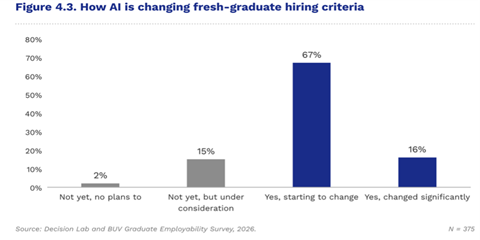
Digital literacy is the only capability area in which fresh graduates meet employers’ expectations, according to a new report. Yet, it is also the standard rising fastest, as businesses increasingly expect new hires to use AI effectively in the workplace. Some 83 per cent of employers say AI has changed, or is beginning to change, their hiring criteria, while 94 per cent report higher expectations for digital and AI capabilities than they had two to three years ago.

INFRASTRUCTURE / CONSTRUCTION / LOGISTIC / PORT
ĐÀ NẴNG GREEN-LIGHTS US$105 MILLION THAI DEVELOPMENT DEAL
The central city has approved an investment proposal by Thailand’s WHA Group to develop infrastructure for the 400ha WHA Đà Nẵng Industrial Park project on two communes of Thăng Bình and Đồng Dương, with an investment of more than VNĐ2.7 trillion (US$105 million). The city said it approved WHA Industrial Development International's status as an investor in the project, which is expected to take place between 2027 and 2034.

VIETNAM ECONOMY INVESTMENT
MOBILE PHONE EXPORTS RISE 20% TO $51.8 BILLION IN FIRST NINE MONTHS
Exports of mobile phones and components rose 20 per cent year-on-year to nearly US$51.8 billion in the first nine months of 2026, with China, the US and Republic of Korea accounting for more than half of the total. Shipments to the three markets reached a combined $26.18 billion, or 50.6 per cent of total exports of the product group during the period, according to data from the Vietnam Department of Customs under the Ministry of Finance.

VIETNAM ECONOMY INVESTMENT
FRUIT AND VEGETABLE EXPORTS POISED TO HIT $10 BILLION IN 2026
Fruit and vegetable exports are on track to reach nearly US$10 billion in 2026, after rising 19.9 per cent year on year to nearly US$7.4 billion in the first nine months, driven by strong seasonal demand and abundant tropical fruit supplies. The Ministry of Agriculture and Environment said the growth reflected stronger international demand for fresh produce and processed agricultural products.
GARMENT / TEXTILE
TEXTILE EXPORTS FACE DUAL CHALLENGES OF SUSTAINING ORDERS AND BOOSTING EFFICIENCY AMID GROWING COMPETITION
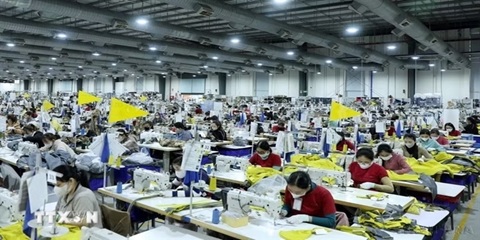
Data shows that the textile and garment sector maintained its growth momentum in the first nine months of this year. The industry's total export turnover reached an estimated US$35.721 billion in the first nine months of this year, up 3.3 per cent year-on-year. Despite posting encouraging export figures, Vietnamese textile and garment enterprises continue to navigate unpredictable market variables.
Events Sponsors






















