Want to be in the loop?
subscribe to
our notification
Business News
VIETNAM’S RIDE-HAILING MARKET ATTRACTS GLOBAL AND LOCAL COMPETITION
As European unicorn Bolt explores a potential entry into Vietnam’s ride-hailing sector, the market is undergoing significant shifts, with local players Be and Xanh SM steadily gaining ground against Grab.
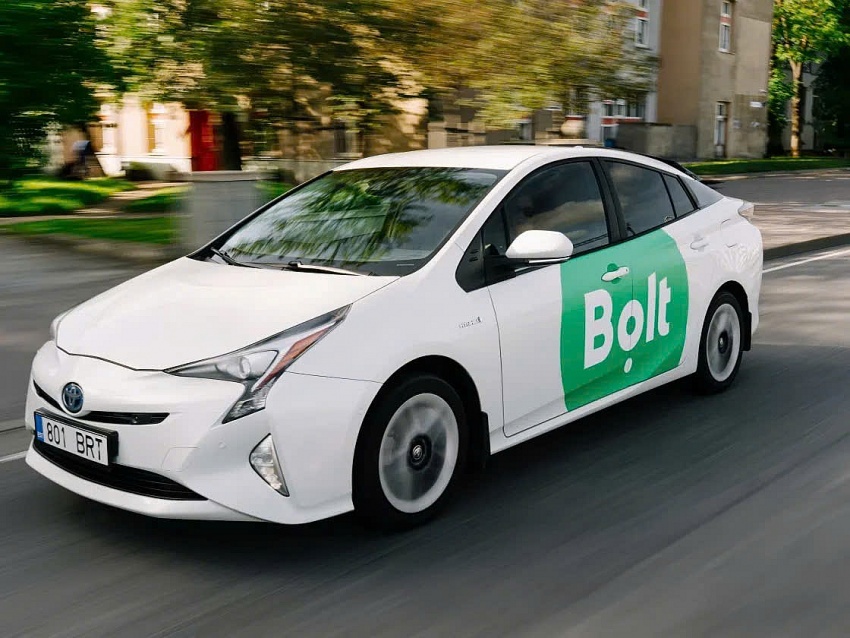
Vietnam’s ride-hailing market attracts global and local competition (Source:Bolt.eu)
In early January 2025, Vietnam’s ride-hailing market was abuzz with speculation over the potential entry of European tech unicorn Bolt.
Specifically, Bolt has begun laying the groundwork for its potential entry into Vietnam, with recruitment efforts now visible in Ho Chi Minh City.
Job postings on Bolt’s LinkedIn early January reveal openings for two roles: operations specialist and customer support specialist. These hires appear to be part of the company’s preparations to launch its ride-hailing platform, though no official timeline has been disclosed for its market debut.
Although unfamiliar to most Vietnamese consumers, Bolt has carved out a dominant position in Europe, where it competes aggressively with Uber by leveraging a low-cost strategy and a youthful brand image. In addition to traditional ride-hailing services, Bolt has successfully capitalised on its ecosystem, offering e-scooter ride-hailing and rentals.
According to The Rakyat Post, Bolt entered the Southeast Asian market in 2020, launching operations in Thailand with a focus on key urban centres such as Bangkok, Phuket, and Chiang Mai. To establish its presence, the company implemented a competitive strategy, waiving commission fees for drivers and offering fares 20 per cent lower than its competitors.
In November 2024, Bolt expanded further into Malaysia, targeting Klang Valley and Kuala Lumpur. Upon launch, it introduced a fixed 15 per cent commission rate for drivers and initiated a promotional campaign with 50 per cent discounts on fares to pull in new users.
With more than a decade of operations, Bolt has emerged as one of Europe’s fastest-growing technology companies. It now operates in over 50 countries globally, providing a wide array of services, including ride-hailing, food delivery, grocery delivery, e-scooter rentals, and corporate mobility solutions.
On the other hand, a representative from Bolt clarified that while Vietnam is seen as an exciting market with significant potential, the company has yet to make a formal decision about entering the market.
"Bolt continuously explores potential markets for expansion and relies on in-depth analysis from our team of experts to ensure a successful launch in any new market. At present, our focus remains on growing our presence in Thailand and Malaysia," the representative shared with local media, quoted Dantri on January 10.
The departure of Indonesian ride-hailing and food delivery giant Gojek in 2024 marked a turning point, leaving the domestic players to gain ground.
According to Decision Lab’s The Connected Consumer report, Grab, while still the market leader, is steadily losing market share to home-grown competitors like Be and Xanh SM.
A study conducted by Q&Me in 2024 highlighted a narrowing gap between Grab and its rivals, driven by Be's growing user base and the rapid emergence of Xanh SM.
International research firm Mordor Intelligence identified Xanh SM as holding the second-largest market share in Vietnam’s ride-hailing sector, with The Connected Consumer report placing Xanh SM as the second most popular app, boasting over 32 per cent market penetration.
Customer satisfaction surveys further underscore this shift. A recent Q&Me poll revealed that 83 per cent of customers were satisfied with Xanh SM's electric vehicle service, surpassing Grab (80 per cent) and Be (68 per cent). Additionally, 84 per cent of users stated they would recommend Xanh SM’s electric taxis, while 77 per cent expressed similar sentiments about its electric motorbike services.
This evolving landscape can be traced back to strategic alliances, such as the 2023 partnership between VinFast GSM, a leading electric vehicle manufacturer, and Be Group. Industry analysts at the time described the collaboration as a mutually beneficial move to challenge foreign giants Grab and Gojek.
By 2024, Xanh SM had rapidly expanded its network across Vietnam, solidifying its presence and capturing consumer interest.
Vietnam’s ride-hailing market is also witnessing a broader generational and economic shift. As the country embraces a green economy and electric vehicle adoption rises, younger generations, particularly Gen Z, are prioritising sustainability over traditional cost-driven choices.
While Grab continues to appeal to price-sensitive users, Be has pivoted to offering premium experiences through services like beCar Plus and beBike Plus, targeting a more discerning, tech-savvy clientele.
An industry insider noted that the battle in Vietnam’s ride-hailing sector goes beyond attracting users.
"Platforms must not only win over and retain customers to sustain revenue but also focus on growing and retaining their driver networks," the source said.
Currently, Be leads with an estimated 400,000 drivers, followed by Grab with 300,000 and Xanh SM with 90,000.
Source: VIR
Related News

CHARITY / EXHIBITION / OTHER EVENTS
INVESTMENT OPPORTUNITIES IN CA MAU PROVINCE: 96 PROJECTS AND 20 STRATEGIC PROJECTS
We are pleased to share with you information on investment projects currently seeking investors in Ca Mau Province. Should your esteemed company or association be interested, we kindly invite you to review the project information and complete the registration form via the links provided. The Ho Chi Minh City Investment and Trade Promotion Centre (ITPC) will consolidate the expressions of interest and facilitate connections with the leadership of Ca Mau Province at a meeting tentatively scheduled for 13 November 2026 in Ho Chi Minh City.

MEMBER CORNER / PROMOTIONS
BẰNG KIỀU LIVESHOW - A SYMPHONY OF LOVE UNDER THE GOLDEN GLOW
A masterclass in live music that takes the audience on a soulful journey through immortal love songs, guided by the peerless artistry and emotive storytelling of renowned singer Bằng Kiều. The highlight of the night is his seamless musical chemistry with special guest Triệu Hồng Ngọc, promising passionate and deeply resonant duets inside the magnificent Grand Ballroom.

INFRASTRUCTURE / CONSTRUCTION / LOGISTIC / PORT
ĐÀ NẴNG GREEN-LIGHTS US$105 MILLION THAI DEVELOPMENT DEAL
The central city has approved an investment proposal by Thailand’s WHA Group to develop infrastructure for the 400ha WHA Đà Nẵng Industrial Park project on two communes of Thăng Bình and Đồng Dương, with an investment of more than VNĐ2.7 trillion (US$105 million). The city said it approved WHA Industrial Development International's status as an investor in the project, which is expected to take place between 2027 and 2034.

VIETNAM ECONOMY INVESTMENT
MOBILE PHONE EXPORTS RISE 20% TO $51.8 BILLION IN FIRST NINE MONTHS
Exports of mobile phones and components rose 20 per cent year-on-year to nearly US$51.8 billion in the first nine months of 2026, with China, the US and Republic of Korea accounting for more than half of the total. Shipments to the three markets reached a combined $26.18 billion, or 50.6 per cent of total exports of the product group during the period, according to data from the Vietnam Department of Customs under the Ministry of Finance.

INFRASTRUCTURE / CONSTRUCTION / LOGISTIC / PORT
VIỆT NAM-CAMBODIA TRADE GATHERS PACE TOWARDS $20 BILLION TARGET
Trade between Việt Nam and Cambodia continues to grow, remaining a bright spot and a key pillar of bilateral cooperation as the two countries aim to raise two-way trade to US$20 billion in the coming years. After setting a record of more than $11.3 billion last year, bilateral trade reached about $8.7 billion in the first eight months of this year, up 8.3 per cent year on year.

VIETNAM ECONOMY INVESTMENT
FRUIT AND VEGETABLE EXPORTS POISED TO HIT $10 BILLION IN 2026
Fruit and vegetable exports are on track to reach nearly US$10 billion in 2026, after rising 19.9 per cent year on year to nearly US$7.4 billion in the first nine months, driven by strong seasonal demand and abundant tropical fruit supplies. The Ministry of Agriculture and Environment said the growth reflected stronger international demand for fresh produce and processed agricultural products.
Events Sponsors






















