Want to be in the loop?
subscribe to
our notification
Business News
VIETNAM SEEKS TO EXPAND EXPORTS TO EU VIA POLAND
Effectively exploiting the Polish market is one of the ways to help Vietnamese goods make inroads into the EU market, experts told a workshop held by the Ho Chi Minh City Investment and Trade Promotion Centre (ITPC) on January 28 on the prospects for Vietnam’s exports to the EU through the Polish gateway.
Effectively exploiting the Polish market is one of the ways to help Vietnamese goods make inroads into the EU market, experts told a workshop held by the Ho Chi Minh City Investment and Trade Promotion Centre (ITPC) on January 28 on the prospects for Vietnam’s exports to the EU through the Polish gateway.
According to ITPC Vice Director Tran Phu Lu, Poland is an important and dynamic market in the heart of central Europe, allowing easy access to the 500-million-strong EU market.
Poland is the largest market among the new member states of the EU and the sixth largest in the EU. It is currently the 23rd-largest exporter in the world and the 20th-largest importer. This means that goods exported to Poland have the opportunity to access other markets through transitional exports.
Lu said the EU-Vietnam Free Trade Agreement (EVFTA), which officially took effect on August 1, 2020, has brought many advantages and opportunities to further boost trade between Vietnam and Poland.
Despite COVID-19, Vietnam - Poland trade in 2020 reached over 2.1 billion USD, up 17.6 percent against 2019.
Vietnam’s exports to the country were close to 1.77 billion USD, a year-on-year rise of 18.4 percent, while it spent 341 million USD on importing goods from the country.
Piotr Harasimowicz, head of the representative office of the Polish Investment and Trade Agency in HCM City, said Vietnam is the 19th-largest exporter of goods to Poland, with major items being computers, electronics and spare parts, garment-textiles, coffee, and footwear.
The elimination of tariffs on Vietnam’s exports to the EU under the EVFTA will help its goods conquer the Polish market in particular and the EU market in general in the time ahead, he said.
Dang Thai Thien, from the municipal Department of Customs, noted the need for Vietnamese businesses to meet standards in quarantine and food safety, technical barriers, and origin of goods, as well as regulations in the Voluntary Partnership Agreement on Forest Law Enforcement, Governance and Trade (VPA/FLEGT) and the Convention on International Trade in Endangered Species of Wild Fauna and Flora (CITES), and those related to illegal, unreported, and unregulated (IUU) fishing if they want to promote exports to the EU.
In order to fully tap the advantages brought about by the EVFTA and further promote exports to the EU, businesses need to synchronously carry out solutions relating to market surveys and the renovation of production to bolster trust among importers, Thien said.
Source: VIR
Related News
VIETNAM ECONOMY INVESTMENT
VIETNAMESE COMPANIES OPTIMISTIC ON INTERNATIONAL GROWTH
Vietnamese businesses are among the most confident about the outlook for international trade, according to HSBC’s Global Trade Pulse Survey 2026, released on November 16. The survey captures the views of 10,000 senior business leaders across 26 markets on trade, tariffs, supply chains, and technology. Findings show that 94 per cent of Vietnamese businesses expect their international trade to grow over the next two years. Vietnam ranks joint top in the survey with the Philippines, compared with 86 per cent globally.
TECHNOLOGY
VIỆT NAM'S DIGITAL TECHNOLOGY INDUSTRY REVENUE SURGES 53% TO $254.6B
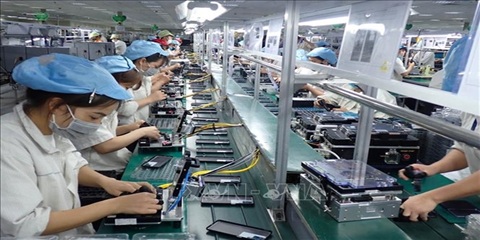
Việt Nam's digital technology industry generated an estimated US$254.6 billion in revenue in the first 10 months of 2026, up 53 per cent from a year earlier, while exports rose 46.2 per cent to $212 billion, the Ministry of Science and Technology said in its latest report. According to the report, hardware and electronics exports reached an estimated $30.681 billion in October, up 108 per cent from the same month last year.
CHARITY / EXHIBITION / OTHER EVENTS
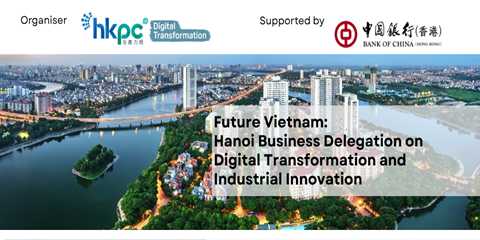
BOCHK ‧ HKPC FUTURE VIETNAM: HANOI BUSINESS DELEGATION ON DIGITAL TRANSFORMATION AND INDUSTRIAL INNOVATION
Interested in exploring Vietnam’s latest developments in digital transformation, technology adoption and industrial innovation? Organised by the Hong Kong Productivity Council (HKPC) and fully supported by Bank of China (Hong Kong) Limited, the "Future Vietnam: Hanoi Business Delegation on Digital Transformation and Industrial Innovation” will feature visits to leading high-tech enterprises across Vietnam and engage with local chambers of commerce, industry organisations and associations. Join us to expand your high-value business network and seize emerging opportunities in the ASEAN market!
GARMENT / TEXTILE
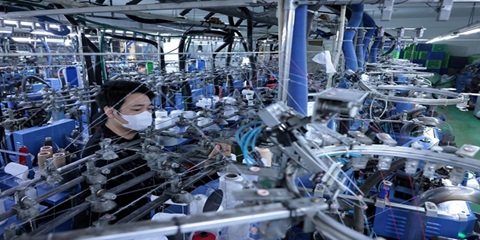
TEXTILE, GARMENT FIRMS REFORM TO MEET CPTPP ORIGIN RULES
Vietnamese textile and garment manufacturers are aggressively restructuring their supply chains and diversifying material sources to unlock untapped tariff benefits. To capitalise on the Comprehensive and Progressive Agreement for Trans-Pacific Partnership (CPTPP), companies are racing to align with the pact's strict "yarn-forward" rules — a task made difficult by a shortage of raw materials within the trade bloc.
TECHNOLOGY
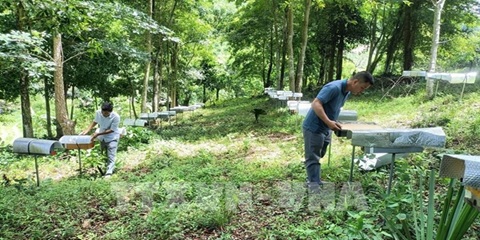
ĐÀ NẴNG SEEKS TO BUILD HIGH-TECH AGRICULTURE, INTEGRATED VALUE CHAINS
Đà Nẵng is seeking to transform its agricultural sector from a supplier of raw materials into a technology-driven, market-oriented economy, with investment opportunities spanning concentrated production areas, deep processing, logistics and agricultural product distribution. The city aims to shift from traditional agricultural production towards agricultural economic development, organising value chains and increasing the technological content and added value of products through closer links between production and processing.
INFRASTRUCTURE / CONSTRUCTION / LOGISTIC / PORT
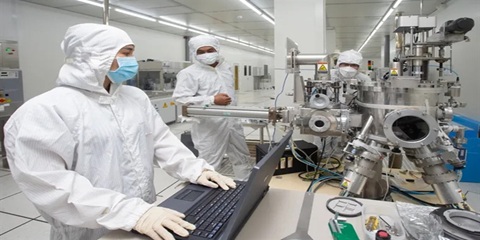
HCM CITY ACCELERATES POWER INFRASTRUCTURE INVESTMENT TO ATTRACT HIGH-TECH CAPITAL
High-tech projects, particularly data centres, are not confined to SHTP but are also expanding into export processing zones and industrial parks across HCM City, driving up electricity demand. Proactively developing power infrastructure, diversifying energy supplies and expanding access to green energy are becoming essential for HCM City to maintain its competitive edge in attracting high-tech foreign direct investment (FDI).
Events Sponsors