Want to be in the loop?
subscribe to
our notification
Business News
VIETNAM SET TO BECOME NEXT DIGITAL TIGER IN ASIA
Vietnam is expected to become the next digital tiger in Asia as the country pushes forward with its digital transformation strategies, according to the Vietnam Economics report by MayBank.
The report said that Vietnam aspires to break through the middle-income trap by becoming a high-income country by 2045.
Digital transformation is regarded as one of the key strategies to boost productivity and long-term growth. Vietnam’s digital economy has grown significantly over the past decade, reaching 8.2 per cent of GDP by 2021. The government aims to grow the digital economy to 20 per cent of GDP by 2025 and 30 of GDP by 2030.
A young and tech-savvy population provides a headstart for digitalisation, with around 70 per cent of the population below 35. Internet penetration is fast-growing at roughly 70 per cent of the population and is predominantly mobile-based. Internet speeds have risen rapidly. Mobile internet speeds have become the second-fastest in ASEAN.
Moreover, Vietnam's internet economy has grown into the third-largest in ASEAN. It is expected to hit $57 billion by 2025, only behind Indonesia. E-commerce has been a key driver, with shoppertainment activities and online grocery shopping gaining popularity.
Meanwhile, cashless payments are growing rapidly, with usage estimated at between 72-95 per cent. Vietnamese consumers are second in ASEAN (behind Thailand) in terms of positive attitudes towards cashless payments.
Mobile wallets are strongly preferred over credit cards. The launch of the Mobile Money pilot in early 2022 will promote greater financial inclusion, particularly for the rural unbanked.
Another important indicator is that Vietnam is becoming a magnet for startups in ASEAN, part of the golden triangle with Singapore and Indonesia. There are four homegrown unicorns and 11 startups worth more than $100 million out of 4,000 startups. Three unicorns were minted over the past two years.
Like many other countries, the pandemic was a catalyst for businesses to step up on digitalisation efforts to reach customers amid social distancing restrictions and enable employees to work remotely.
The percentage of firms investing in digital tools rose from 5 per cent in June 2020 to 21 per cent in Jan 2021. The usage rate of digital platforms, e-commerce websites, online social media and specialised apps grew from 48 per cent of firms to 73 per cent over the same period, according to the World Bank’s phone surveys.
On top of that, Vietnam aims to digitalise all public services by 2030 and rank within the top 30 of the UN E-Government Development Index (86th currently). Notable initiatives include the National Public Service Portal which has integrated more than 3,500 online public services; the National Data Exchange Platform to improve data collection and sharing practices; and chip-based citizen ID cards.
Assistance programmes are supporting the digitalisation of small- and medium-sized businesses (SME) and promoting startup formation. Digital skills will be taught at all levels of the education system.
The e-Conomy SEA Report 2021 also predicts that Vietnam is entering its ‘digital decade’ as the internet increasingly becomes an integral part of consumers’ daily lives.
Commenting on this prospect, Florian Hoppe, partner and head of Digital Practice in Asia-Pacific, Bain & Company said, “Vietnam holds the potential to become the region's second-largest economy at close to $220 billion by 2030 with strong investor interest and as more of its non-metro populations come online. To accelerate growth in the digital decade ahead, Vietnam must continue to invest in momentum drivers and critical enablers such as digital payments and talent development."
Hoppe added, “We believe increasing penetration of digital financial services and corresponding infrastructure, continued investments in last-mile logistics, coupled with the ubiquitous access to the internet and structural shifts in consumer and SME behaviours will leapfrog Vietnam's internet economy by 2030."
Source: VIR
Related News

CHARITY / EXHIBITION / OTHER EVENTS
INVESTMENT OPPORTUNITIES IN CA MAU PROVINCE: 96 PROJECTS AND 20 STRATEGIC PROJECTS
We are pleased to share with you information on investment projects currently seeking investors in Ca Mau Province. Should your esteemed company or association be interested, we kindly invite you to review the project information and complete the registration form via the links provided. The Ho Chi Minh City Investment and Trade Promotion Centre (ITPC) will consolidate the expressions of interest and facilitate connections with the leadership of Ca Mau Province at a meeting tentatively scheduled for 13 November 2026 in Ho Chi Minh City.

MEMBER CORNER / PROMOTIONS
BẰNG KIỀU LIVESHOW - A SYMPHONY OF LOVE UNDER THE GOLDEN GLOW
A masterclass in live music that takes the audience on a soulful journey through immortal love songs, guided by the peerless artistry and emotive storytelling of renowned singer Bằng Kiều. The highlight of the night is his seamless musical chemistry with special guest Triệu Hồng Ngọc, promising passionate and deeply resonant duets inside the magnificent Grand Ballroom.
INFRASTRUCTURE / CONSTRUCTION / LOGISTIC / PORT
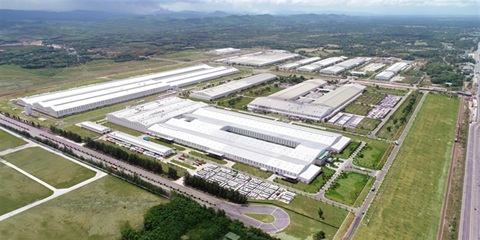
ĐÀ NẴNG GREEN-LIGHTS US$105 MILLION THAI DEVELOPMENT DEAL
The central city has approved an investment proposal by Thailand’s WHA Group to develop infrastructure for the 400ha WHA Đà Nẵng Industrial Park project on two communes of Thăng Bình and Đồng Dương, with an investment of more than VNĐ2.7 trillion (US$105 million). The city said it approved WHA Industrial Development International's status as an investor in the project, which is expected to take place between 2027 and 2034.

VIETNAM ECONOMY INVESTMENT
MOBILE PHONE EXPORTS RISE 20% TO $51.8 BILLION IN FIRST NINE MONTHS
Exports of mobile phones and components rose 20 per cent year-on-year to nearly US$51.8 billion in the first nine months of 2026, with China, the US and Republic of Korea accounting for more than half of the total. Shipments to the three markets reached a combined $26.18 billion, or 50.6 per cent of total exports of the product group during the period, according to data from the Vietnam Department of Customs under the Ministry of Finance.

INFRASTRUCTURE / CONSTRUCTION / LOGISTIC / PORT
VIỆT NAM-CAMBODIA TRADE GATHERS PACE TOWARDS $20 BILLION TARGET
Trade between Việt Nam and Cambodia continues to grow, remaining a bright spot and a key pillar of bilateral cooperation as the two countries aim to raise two-way trade to US$20 billion in the coming years. After setting a record of more than $11.3 billion last year, bilateral trade reached about $8.7 billion in the first eight months of this year, up 8.3 per cent year on year.
VIETNAM ECONOMY INVESTMENT
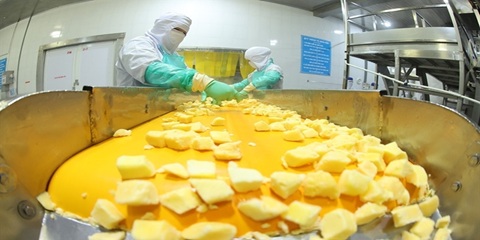
FRUIT AND VEGETABLE EXPORTS POISED TO HIT $10 BILLION IN 2026
Fruit and vegetable exports are on track to reach nearly US$10 billion in 2026, after rising 19.9 per cent year on year to nearly US$7.4 billion in the first nine months, driven by strong seasonal demand and abundant tropical fruit supplies. The Ministry of Agriculture and Environment said the growth reflected stronger international demand for fresh produce and processed agricultural products.
Events Sponsors






















