Want to be in the loop?
subscribe to
our notification
Business News
VIETNAM SETS SIGHTS ON HO CHI MINH CITY'S TRANSFORMATION INTO A GLOBAL FINANCIAL HUB BY 2030
Vietnam established a steering committee, led by Deputy Prime Minister Le Minh Khai, on October 6 to guide the development of a new international financial hub, underscoring its ambition to elevate its global financial stature.
Vietnam has recently laid the foundations for the conception of a regional and international financial hub, demonstrating its keen intent to upscale its presence in the global financial landscape.
The initiation was marked by the establishment of a steering committee to oversee this monumental endeavour, with Deputy Prime Minister Le Minh Khai spearheading the group.
Formed following a decision on October 6 by Prime Minister Pham Minh Chinh, the committee's primary role will be to advise the government and assist the prime minister with research, coordination efforts, and the resolution of tasks associated with building the envisioned financial centre.
Lending weight to the committee’s prominence is a roster of esteemed officials. Beyond the leadership of DPM Khai, the committee includes Minister of Planning and Investment Nguyen Chi Dung and is bolstered by the involvement of top-tier executives from several ministries, including Finance, Trade and Industry, Defence, Public Security, Information and Communication, Natural Resources and Environment, the State Bank, the Government Office, and also representation from the administrative agencies of Ho Chi Minh City and Danang.
Ho Chi Minh City and Danang have previously delved into foundational research into the inception of such a financial epicentre. As revealed by the Ministry of Planning and Investment in May, there have been joint explorations with these cities on the matter.
However, the proposition of sculpting an international financial hub in Ho Chi Minh City is perceived as a formidable and intricate undertaking.
The blueprint for this endeavour seeks to leverage the myriad of potential and advantages inherent in both Vietnam as a nation and the cities of Ho Chi Minh City and Danang.
Preliminary drafts from Ho Chi Minh City in 2022 shed light on the three-pronged structure for the international financial hub. This encompasses a monetary market coupled with a banking system, a capital market, and another dedicated to derivative commodities.
To realise this grand vision, Ho Chi Minh City has delineated a quartet of specific action programmes. These include the proliferation of Fintech, digital banking, and digital financial transactions, the regional integration of the hub, the promotion of the Thu Thiem Financial and Trade Zone, and the growth of the commodities market.
Furthermore, the prospective financial centre in Ho Chi Minh City has been envisaged to host entertainment quarters and casinos, albeit not as core components but as strategic add-ons to enhance its appeal to global investors.
The city’s blueprint sets forth a phased deployment plan, aiming for the establishment of this international financial hub by 2030.
Source: VIR
Related News
MEMBER CORNER / PROMOTIONS
KNIC ENGAGES WITH GOVERNMENT AND HIGH-TECH BUSINESS COMMUNITIES IN CHINA
From Beijing to Shandong, KN Holdings and KN Industrial City are continuing to expand their engagement with government authorities, trade promotion organizations, and high-tech business communities in China. In Beijing, the delegation met with the Center for International Economic and Technological Cooperation under the Ministry of Industry and Information Technology (MIIT), exchanging perspectives on industrial and technology cooperation between the two markets.
VIETNAM ECONOMY INVESTMENT
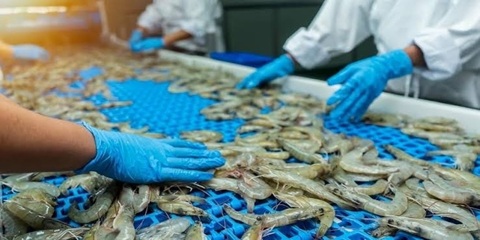
VIETNAM’S TRADE TOPS $825 BILLION BY MID-SEPTEMBER
Figures released on September 21 showed goods trade reached nearly $55 billion in the first 15 days of September alone, bringing cumulative turnover since the beginning of the year to more than $825 billion. The strong growth reflects robust trade flows, with demand for consumer goods and production inputs remaining high.

TECHNOLOGY
VIỆT NAM'S BUSINESSES MOVE TOWARDS AI AGENTS
Việt Nam’s AI landscape is entering a new phase as businesses move beyond generative AI (GenAI) tools designed to assist human users towards autonomous AI, agentic AI and AI agents that can take action with limited supervision, experts have said. The shift comes as Việt Nam seeks to accelerate science and technology, innovation and digital transformation under Politburo Resolution 57-NQ/TW, issued on December 22, 2024.
GARMENT / TEXTILE
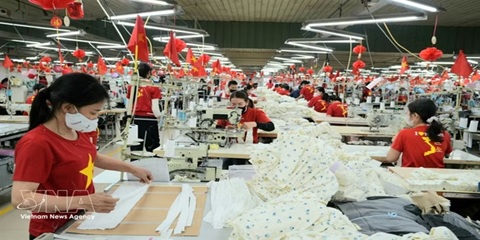
VIỆT NAM TARGETS $48 BILLION IN TEXTILE-GARMENT EXPORTS
Việt Nam’s textile and garment industry is facing both opportunities and challenges amid complex and unpredictable developments in the global market, prompting businesses to improve growth quality, optimise production costs and enhance adaptability in pursuit of an export turnover of about $48 billion this year. The target is considered an important milestone that requires concerted efforts from management agencies and the business community.
INFRASTRUCTURE / CONSTRUCTION / LOGISTIC / PORT
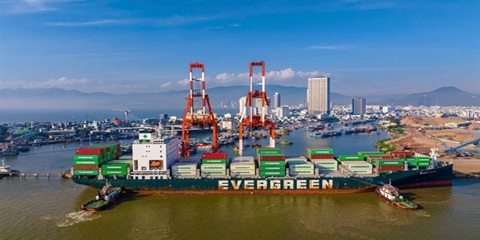
CUTTING LOGISTICS COSTS KEY TO BOOSTING EXPORTS
Reducing costs has become an increasingly urgent priority for import-export activities, particularly logistics costs, a conference in Hà Nội was told on Tuesday. According to Deputy General Director of the Ministry of Industry and Trade's Agency for Foreign Trade, Trần Thanh Hải, import-export activities has remained a bright spot for the economy in recent years, playing an important role and helping drive macroeconomic growth.
LEGAL UPDATE / POLICY
FLEXIBLE FISCAL POLICY HELPS DRIVE ECONOMIC GROWTH
Việt Nam’s fiscal policy has been implemented in a targeted expansionary manner since early 2026, helping maintain macroeconomic stability and supporting the country’s goal of achieving double-digit economic growth. According to the Ministry of Finance, State budget revenue in the first eight months of 2026 was estimated at VNĐ2.02 quadrillion (US$77.7 billion), equivalent to 80 per cent of the annual estimate and up 16 per cent year-on-year.
Events Sponsors






















