Want to be in the loop?
subscribe to
our notification
Business News
VIETNAMESE RETAIL INDUSTRY SET TO BOUNCE BACK
Despite low growth in 2021, the local retail industry is still considered full of potential and will continue to explore areas for new growth.
According to experts, modern retail distribution faces the biggest challenge in the last two years due to changes in customer trends, human resources, warehouse operation and the supply chain.
During the fourth wave of the COVID-19 pandemic in HCM City, the supply chain of goods suffered many fluctuations which the modern retail enterprises must respond to in its distribution system instead of the traditional role of providing goods to consumers onsite.
During the pandemic, retail businesses invested in technological innovation and applied them in operations, business, and delivery services to fully meet the needs of customers.
MM Mega Market Việt Nam system has started a multi-channel sales development strategy, along with completing the online sales solutions: website MM Click & Get; Zalo and Telesales.
The system is also preparing to launch MMPro, an online shopping website for professional customers with product prices and solutions designed for each specific customer.
Similarly, Saigon Co.op, AEON, and LOTTE Mart are also pushing sales via phone, Zalo, assorted apps and e-commerce partners.
In addition, in 2021, major retail systems such as Saigon Co.op, MM, Central, Aeon, LOTTE Mart, and Emart have implemented cashless payment methods on both online and offline shopping channels.
Experts forecast the COVID-19 pandemic will still be complicated in 2022, thus businesses must be well-prepared to stay up to speed during the recovery.
Nguyễn Anh Đức, general director of Saigon Co.op, said the firm’s 1,000 points of sale continued the development of modern commercial forms with advanced distribution channels to ensure the local consumption and to comply with world development trends such as online, e-commerce, cashless payment, contactless payment.
To avoid crowding during the pandemic, instead of focusing on developing physical stores, Saigon Co.op has focused on improving and perfecting its online sales channel and supply chain system, Đức said.
He added the trend of modernizing traditional sales channels and quick-selling models will soon come into practice while individual-customer-first serving is another trend.
“Retailers that optimise the experience for customer retention and apply multiple sales process metrics will have a better edge to dominate the market,” he said.
With a digital transformation strategy in the retail sector, focusing on customers according to the data-driven value chain model, Saigon Co.op is constantly upgrading technology for solutions for the collection, storage, and management and comprehensive data analysis, based on a solid, secure, flexible, and self-operating cloud computing infrastructure.
MM will continue to invest and develop multi-channel sales. The wholesale supermarket system will soon put into use Pick & Go software.
"MM's goal from now to 2025 is to become a leading food supplier in the retail industry," said an MM representative.
"We plan to open a smaller centre in the inner city with the Food service model, and Depot (storage and distribution) for the provinces to develop tourism and the Hybrid Food Service model – a place that combines shopping at the centre for household customers, and selling goods to customers at the same time."
AEON Việt Nam has focused on opening more business locations with a variety of retail models, including shopping malls, department stores and supermarkets, supermarkets, convenience stores and specialized stores; digital transformation, especially focusing on promoting O2O (offline-to-online); developing products to meet customer needs and making more efforts in sustainable development in terms of environment and social responsibility.
AEON Việt Nam General Director Furusawa Yasuyuki said it aimed to open 30 shopping centres by 2030 along with other models.
Emart with a new legal entity as THISO Retail, from Thaco Group, will put into operation two new shopping centres, which will be "one destination" for the Emart supermarket, wedding centre and car showroom.
Experts said that although the retail market in Việt Nam experienced a low growth rate due to the pandemic, it was still a potential market in the long term.
According to AEON, Việt Nam's economy and the retail industry will have a great potential in the next 5-10 years with many favourable development conditions as Việt Nam will be one of the leading countries for the expansion of the middle class in Southeast Asia, with growth of 9.2 per cent per year.
Along with the rapid growth of the local economy and drastic change in the structure of the retail industry, the revenue of leading retailers is expected to be three times higher from now, according to AEON.
Source: VNS
Related News
VIETNAM ECONOMY INVESTMENT
VIETNAMESE COMPANIES OPTIMISTIC ON INTERNATIONAL GROWTH
Vietnamese businesses are among the most confident about the outlook for international trade, according to HSBC’s Global Trade Pulse Survey 2026, released on November 16. The survey captures the views of 10,000 senior business leaders across 26 markets on trade, tariffs, supply chains, and technology. Findings show that 94 per cent of Vietnamese businesses expect their international trade to grow over the next two years. Vietnam ranks joint top in the survey with the Philippines, compared with 86 per cent globally.
TECHNOLOGY
VIỆT NAM'S DIGITAL TECHNOLOGY INDUSTRY REVENUE SURGES 53% TO $254.6B
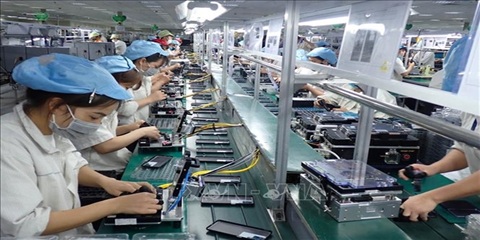
Việt Nam's digital technology industry generated an estimated US$254.6 billion in revenue in the first 10 months of 2026, up 53 per cent from a year earlier, while exports rose 46.2 per cent to $212 billion, the Ministry of Science and Technology said in its latest report. According to the report, hardware and electronics exports reached an estimated $30.681 billion in October, up 108 per cent from the same month last year.
CHARITY / EXHIBITION / OTHER EVENTS
BOCHK ‧ HKPC FUTURE VIETNAM: HANOI BUSINESS DELEGATION ON DIGITAL TRANSFORMATION AND INDUSTRIAL INNOVATION
Interested in exploring Vietnam’s latest developments in digital transformation, technology adoption and industrial innovation? Organised by the Hong Kong Productivity Council (HKPC) and fully supported by Bank of China (Hong Kong) Limited, the "Future Vietnam: Hanoi Business Delegation on Digital Transformation and Industrial Innovation” will feature visits to leading high-tech enterprises across Vietnam and engage with local chambers of commerce, industry organisations and associations. Join us to expand your high-value business network and seize emerging opportunities in the ASEAN market!
GARMENT / TEXTILE
TEXTILE, GARMENT FIRMS REFORM TO MEET CPTPP ORIGIN RULES
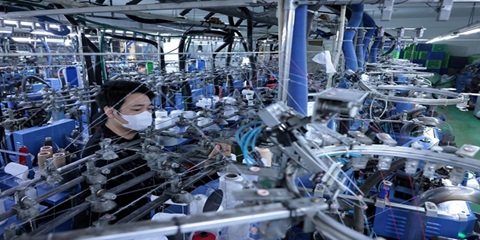
Vietnamese textile and garment manufacturers are aggressively restructuring their supply chains and diversifying material sources to unlock untapped tariff benefits. To capitalise on the Comprehensive and Progressive Agreement for Trans-Pacific Partnership (CPTPP), companies are racing to align with the pact's strict "yarn-forward" rules — a task made difficult by a shortage of raw materials within the trade bloc.
TECHNOLOGY
ĐÀ NẴNG SEEKS TO BUILD HIGH-TECH AGRICULTURE, INTEGRATED VALUE CHAINS
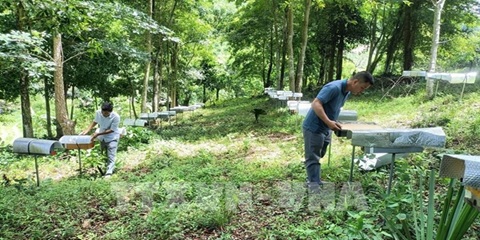
Đà Nẵng is seeking to transform its agricultural sector from a supplier of raw materials into a technology-driven, market-oriented economy, with investment opportunities spanning concentrated production areas, deep processing, logistics and agricultural product distribution. The city aims to shift from traditional agricultural production towards agricultural economic development, organising value chains and increasing the technological content and added value of products through closer links between production and processing.
INFRASTRUCTURE / CONSTRUCTION / LOGISTIC / PORT
HCM CITY ACCELERATES POWER INFRASTRUCTURE INVESTMENT TO ATTRACT HIGH-TECH CAPITAL
High-tech projects, particularly data centres, are not confined to SHTP but are also expanding into export processing zones and industrial parks across HCM City, driving up electricity demand. Proactively developing power infrastructure, diversifying energy supplies and expanding access to green energy are becoming essential for HCM City to maintain its competitive edge in attracting high-tech foreign direct investment (FDI).
Events Sponsors