Want to be in the loop?
subscribe to
our notification
Business News
VIETNAMESE START-UPS EYE GLOBAL MARKETS THROUGH STRATEGIC FRANCHISING
Franchising is an effective strategy for international market expansion across all sectors.
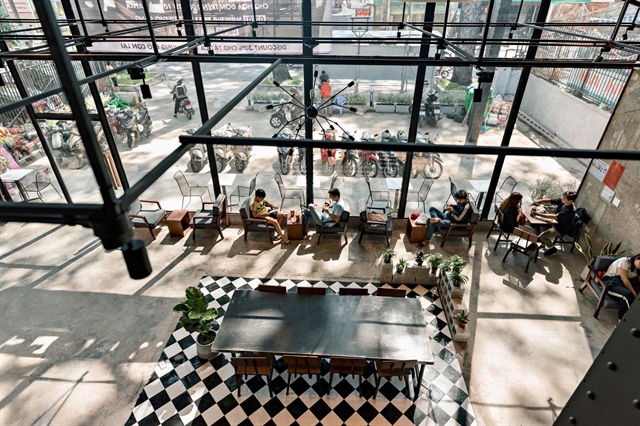
A Three O’Clock coffee shop in HCM City. The brand is set to open its first five franchise stores in India in the next quarter, following a deal with FranGlobal earlier this year. — Photo courtesy of Three O'clock
HÀ NỘI — Franchising abroad is emerging as an effective strategy for businesses — especially start-ups — to rapidly scale up their operations, enhance brand recognition and open new channels to sell raw materials and services in international markets.
While the opportunities are significant, experts said that success hinges on the internal capabilities and readiness of each business to capitalise on these prospects.
Global expansion through franchising
As the global franchising model gains momentum, Vietnamese start-ups — particularly in the food and beverage (F&B) sector — are increasingly eyeing international markets as a key growth avenue. While established names like Highlands Coffee and Trung Nguyen Legend have paved the way abroad, a new generation of dynamic, creative brands such as Three O’Clock, HappiTea and Pho’S are taking centre stage in this next wave of international expansion.
Among the rising stars, coffee chain Three O’Clock is making notable moves. The brand is set to open its first five franchise stores in India in the next quarter, following a deal with FranGlobal earlier this year. The deal also includes franchise rights for Nepal, Sri Lanka and Bangladesh, thesaigontimes.vn reported.
Three O'Clock founder and CEO Thuận Nguyễn told thesaigontimes.vn that her firm aims to open at least 100 stores over the next decade.
She highlighted a growing global shift from tea to coffee among younger demographics as a key market driver. In addition, her brand has recently inked a second exclusive international franchise agreement, expanding into countries within the Gulf Cooperation Council (GCC).
Another standout is Phuc Tea, whose franchise brand HappiTea has established a presence in the Philippines and is now expanding into India, the UAE, Saudi Arabia, Kuwait and Qatar.
Some Vietnamese start-ups in the service sector have also started to go international.
Taking advantage of competitive costs, Gozo Company has signed three franchise contracts in Thailand, opening up the potential for logistics service development in the ASEAN region.
According to CEO Phan Duy Minh, Gozo's advantage lies in its service prices being about 30 per cent lower and its free franchise method, which only requires partners to invest in space, helping to expand quickly without needing large capital.
Meanwhile, Care With Love, which offers health care services for moms and babies at home, has marked its first step into international franchising with the opening of a branch in Cambodia. After nearly four months of operation, the Cambodian franchise has already achieved approximately 80 per cent of its revenue target.
Building on this momentum, the company is planning further expansion into Dubai and other Middle Eastern markets, and is currently in negotiations to enter the Philippines, the online newspaper cited Chairwoman of the Board of Directors Trần Thảo Vi as saying.
According to Vi, the key to successful franchising in the service sector lies in standardising operational processes and selecting experienced local partners. She said that comprehensive support across recruitment, training and supervision is essential for ensuring consistent service quality and long-term franchise success in international markets.

Care With Love, which offers health care services for moms and babies at home, has marked its first step into international franchising with the opening of a branch in Cambodia. — Photo carewithlove.com.vn
Untapped potential
Encouraging signs show that Vietnamese start-ups are increasingly adopting franchising as a flexible and scalable strategy for international expansion. By leveraging digital platforms and forming strategic partnerships, these businesses aim to systematically tap into global markets.
However, despite the growing interest and early momentum, Việt Nam's presence in the international franchising landscape remains limited.
Even Napoli Coffee, one of Việt Nam’s most prominent franchise brands with over 3,000 stores nationwide, currently operates only four international outlets in Laos, Malaysia, South Korea and China.
According to Nguyễn Đức Hưng, CEO of brand owner Napoli Coffee Export Import Trading Production JSC, these overseas stores are primarily operated by individual overseas Vietnamese franchisees and have yet to adopt a standardised, professional franchising model.
In response, the company is now developing international franchising standards, with the goal of expanding its footprint to 100 overseas stores within the next five years, he added.
Experts said that the food and service sectors hold significant potential for international expansion if executed properly. However, small Vietnamese businesses often face major hurdles related to professionalism, operational systems and brand trust when entering foreign markets.
Key challenges include geographical distance, language barriers, maintaining operational control, ensuring consistent service quality, exporting raw materials and securing qualified workers.
Other promising sectors for Vietnamese franchising businesses include beverages, textiles and footwear, experts note. By leveraging local resources, these firms have the potential to move up the value chain — for example, by processing tea into value-added products like milk tea, rather than exporting raw materials.
In the textile and footwear industries, there is growing potential for building independent brands instead of remaining solely as manufacturing hubs. The franchising trend is also expanding into technology start-ups, including in emerging fields such as logistics, virtual reality and augmented reality.
Franchising is an effective strategy for international market expansion across all sectors, according to franchise expert Nguyễn Phi Vân. Agricultural products such as tea and coffee have demonstrated the success of this approach. When franchised effectively, these products have seen their value increase by 30 to 70 times, thanks to raw materials, accessories and branding.
Market research firm Technavio has projected the global franchising industry to grow by approximately 10 per cent annually, reaching a value of US$4.38 trillion by 2027. — VNS
Source: VNS
Related News

CHARITY / EXHIBITION / OTHER EVENTS
INVESTMENT OPPORTUNITIES IN CA MAU PROVINCE: 96 PROJECTS AND 20 STRATEGIC PROJECTS
We are pleased to share with you information on investment projects currently seeking investors in Ca Mau Province. Should your esteemed company or association be interested, we kindly invite you to review the project information and complete the registration form via the links provided. The Ho Chi Minh City Investment and Trade Promotion Centre (ITPC) will consolidate the expressions of interest and facilitate connections with the leadership of Ca Mau Province at a meeting tentatively scheduled for 13 November 2026 in Ho Chi Minh City.

MEMBER CORNER / PROMOTIONS
BẰNG KIỀU LIVESHOW - A SYMPHONY OF LOVE UNDER THE GOLDEN GLOW
A masterclass in live music that takes the audience on a soulful journey through immortal love songs, guided by the peerless artistry and emotive storytelling of renowned singer Bằng Kiều. The highlight of the night is his seamless musical chemistry with special guest Triệu Hồng Ngọc, promising passionate and deeply resonant duets inside the magnificent Grand Ballroom.

INFRASTRUCTURE / CONSTRUCTION / LOGISTIC / PORT
ĐÀ NẴNG GREEN-LIGHTS US$105 MILLION THAI DEVELOPMENT DEAL
The central city has approved an investment proposal by Thailand’s WHA Group to develop infrastructure for the 400ha WHA Đà Nẵng Industrial Park project on two communes of Thăng Bình and Đồng Dương, with an investment of more than VNĐ2.7 trillion (US$105 million). The city said it approved WHA Industrial Development International's status as an investor in the project, which is expected to take place between 2027 and 2034.

VIETNAM ECONOMY INVESTMENT
MOBILE PHONE EXPORTS RISE 20% TO $51.8 BILLION IN FIRST NINE MONTHS
Exports of mobile phones and components rose 20 per cent year-on-year to nearly US$51.8 billion in the first nine months of 2026, with China, the US and Republic of Korea accounting for more than half of the total. Shipments to the three markets reached a combined $26.18 billion, or 50.6 per cent of total exports of the product group during the period, according to data from the Vietnam Department of Customs under the Ministry of Finance.

INFRASTRUCTURE / CONSTRUCTION / LOGISTIC / PORT
VIỆT NAM-CAMBODIA TRADE GATHERS PACE TOWARDS $20 BILLION TARGET
Trade between Việt Nam and Cambodia continues to grow, remaining a bright spot and a key pillar of bilateral cooperation as the two countries aim to raise two-way trade to US$20 billion in the coming years. After setting a record of more than $11.3 billion last year, bilateral trade reached about $8.7 billion in the first eight months of this year, up 8.3 per cent year on year.

VIETNAM ECONOMY INVESTMENT
FRUIT AND VEGETABLE EXPORTS POISED TO HIT $10 BILLION IN 2026
Fruit and vegetable exports are on track to reach nearly US$10 billion in 2026, after rising 19.9 per cent year on year to nearly US$7.4 billion in the first nine months, driven by strong seasonal demand and abundant tropical fruit supplies. The Ministry of Agriculture and Environment said the growth reflected stronger international demand for fresh produce and processed agricultural products.
Events Sponsors






















