Want to be in the loop?
subscribe to
our notification
Business News
VISA POLICY NEEDS FURTHER REFORM
At the Year-end Vietnam Business Forum 2015 (VBF), Mr Ken Atkinson, representative of Tourism Working Group, appreciated important solutions for the tourism industry, including the waiver of visa for citizens from five European countries and Belarus, its major improvements in online visa application settlement at Tan Son Nhat International Airport, and bold breakthrough steps in allowing foreigners to possess residential houses in Vietnam.
However, when attractive visa policy has not become a key policy of the Government, its effect cannot be as expected. Currently, Vietnam is applying strict visa policy to foreign visitors from most countries in the world at a relative high cost. This is inhibiting high-spending international travellers from entering Vietnam, said Mr Tomaso Andreatta, Vice President of the European Chamber of Commerce in Vietnam (EuroCham).
Ms Sherry Boger, Chairwoman of the American Chamber of Commerce in Vietnam (AmCham), said most of the TPP member countries apply specific entry visa policy for entrepreneurs. However, the Immigration Law of Vietnam, amended in June 2014 and brought into effect on January 1, 2015, does not have any reference to TPP. According to this law, US citizens planning to arrive in Vietnam using B-1 or B-2 equivalent visas of the US will receive a three-month visa for a single entry. Thus, the US government will likely in the near future, based on the principle of reciprocity, reduce US visas to Vietnamese citizens to three months validity and for a single entry, as Vietnam imposes this policy on US citizens. This provision is clearly a major obstacle for businessmen and tourists to both countries and will inevitably have negative impact on the tourism industry, one of five prioritised sectors for development investment in Vietnam.
Meanwhile, the biggest obstacle to Japanese citizens is that Japanese nationals will not be allowed re-entry into Vietnam within 30 days without a visa. Changes in visa-free conditions inhibit Japanese citizens from entering Vietnam more frequently with tourism or business purposes, said Mr Shimon Tokuyama, Chairman of the Japan Business Association in Vietnam (JBAV). The association used to ask the Government of Vietnam to modify entry conditions applied to Japanese citizens returning to Vietnam, as the old law to exempt entry visa for them irrespective of how long they leave Vietnam.
The government’s recent decision to increase the number of countries on the list of visa-exempt countries is very welcome. Vietnam now has visa waivers or exemptions for citizens of 21 countries, which is far lower than neighbouring competitors such as Malaysia (with 164), the Philippines (157), and Thailand (52). Mr David W. Carter, National Board Member of the Australian Chamber of Commerce (AusCham), expressed his concern on this issue and recommended Vietnam to promptly extend the list of visa waiver countries to include Australia and New Zealand. He recommended the exemptions be for 30 days instead of current 15 days, with returns allowed within 30 days, as a means of encouraging people to use Vietnam as a transit hub. This must be considered a means of further facilitating trade, investment, and tourism between the nations.
Competent Vietnamese bodies are working hard on proposals for the Government to adjust visa policies. The Government assigned the Ministry of Public Security to study the possibility of deploying electronic visas. It will change policies on visa with a validity of one year for US tourists and citizens going to Vietnam to attend workshops and conferences. Simultaneously, the Immigration Department under the Ministry of Public Security will modify regulations on visa exemptions for Japanese citizens. It is also considering unilateral waiver of visas for Australia and New Zealand. In November, Vietnam lowered its visa fees to the level of Laos and Cambodia.
Source: VCCI
Related News
VIETNAM ECONOMY INVESTMENT
FOREIGN INVESTORS SEEKING A SYNCHRONISED MANUFACTURING ECOSYSTEM
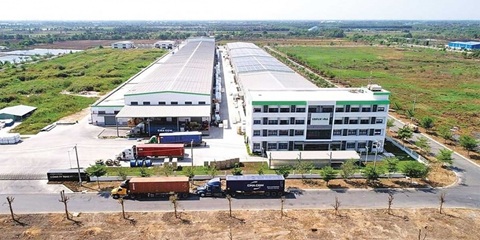
Instead of focusing only on land costs and incentives as usual, foreign investors are seeking a synchronised manufacturing ecosystem, from stable power supply and logistics to shared infrastructure and the convenience of completing residence procedures for experts to serve their long-term investment in the country.
INFRASTRUCTURE / CONSTRUCTION / LOGISTIC / PORT
DONG THAP PROVINCE STEPS UP INDUSTRIAL EXPANSION AND INFRASTRUCTURE CONNECTIVITY
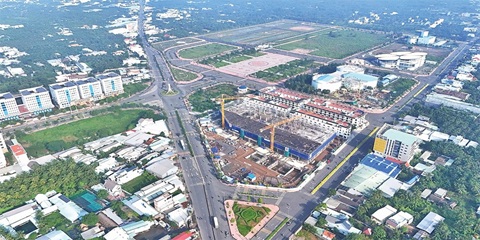
Accelerating public investment, strengthening inter-regional connectivity, and expanding industrial land are helping Dong Thap efficiently bolster competitiveness and drive economic growth. Following the 2025 merger of the former Dong Thap and Tien Giang provinces, the expanded Dong Thap province in the Mekong Delta faces mounting pressure to accelerate infrastructure development and strengthen connectivity among local economic zones, urban areas, industrial parks (IPs), and production centres.
PROPERTY / INDUSTRIAL ZONE
HCM CITY ATTRACTS US$5.7 BILLION INTO EXPORT PROCESSING AND INDUSTRIAL ZONES
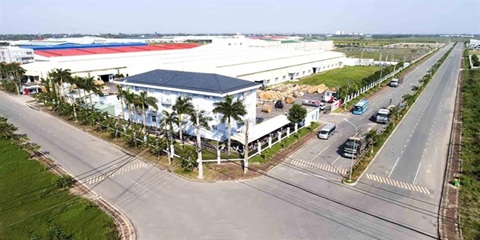
HCM City attracted US$5.7 billion in domestic and foreign investment into its export processing and industrial zones during the first nine months of 2026. The figure exceeded the city's full-year target by 31 per cent, highlighting strong momentum in high-quality industrial investment under Resolution No.10-NQ/TW. Total investment reached 131 per cent of the 2026 target of $4.25 billion and represented a 29 per cent increase compared with the same period in 2025, according to the city's Export Processing and Industrial Zones Authority (HEPZA).
BANKING / FINANCE / INSURANCE / TAX
REMITTANCES TO HCM CITY RISE NEARLY 40% IN Q3
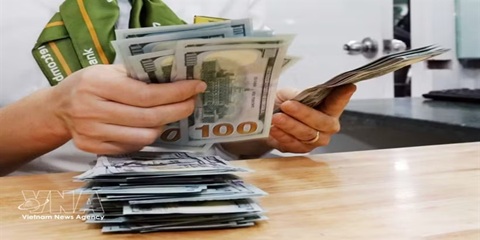
Remittances to HCM City reached more than US$2.83 billion in the third quarter of this year, up 39.5 per cent from the previous quarter and 3.6 per cent year-on-year. This was the first quarter showing positive annual growth this year, helping narrow the decline in remittance inflows over the first nine months. According to the State Bank of Vietnam (SBV)’s Regional Branch 2, remittances transferred to HCM City through credit institutions and economic organisations totalled $2.835 billion in Q3, an increase of more than $802 million from the previous quarter.
VIETNAM ECONOMY INVESTMENT
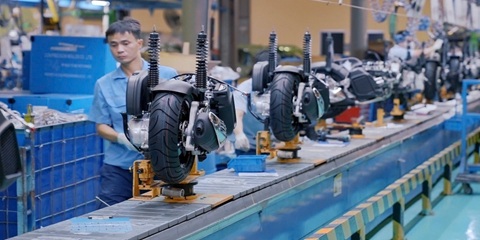
LOCALITIES REPORT BREAKTHROUGH RESULTS IN FDI IN FIRST NINE MONTHS
In Ho Chi Minh City, total registered capital reached $17.2 billion in the first nine months, up 4.2 times from the same period last year. The figure included more than $9.35 billion in newly registered capital and over $4.9 billion in additional capital for existing projects. Foreign investors also registered more than $2.9 billion through capital contributions and share purchases.
TECHNOLOGY
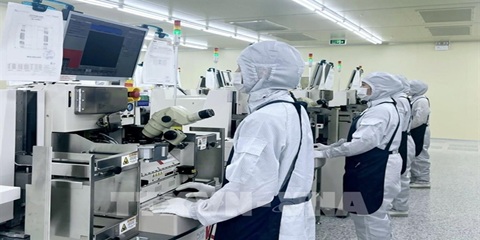
TECH SECTOR GROWTH OPENS UP OPPORTUNITIES FOR VIỆT NAM TO GO GLOBAL
The growth of the electronics, semiconductor and high-tech sectors worldwide is opening up a variety of opportunities for Vietnamese enterprises to integrate more deeply into the global supply chain. However, to become suppliers for these corporations, domestic enterprises must meet rigorous standards regarding quality, technology, productivity and order fulfilment capabilities.
Events Sponsors






















