Want to be in the loop?
subscribe to
our notification
Business News
VN€™S ECONOMY IN 2016 €“ YEAR OF INTEGRATION
Prospects from FTAs
In 2015, Viet Nam set a global record in the number of FTAs signed with other partners. This was a deserving outcome for Viet Nam in 2015, the year of ‘trade liberalization’, said Media and Government Relations Manager at the Russian International Affairs Council (RIAC) Anton Tsvetov.
The signing of FTAs was expected to open up vast opportunities for Vietnamese enterprises to enlarge market, raise revenue, and improve production capacity.
In 2015, the Southeast Asian country sealed a FTA with the Eurasian Economic Union (EAEU), the Republic of Korea, concluded negotiations on the Trans-Pacific Partnership Agreement, and finalized the Viet Nam-EU Free Trade Agreement Negotiation (EV-FTA).
Viet Nam is the country with the lowest level of development among TPP member countries and is expected to benefit most from the TPP.
Economists forecast that TPP would boost US$23.5 billion of Viet Nam’s GDP by 2020 and US$35.5 billion by 2025.
Under the EV-FTA, Viet Nam and the EU would cut over 99% of tariff lines, the highest commitments ever made by Viet Nam. Thus, the benefits of the EV-FTA for Viet Nam is equal to TPP’s ones.
Earlier, the FTA between Viet Nam and the member countries of the Economic Alliance Asia – Europe (EEU) - Russia, Armenia, Belarus, Kazakhstan and Kyrgyzstan - was reached on May 29. The two sides are expected for each level of market opening in goods that account for about 90% of tariff lines, equivalent to over 90% of bilateral trade. Once the FTA takes effect, two-way trade turnover would hit US$10-12 billion by 2020 and rise three times against 2014.
Especially, the ASEAN Economic Community (AEC) came into effect on January 1, 2016, and created the world’s seventh-largest single market of 600 million people, larger than the European Union or the North American Free Trade Agreement.
Turning challenges into opportunities
It is the right time for Viet Nam to “play” with big partners across the globe, said Dr. Vo Tri Thanh, Vice President of Central Institute for Economic Management (CIEM). The economist also regarded this as a unique opportunity for local enterprises to play with the best.
In 2016, Viet Nam will integrate comprehensively and intensively into the global economy. The integration process will bring back both opportunities and challenges.
According to Minister of Planning and Investment Bui Quang Vinh, Viet Nam joined the AEC on December 31, 2015 and faced three challenges including the free movement of products, investment and high-skilled laborers.
Without higher competitiveness, Vietnamese people may lose jobs right at ‘their playing ground.’ Once trade liberalization is effective, a “large piece of the cake” would be taken by FDI enterprises, not domestic ones.
Minister Vinh also suggested the necessity to work with associations and enterprises to build mechanisms and policies which give a impulse to internal strengthen; seize FTA opportunities; and overcome challenges.
Source: VGP
Related News
BANKING / FINANCE / INSURANCE / TAX
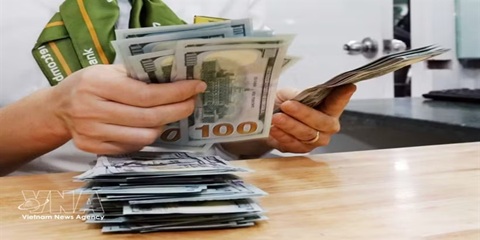
REMITTANCES TO HCM CITY RISE NEARLY 40% IN Q3
Remittances to HCM City reached more than US$2.83 billion in the third quarter of this year, up 39.5 per cent from the previous quarter and 3.6 per cent year-on-year. This was the first quarter showing positive annual growth this year, helping narrow the decline in remittance inflows over the first nine months. According to the State Bank of Vietnam (SBV)’s Regional Branch 2, remittances transferred to HCM City through credit institutions and economic organisations totalled $2.835 billion in Q3, an increase of more than $802 million from the previous quarter.
TECHNOLOGY
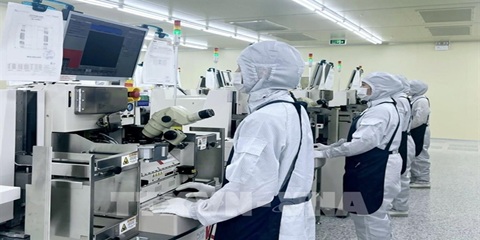
TECH SECTOR GROWTH OPENS UP OPPORTUNITIES FOR VIỆT NAM TO GO GLOBAL
The growth of the electronics, semiconductor and high-tech sectors worldwide is opening up a variety of opportunities for Vietnamese enterprises to integrate more deeply into the global supply chain. However, to become suppliers for these corporations, domestic enterprises must meet rigorous standards regarding quality, technology, productivity and order fulfilment capabilities.
VIETNAM ECONOMY INVESTMENT
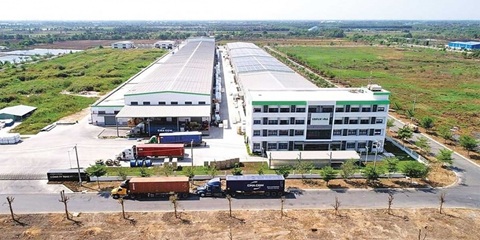
FOREIGN INVESTORS SEEKING A SYNCHRONISED MANUFACTURING ECOSYSTEM
Instead of focusing only on land costs and incentives as usual, foreign investors are seeking a synchronised manufacturing ecosystem, from stable power supply and logistics to shared infrastructure and the convenience of completing residence procedures for experts to serve their long-term investment in the country.
MEMBER CORNER / PROMOTIONS
SENTRYSAFE FHW40200 – PROTECT YOUR VALUABLES, ENJOY PEACE OF MIND!
Looking for a reliable solution to protect your important documents, cash, and valuables from fire and water damage? Genuine SENTRYSAFE - Reliable protection for your valuables and peace of mind! Contact Sen Wai Vietnam for more information and personalized product recommendations.
PROPERTY / INDUSTRIAL ZONE
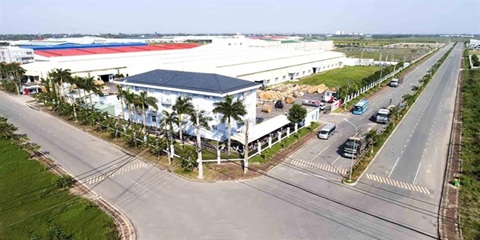
HCM CITY ATTRACTS US$5.7 BILLION INTO EXPORT PROCESSING AND INDUSTRIAL ZONES
HCM City attracted US$5.7 billion in domestic and foreign investment into its export processing and industrial zones during the first nine months of 2026. The figure exceeded the city's full-year target by 31 per cent, highlighting strong momentum in high-quality industrial investment under Resolution No.10-NQ/TW. Total investment reached 131 per cent of the 2026 target of $4.25 billion and represented a 29 per cent increase compared with the same period in 2025, according to the city's Export Processing and Industrial Zones Authority (HEPZA).
INFRASTRUCTURE / CONSTRUCTION / LOGISTIC / PORT
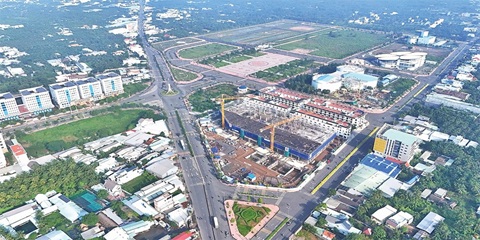
DONG THAP PROVINCE STEPS UP INDUSTRIAL EXPANSION AND INFRASTRUCTURE CONNECTIVITY
Accelerating public investment, strengthening inter-regional connectivity, and expanding industrial land are helping Dong Thap efficiently bolster competitiveness and drive economic growth. Following the 2025 merger of the former Dong Thap and Tien Giang provinces, the expanded Dong Thap province in the Mekong Delta faces mounting pressure to accelerate infrastructure development and strengthen connectivity among local economic zones, urban areas, industrial parks (IPs), and production centres.
Events Sponsors






















