Want to be in the loop?
subscribe to
our notification
Business News
VN BANKS STRUGGLE TO KEEP INTEREST RATES STEADY
From mid-March, Sacombank has been offering certificates of deposit (CDs) denominated in dong to individuals and companies. A sum of at least VND10 million (US$441) for five years plus one day carries a coupon of 8.48 per cent per annum while a seven-year CDs get 8.88 per cent for the first year.
CD holders can get a preferred interest rate loan and assign the CDs to the bank at any time.
Earlier, VPBank had issued CDs to individual customers for tenors ranging from 18 to 60 months with an interest rate of up to 9.2 per cent for amounts of VND5 billion and higher.
VietABank has issued long- and medium-term CDs at 8.2 per cent.
Many banks have also launched promotions including lottery draws with bonuses.
Market observers said there is intense competition among banks in terms of deposit interest rates to improve their funding.
The chief of a joint stock commercial bank in HCM City, who declined to be named, said credit growth has been high this year, and so some banks are indeed looking to raise funds.
In HCM City, the credit growth rate has been 6.25 per cent while deposits only grew by 1.77 per cent.
Credit demand is forecast to increase sharply, which has encouraged the lenders to mobilise funds.
Though the market has not yet showed signs of increasing lending interest rates, the sharp increase in the deposit interest rates is making companies fear this possibility in the near future.
At present, the common interest rates are 6-7 per cent for short- and medium-term loans to businesses in priority sectors, while long-term loans are offered at 9-10 per cent.
The rates for short-term loans to non-priority borrowers are between 6.8 and 9 per cent, while they range from 9.3 to 11 per cent for medium- and long-term loans.
The fear of rising interest rates is justified, with a director of a major bank’s branch in HCM City saying some banks have already hiked them by 0.5 per cent and even 1 per cent.
There are many factors that influence interest rates, including inflation, foreign exchange rates, fiscal policies and liquidity.
But according to analysts, the most important factors are the foreign exchange rates and inflation.
They said credit interest rates can decline only when forex rates are stable because when the dollar appreciates people draw their savings from banks to buy the greenback, forcing the banks to hike deposit interest rates and, in turn, lending rates.
The dollar appreciated by only 1 per cent in the first five months of this year.
As for inflation, data from the General Statistics Office shows that the consumer price index (CPI) actually fell in May by 0.53 per cent, the highest decline since 2008.
Liquidity in the banking sector is steady.
In the event, analysts are sanguine that there will be no pressure on interest rates and the central bank is in a good terms of regulating the rates.
They even believe that the rates can be cut at the end of this year if the Government’s Resolution on bad debt settlement is approved.
The managers of many banks have said they have to keep their interest rates at a reasonable level to ensure liquidity.
Nguyen Van Thang, chairman of Vietinbank, said only when the bad debts are settled would lenders have more resources to do business and lower lending interest rates.
Dr Nguyen Duc Kien, chairman of the National Assembly’s Economics Commission, agreed with Thang, saying if the resolution is approved interest rates can be cut by 0.75 percentage points.
Vietnamese products
A study by VIBIZ in March of 75
shops and agents trading rice and 121 rice users in Ha Noi and HCM City, 64 per cent of Vietnamese rice varieties sold in the market had foreign names.
The survey also found that 53 per cent of consumers preferred foreign rice coming from Thailand, Cambodia and Japan.
Not only food products but also many others have been given foreign names.
Many fashion products sold at big shopping malls are Vietnamese but have foreign brand names.
Viet Tien Garment Corporation, for instance, has given its products names such as Sam Sciaro, Manhattan, TT-up. Nha Be Garment Corporation sells Mattana and Novelty, and Phu Nhuan Jewelry Company has Jemma, targeting high-end customers.
Even high-rise buildings in the central areas of major cities have foreign names.
The tendency of giving foreign names to Vietnamese products can also be seen at property projects. The words “Plaza”,”Tower” and “Centre” were used to indicate the main use of the buildings.
“Times”, “Garden”, “City”, “Square”, “Riverside”, “Park”, “Orchards” have also been used for residential buildings.
Garment and footwear manufacturers and traders all believe that to popularise their brands it is necessary to choose foreign names which are easy to remember. They add that Italian-sounding names are seemingly the most popular because in people’s minds Italian products always lead the world in fashion and jewellery.
A real estate developer explained that foreign names not only help show the functions of the buildings but also the products’ “class”. Foreign names always indicate high-end products which have high prices.
Analysts said Vietnamese companies are encouraged to use foreign brand names because most Vietnamese consumers still prefer foreign products.
For instance, though instant noodles sold at Metro, Aeon and Lotte supermarkets cost as much as VND16,000 (US$0.8), triple that of a Vietnamese product, many people still buy them.
Buying foreign products gives them a sense of pride since it is a status symbol underlining their social acceptability and class.
Manufacturers are only too happy to play along.
The underlying reason is clear: consumers do not have trust in locally made products.
Many even prefer ‘xuat du’ products of famous brands to domestic ones.
Xuat du is a term used to describe products made in the same factory as legitimate luxury products without permission. They are made illegally from scraps and leftover materials and sold on the black market.
A survey by VIBIZ found that 57.3 per cent of consumers polled prefer these foreign fakes to legitimate Vietnamese goods.
Analysts said Vietnamese also prefer products sold through professional distribution systems.
On the other hand, many Vietnamese companies believe it is enough to focus investment into production and give foreign names to their products, and do not pay attention to building professional retail systems.
Because of this, foreign goods are able to push Vietnamese them off store shelves.
Vo Van Quyen, director of the Ministry of Industry and Trade’s Domestic Market Department, told Thoi Bao Kinh Doanh that most Vietnamese consumer companies are still small- or medium-sized and have limited resources, and so lack the capability to create professional distribution networks.
Analysts said to overcome this problem, the Government should provide credit and taxation support to Vietnamese producers to enable them to establish modern distribution systems and promote their brands.
Source: VIR
Related News
VIETNAM ECONOMY INVESTMENT
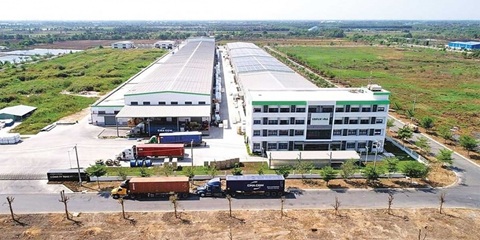
FOREIGN INVESTORS SEEKING A SYNCHRONISED MANUFACTURING ECOSYSTEM
Instead of focusing only on land costs and incentives as usual, foreign investors are seeking a synchronised manufacturing ecosystem, from stable power supply and logistics to shared infrastructure and the convenience of completing residence procedures for experts to serve their long-term investment in the country.
INFRASTRUCTURE / CONSTRUCTION / LOGISTIC / PORT
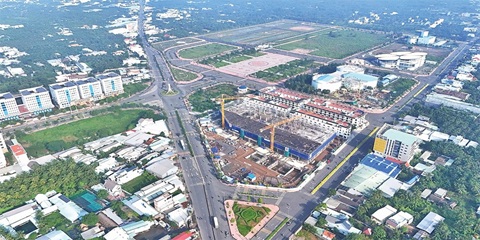
DONG THAP PROVINCE STEPS UP INDUSTRIAL EXPANSION AND INFRASTRUCTURE CONNECTIVITY
Accelerating public investment, strengthening inter-regional connectivity, and expanding industrial land are helping Dong Thap efficiently bolster competitiveness and drive economic growth. Following the 2025 merger of the former Dong Thap and Tien Giang provinces, the expanded Dong Thap province in the Mekong Delta faces mounting pressure to accelerate infrastructure development and strengthen connectivity among local economic zones, urban areas, industrial parks (IPs), and production centres.
PROPERTY / INDUSTRIAL ZONE
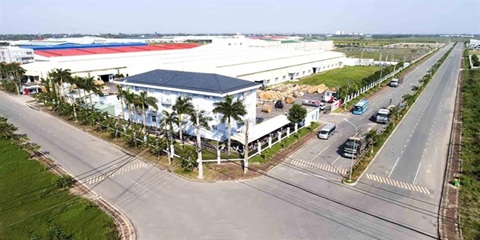
HCM CITY ATTRACTS US$5.7 BILLION INTO EXPORT PROCESSING AND INDUSTRIAL ZONES
HCM City attracted US$5.7 billion in domestic and foreign investment into its export processing and industrial zones during the first nine months of 2026. The figure exceeded the city's full-year target by 31 per cent, highlighting strong momentum in high-quality industrial investment under Resolution No.10-NQ/TW. Total investment reached 131 per cent of the 2026 target of $4.25 billion and represented a 29 per cent increase compared with the same period in 2025, according to the city's Export Processing and Industrial Zones Authority (HEPZA).

BANKING / FINANCE / INSURANCE / TAX
REMITTANCES TO HCM CITY RISE NEARLY 40% IN Q3
Remittances to HCM City reached more than US$2.83 billion in the third quarter of this year, up 39.5 per cent from the previous quarter and 3.6 per cent year-on-year. This was the first quarter showing positive annual growth this year, helping narrow the decline in remittance inflows over the first nine months. According to the State Bank of Vietnam (SBV)’s Regional Branch 2, remittances transferred to HCM City through credit institutions and economic organisations totalled $2.835 billion in Q3, an increase of more than $802 million from the previous quarter.
VIETNAM ECONOMY INVESTMENT
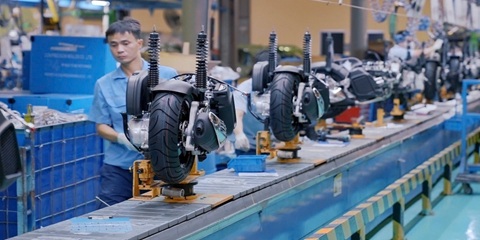
LOCALITIES REPORT BREAKTHROUGH RESULTS IN FDI IN FIRST NINE MONTHS
In Ho Chi Minh City, total registered capital reached $17.2 billion in the first nine months, up 4.2 times from the same period last year. The figure included more than $9.35 billion in newly registered capital and over $4.9 billion in additional capital for existing projects. Foreign investors also registered more than $2.9 billion through capital contributions and share purchases.

TECHNOLOGY
TECH SECTOR GROWTH OPENS UP OPPORTUNITIES FOR VIỆT NAM TO GO GLOBAL
The growth of the electronics, semiconductor and high-tech sectors worldwide is opening up a variety of opportunities for Vietnamese enterprises to integrate more deeply into the global supply chain. However, to become suppliers for these corporations, domestic enterprises must meet rigorous standards regarding quality, technology, productivity and order fulfilment capabilities.
Events Sponsors






















