Want to be in the loop?
subscribe to
our notification
Business News
AGRICULTURAL LAND TAX EXEMPTION MOTIVATES BUSINESS
Extending exemptions for agricultural land use tax is expected to create motivation for businesses to expand and renovate their investments in Vietnam.
The government has proposed that agricultural land use continue to be exempted from taxation through to 2030, according to a draft resolution on the issue submitted in mid-May to the National Assembly (NA).
The draft resolution, compiled by the Ministry of Finance (MoF), follows positive results of the exemption scheme having been applied since 2021.
“The continued exemption of agricultural land use tax until the end of 2030 will not reduce revenue, as this policy is already being implemented in practice. With the proposal to extend the exemption until the end of 2030, as per current regulations, the exempted agricultural land use tax is estimated at VND7.5 trillion ($300 million) per year,” the MoF stated in the draft.
The MoF’s proposal in the draft has received support from agricultural enterprises and NA deputies.
If the policy is approved, agricultural enterprises will benefit from reduced production costs and enhanced competitiveness, a representative of a domestic dairy firm in Vietnam told VIR.
“For large corporations with projects typically involving land areas ranging from hundreds to thousands of hectares, this exemption will help them reduce financial burdens, particularly those operating in crop cultivation, livestock farming, aquaculture, and agricultural product processing,” he said. “The exempted tax amount will enable enterprises to invest in expanding production, improving infrastructure, or adopting new technologies.”
Furthermore, the mechanism will encourage investment in agriculture, particularly in the production of high-quality agricultural products and high-tech agriculture, the representative said.
According to statistics from the MoF, the number of businesses investing in agriculture accounts for only about 5.5 per cent of the total number of enterprises nationwide in 2024, of which approximately 96 per cent were micro- and small enterprises. Compared to the potential and proportion of the agriculture sector in the economy, the current number of enterprises is minimal, with limited scale, and does not meet the requirements for agricultural development in the context of international economic integration.
“To contribute to achieving the goal of increasing the number of businesses engaged in agricultural investment by 2030 and accelerating the growth rate of agricultural, forestry, and aquatic product output by about 3 per cent per year, the MoF proposes to implement the agricultural land use tax exemption policy for organisations directly using agricultural land for agricultural production. This is one of the effective support solutions,” Minister of Finance Nguyen Van Thang said.
The total amount of agricultural land use tax exempted and reduced over the past 20 years has tended to increase gradually, with an average of about $131 million per year in 2003-2010, rising to $252 million per year in 2011-2016, reaching about $298 million per year in 2017-2020, and maintaining at around $300 million per year in 2021-2023.
Hoang Van Cuong, an NA deputy representing Hanoi, said that the agricultural land use tax exemption is one of the tax policies that has been implemented for many years, clearly demonstrating Vietnam’s consistent policy in developing agriculture, farmers, and rural areas.
“In production, any cost affects the price and income. Although the agricultural land use tax rate is not high, the tax exemption is very meaningful for farmers,” Cuong said.
“Therefore, this policy not only demonstrates the deep concern of the Party and the state for the agricultural production force but also serves as a practical source of encouragement and motivation to help people feel secure in sticking to their land and fields,” he added.
Source: VIR
Related News

CHARITY / EXHIBITION / OTHER EVENTS
INVESTMENT OPPORTUNITIES IN CA MAU PROVINCE: 96 PROJECTS AND 20 STRATEGIC PROJECTS
We are pleased to share with you information on investment projects currently seeking investors in Ca Mau Province. Should your esteemed company or association be interested, we kindly invite you to review the project information and complete the registration form via the links provided. The Ho Chi Minh City Investment and Trade Promotion Centre (ITPC) will consolidate the expressions of interest and facilitate connections with the leadership of Ca Mau Province at a meeting tentatively scheduled for 13 November 2026 in Ho Chi Minh City.

MEMBER CORNER / PROMOTIONS
BẰNG KIỀU LIVESHOW - A SYMPHONY OF LOVE UNDER THE GOLDEN GLOW
A masterclass in live music that takes the audience on a soulful journey through immortal love songs, guided by the peerless artistry and emotive storytelling of renowned singer Bằng Kiều. The highlight of the night is his seamless musical chemistry with special guest Triệu Hồng Ngọc, promising passionate and deeply resonant duets inside the magnificent Grand Ballroom.
INFRASTRUCTURE / CONSTRUCTION / LOGISTIC / PORT
ĐÀ NẴNG GREEN-LIGHTS US$105 MILLION THAI DEVELOPMENT DEAL
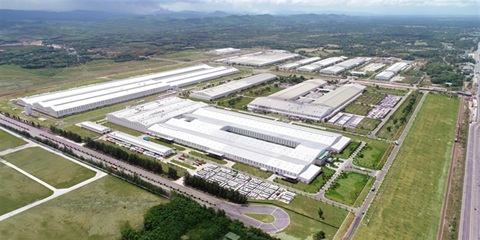
The central city has approved an investment proposal by Thailand’s WHA Group to develop infrastructure for the 400ha WHA Đà Nẵng Industrial Park project on two communes of Thăng Bình and Đồng Dương, with an investment of more than VNĐ2.7 trillion (US$105 million). The city said it approved WHA Industrial Development International's status as an investor in the project, which is expected to take place between 2027 and 2034.

VIETNAM ECONOMY INVESTMENT
MOBILE PHONE EXPORTS RISE 20% TO $51.8 BILLION IN FIRST NINE MONTHS
Exports of mobile phones and components rose 20 per cent year-on-year to nearly US$51.8 billion in the first nine months of 2026, with China, the US and Republic of Korea accounting for more than half of the total. Shipments to the three markets reached a combined $26.18 billion, or 50.6 per cent of total exports of the product group during the period, according to data from the Vietnam Department of Customs under the Ministry of Finance.
INFRASTRUCTURE / CONSTRUCTION / LOGISTIC / PORT
VIỆT NAM-CAMBODIA TRADE GATHERS PACE TOWARDS $20 BILLION TARGET
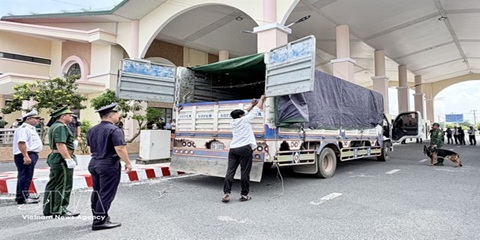
Trade between Việt Nam and Cambodia continues to grow, remaining a bright spot and a key pillar of bilateral cooperation as the two countries aim to raise two-way trade to US$20 billion in the coming years. After setting a record of more than $11.3 billion last year, bilateral trade reached about $8.7 billion in the first eight months of this year, up 8.3 per cent year on year.
VIETNAM ECONOMY INVESTMENT
FRUIT AND VEGETABLE EXPORTS POISED TO HIT $10 BILLION IN 2026
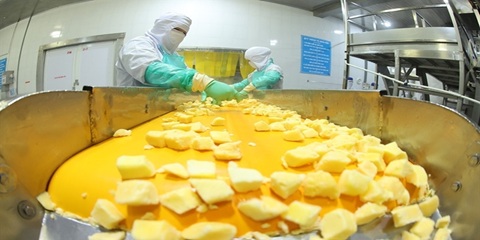
Fruit and vegetable exports are on track to reach nearly US$10 billion in 2026, after rising 19.9 per cent year on year to nearly US$7.4 billion in the first nine months, driven by strong seasonal demand and abundant tropical fruit supplies. The Ministry of Agriculture and Environment said the growth reflected stronger international demand for fresh produce and processed agricultural products.
Events Sponsors






















