Want to be in the loop?
subscribe to
our notification
Business News
BANANA EXPORTS POISED TO REACH $4 BILLION IN NEAR FUTURE
Bananas are becoming a rising star in Việt Nam’s fruit export sector, now covering approximately 161,000ha hectares out of the country’s more than 1.3 million hectares of fruit-growing land.
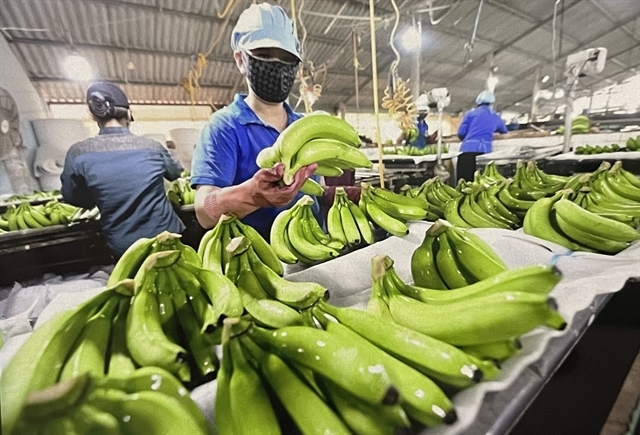
Packaging bananas for exports at a factory in Đồng Nai Province. — VNA/VNS Photo Hồng Nhung
HÀ NỘI — Việt Nam's banana industry has the potential to achieve an export value of US$4 billion, according to Phạm Quốc Liêm, Chairman of U&I Agriculture Corporation (Unifarm).
He noted that this figure would translate to a minimum production value of US$20,000 per hectare, nearly 10 times higher than the current average.
Bananas are becoming a rising star in Việt Nam’s fruit export sector, now covering approximately 161,000 hectares of the country’s more than 1.3 million hectares of fruit-growing land. In 2024 alone, banana exports brought in nearly $380 million, securing Việt Nam a spot among the world’s top 10 banana-exporting nations.
Vietnamese bananas are now present in major international markets, including China, South Korea, Japan, Australia, Canada, the EU and the US, demonstrating both their quality and competitiveness.
As Việt Nam’s durian exports, once a billion-dollar commodity, face headwinds in the first half of 2025 and dragon fruit export revenue falls below the $1 billion mark, the agricultural sector is urgently seeking new growth drivers.
With strong export potential and high adaptability to various climates, bananas are increasingly viewed as the next key pillar of Việt Nam’s fruit industry, experts have said.
In support of the ambitious goal of turning bananas into a major export commodity, Liêm told thoibaonganhang.vn that Unifarm will continue to uphold a unified and rigorous set of quality standards across its entire production chain - from seed selection and cultivation to harvesting and traceability.
Rather than adapting to each market’s certification standards, such as VietGAP or GlobalGAP, Unifarm is implementing a standardised, comprehensive process. This approach, Liêm said, ensures consistency, scalability, and long-term sustainability.
Unifarm’s vision, he added, extends beyond profitability. The company is committed to working alongside Việt Nam’s agricultural sector and farmers to build a globally recognised and reputable Vietnamese banana brand.
Restructuring for sustainable development
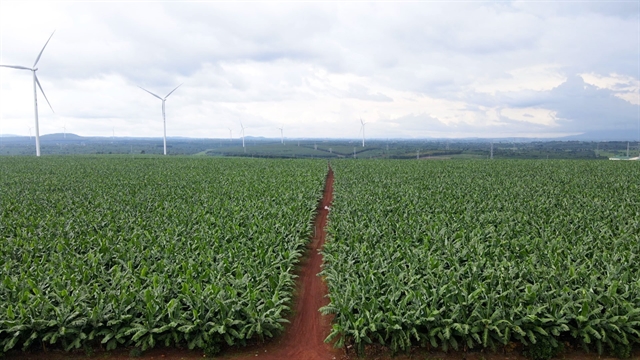
The banana cultivation area of the Hùng Sơn Company in Gia Lai Province. — VNA/VNS Photo Hoài Nam
Despite the growing potential of Việt Nam’s fruit sector, including bananas, Deputy Minister of Agriculture and Environment Trần Thanh Nam said comprehensive restructuring is essential to ensure its long-term sustainability.
Key priorities include the development of concentrated raw material zones linked with purchasing enterprises, improvements in crop varieties and farming techniques, and reductions in input costs.
Modernising processing facilities, strengthening logistics infrastructure, building strong brand identities, and promoting official export channels should also be included, he said.
Nam also highlighted the need to reorganise the entire value chain, underscoring the critical role of businesses and cooperatives, not only in production but also in shaping market strategy and advancing the processing industry.
Võ Quan Huy, dubbed the ‘Banana King’, director of Huy Long An Company, said that in an increasingly competitive fresh banana market, developing processed banana products and by-products is essential for Việt Nam to elevate its banana industry and reduce reliance on a few traditional export markets.
Currently, the majority of Vietnamese bananas are exported fresh, primarily to China, South Korea, Japan, and some Middle Eastern countries. Meanwhile, higher-value products such as dried bananas, banana chips, banana wine, banana cakes, and green banana powder are still produced only on a small and fragmented scale, Huy spoke to thoibaonganhang.vn.
To tap into this potential, Huy proposed policies prioritising the development of the banana processing industry, including support for businesses in accessing capital, technology, and both domestic and international markets. He also emphasised the need for research and technology transfer programs to fully utilise banana waste and by-products, currently often discarded, causing waste and environmental pollution.
Nguyễn Như Cương, deputy director of the Department of Science and Technology under the Ministry of Agriculture and Environment, said that effective management of banana varieties remains a critical issue for Việt Nam’s banana sector. Although bananas are classified among the country’s main crops, alongside rice, corn, coffee, oranges and grapefruit, the number of businesses registering for variety testing remains very low.
Cương said the ministry is currently considering limiting official variety registration to just two primary crops - rice and corn - while other crops, including bananas, would move to a self-declaration system. Under this model, businesses would bear full legal responsibility for the quality of their seed varieties.
This shift calls on banana producers to enhance their research and variety selection capabilities, while also increasing awareness of intellectual property rights related to seed production - a vital but often overlooked factor in the competitive market.— VNS
Source: VNS
Related News

CHARITY / EXHIBITION / OTHER EVENTS
INVESTMENT OPPORTUNITIES IN CA MAU PROVINCE: 96 PROJECTS AND 20 STRATEGIC PROJECTS
We are pleased to share with you information on investment projects currently seeking investors in Ca Mau Province. Should your esteemed company or association be interested, we kindly invite you to review the project information and complete the registration form via the links provided. The Ho Chi Minh City Investment and Trade Promotion Centre (ITPC) will consolidate the expressions of interest and facilitate connections with the leadership of Ca Mau Province at a meeting tentatively scheduled for 13 November 2026 in Ho Chi Minh City.

MEMBER CORNER / PROMOTIONS
BẰNG KIỀU LIVESHOW - A SYMPHONY OF LOVE UNDER THE GOLDEN GLOW
A masterclass in live music that takes the audience on a soulful journey through immortal love songs, guided by the peerless artistry and emotive storytelling of renowned singer Bằng Kiều. The highlight of the night is his seamless musical chemistry with special guest Triệu Hồng Ngọc, promising passionate and deeply resonant duets inside the magnificent Grand Ballroom.

INFRASTRUCTURE / CONSTRUCTION / LOGISTIC / PORT
ĐÀ NẴNG GREEN-LIGHTS US$105 MILLION THAI DEVELOPMENT DEAL
The central city has approved an investment proposal by Thailand’s WHA Group to develop infrastructure for the 400ha WHA Đà Nẵng Industrial Park project on two communes of Thăng Bình and Đồng Dương, with an investment of more than VNĐ2.7 trillion (US$105 million). The city said it approved WHA Industrial Development International's status as an investor in the project, which is expected to take place between 2027 and 2034.

VIETNAM ECONOMY INVESTMENT
MOBILE PHONE EXPORTS RISE 20% TO $51.8 BILLION IN FIRST NINE MONTHS
Exports of mobile phones and components rose 20 per cent year-on-year to nearly US$51.8 billion in the first nine months of 2026, with China, the US and Republic of Korea accounting for more than half of the total. Shipments to the three markets reached a combined $26.18 billion, or 50.6 per cent of total exports of the product group during the period, according to data from the Vietnam Department of Customs under the Ministry of Finance.

INFRASTRUCTURE / CONSTRUCTION / LOGISTIC / PORT
VIỆT NAM-CAMBODIA TRADE GATHERS PACE TOWARDS $20 BILLION TARGET
Trade between Việt Nam and Cambodia continues to grow, remaining a bright spot and a key pillar of bilateral cooperation as the two countries aim to raise two-way trade to US$20 billion in the coming years. After setting a record of more than $11.3 billion last year, bilateral trade reached about $8.7 billion in the first eight months of this year, up 8.3 per cent year on year.

VIETNAM ECONOMY INVESTMENT
FRUIT AND VEGETABLE EXPORTS POISED TO HIT $10 BILLION IN 2026
Fruit and vegetable exports are on track to reach nearly US$10 billion in 2026, after rising 19.9 per cent year on year to nearly US$7.4 billion in the first nine months, driven by strong seasonal demand and abundant tropical fruit supplies. The Ministry of Agriculture and Environment said the growth reflected stronger international demand for fresh produce and processed agricultural products.
Events Sponsors






















