Want to be in the loop?
subscribe to
our notification
Business News
BANKING INDUSTRY BEFORE 4TH INDUSTRIAL REVOLUTION: PLENTIFUL OPPORTUNITIES, ABUNDANT CHALLENGES
Despite staying out of the list of nine sectors hardest hit by the Fourth Industrial Revolution, the banking industry, typically at the forefront of information technology application, will not stand out of the whirlwind of this Fourth Revolution.
Many opportunities
High-tech application and development demands in banking operations in Vietnam are rising. A survey conducted by the State Bank of Vietnam (SBV) showed that some banks are planning to invest 8 - 10 per cent of their annual operating expenses for information technology. Advances from the digital revolution and the upcoming Fourth Industrial Revolution will provide banks with the opportunity to attract investment capital, gain access to international markets, learn advanced management and business skills, and acquire smart digital models and technological innovations.
The application of high technology, typical of the Fourth Industrial Revolution, will help Vietnamese banks to gain many benefits such as improving profitability by reducing administrative costs, effectively operating the banking system and tech infrastructure, deploying new products and services in a faster and more flexible manner to meet customers' demands for electronic banking services. This will thus help domestic banks develop strongly and compete with advanced banks in the region and in the world.
The digital banking model, technologically operated digital devices connected to computer software in the Internet environment, has in fact been, and will be, changing the entire banking structure and providing modern banking services. Many new financial services such as M-POS, internet banking, mobile banking, chip card technology and e-wallet are developing strongly to facilitate people to use modern banking services and save transaction costs.
Recently, at the Vietnam Retail Banking Forum 2017 hosted by the Vietnam Bankers Association and International Data Group (IDG Vietnam), Mr Nguyen Toan Thang, General Secretary of the Vietnam Bankers Association, said that Vietnamese banks are positively moving with new technology trends. It is the shift from conventional banking to digital banking, the transformation of business model, an increase in customer experiences with new products and solutions, modern digital infrastructure construction and data management and artificial intelligence application.
He said, the Fourth Industrial Revolution will bring more opportunities and motivations for Vietnamese banks to develop retail banking, especially apply innovative business solutions and create technology breakthroughs to meet customer experiences.
Tough challenges
Banks will see challenges with new business models and governance models. The inevitable shift from simple digital to smart innovation based on technological blending is forcing domestic banks to rethink how they operate business and tune up with governance trends driven by artificial intelligence, mobile banking, paperless banking and digital banking.
In addition, with technology development, customers will demand banking services capably integrated on a single device, enabling them to use the services anywhere, anytime. Therefore, banks should focus on maximising customer experience based on their knowledge and understanding of these trends.
In addition, the fact that small and medium banks do not have enough potential to build backup data centres or, if having enough, are not able to meet national standards has significantly impacted information security.
One of the biggest concerns is technological risk and personnel quality. The growing sophistication of digital technology has led to an increase in security vulnerabilities, which lure cybercriminals and hackers. Indeed, cybercriminals may steal bank assets and information without having to go to the bank or even physically connecting it. Consequently, governments and service providers should take proactive measures to ensure network security and customer information.
In addition, the increase of cross-border financial products and derivative financial products in the context of integration has made security network infrastructure extremely important to banks. Improving the quality of human resources, not only professional skills but also digital operation skills and compliance with the process of delivering banking products and services in the technological environment, is also an interesting challenge.
And, before these challenges, whether they like them or not, banks and policymakers have to accept inevitable changes and broaden their outlook on banking services to survive and develop sustainably.
Source: VIR
Related News
VIETNAM ECONOMY INVESTMENT
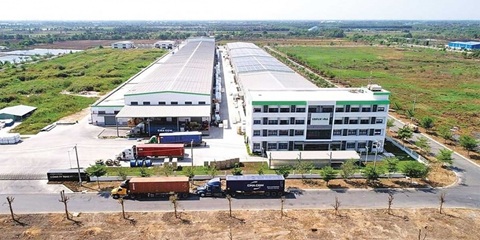
FOREIGN INVESTORS SEEKING A SYNCHRONISED MANUFACTURING ECOSYSTEM
Instead of focusing only on land costs and incentives as usual, foreign investors are seeking a synchronised manufacturing ecosystem, from stable power supply and logistics to shared infrastructure and the convenience of completing residence procedures for experts to serve their long-term investment in the country.
INFRASTRUCTURE / CONSTRUCTION / LOGISTIC / PORT
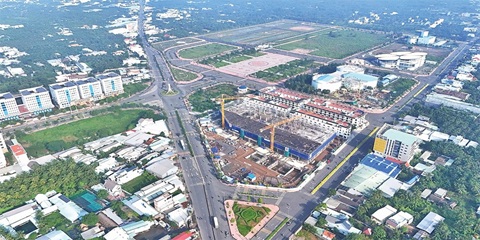
DONG THAP PROVINCE STEPS UP INDUSTRIAL EXPANSION AND INFRASTRUCTURE CONNECTIVITY
Accelerating public investment, strengthening inter-regional connectivity, and expanding industrial land are helping Dong Thap efficiently bolster competitiveness and drive economic growth. Following the 2025 merger of the former Dong Thap and Tien Giang provinces, the expanded Dong Thap province in the Mekong Delta faces mounting pressure to accelerate infrastructure development and strengthen connectivity among local economic zones, urban areas, industrial parks (IPs), and production centres.
PROPERTY / INDUSTRIAL ZONE
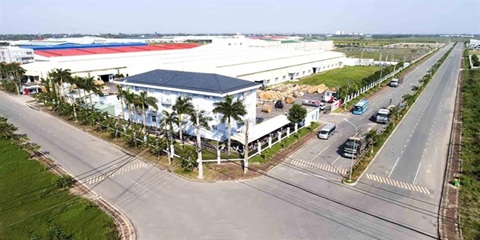
HCM CITY ATTRACTS US$5.7 BILLION INTO EXPORT PROCESSING AND INDUSTRIAL ZONES
HCM City attracted US$5.7 billion in domestic and foreign investment into its export processing and industrial zones during the first nine months of 2026. The figure exceeded the city's full-year target by 31 per cent, highlighting strong momentum in high-quality industrial investment under Resolution No.10-NQ/TW. Total investment reached 131 per cent of the 2026 target of $4.25 billion and represented a 29 per cent increase compared with the same period in 2025, according to the city's Export Processing and Industrial Zones Authority (HEPZA).

BANKING / FINANCE / INSURANCE / TAX
REMITTANCES TO HCM CITY RISE NEARLY 40% IN Q3
Remittances to HCM City reached more than US$2.83 billion in the third quarter of this year, up 39.5 per cent from the previous quarter and 3.6 per cent year-on-year. This was the first quarter showing positive annual growth this year, helping narrow the decline in remittance inflows over the first nine months. According to the State Bank of Vietnam (SBV)’s Regional Branch 2, remittances transferred to HCM City through credit institutions and economic organisations totalled $2.835 billion in Q3, an increase of more than $802 million from the previous quarter.
VIETNAM ECONOMY INVESTMENT
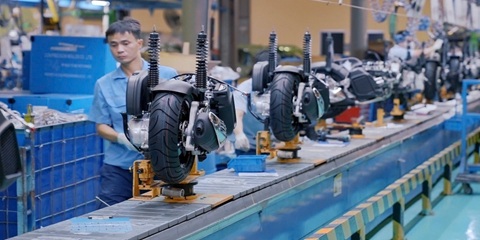
LOCALITIES REPORT BREAKTHROUGH RESULTS IN FDI IN FIRST NINE MONTHS
In Ho Chi Minh City, total registered capital reached $17.2 billion in the first nine months, up 4.2 times from the same period last year. The figure included more than $9.35 billion in newly registered capital and over $4.9 billion in additional capital for existing projects. Foreign investors also registered more than $2.9 billion through capital contributions and share purchases.
TECHNOLOGY
TECH SECTOR GROWTH OPENS UP OPPORTUNITIES FOR VIỆT NAM TO GO GLOBAL
The growth of the electronics, semiconductor and high-tech sectors worldwide is opening up a variety of opportunities for Vietnamese enterprises to integrate more deeply into the global supply chain. However, to become suppliers for these corporations, domestic enterprises must meet rigorous standards regarding quality, technology, productivity and order fulfilment capabilities.
Events Sponsors






















