Want to be in the loop?
subscribe to
our notification
Business News
BANKS SLASH INTEREST RATES
The bank also launched a VND300 billion ($13.4 million) loan package to support companies’ business expansion and credit quality. According to Vietcombank, this package was made possible thanks to the bank’s cuts in operational costs, strong risk management, and maximised efficiency.
BIDV, another primarily state-owned bank, has also slashed its short-term lending rates by 0.5 per cent for selected customers. Mid-to long-term loans for manufacturing and business purposes can now enjoy rates lower than 10 per cent a year, down from the previous 10-11 per cent. Vietinbank, Agribank, Saigon-Hanoi Bank and many others have since followed suit.
The decision came after Prime Minister Nguyen Xuan Phuc met with 300 firms in Ho Chi Minh City on April 29. At the meeting, the PM asked the State Bank of Vietnam (SBV) to maintain reasonable interest rates for manufacturing and business loans, keep foreign exchange rates under control, and closely assist the business community in Vietnam.
Representing businesses at the meeting, Vu Tien Loc, chairman of the Vietnamese Chamber of Commerce and Industry, expressed his concern about high lending rates.
According to Loc, although businesses in Vietnam are still struggling – with 58 per cent reporting losses in 2015 – borrowing costs remain the highest in ASEAN.
“The current inflation rates are under 1 per cent, but firms can only borrow with an 8 per cent minimum interest rate, which is absurd and cumbersome. I suggest that the banking sector lower its lending rates by at least 1 to 2 per cent to support businesses,” Loc reported.
Tran Bac Ha, chairman of BIDV, replied at the meeting that reducing lending rates would hurt the bank’s annual revenue by approximately VND400 billion ($17.9 million), as depository rates are already standing at 6 to 7 per cent. However, Ha stressed that BIDV is willing to share the burden with firms, and proposed some necessary actions to cut lending rates.
“I believe that this goal requires a combined effort from all sides. Firstly, the SBV should lessen the cash reserve ratio and refinancing rates, so that banks have sufficient funds for lending and operating. Secondly, to reduce pressure on interest rates as a whole, the government should consider releasing fewer governmental bonds. Thirdly, the banks themselves should trim their operational costs to improve the net income margin,” said Ha.
SBV Governor Le Minh Hung noted that lending rates have already dropped by 60 per cent compared to 2011, when Vietnam experienced soaring inflation. However, Hung said, the central bank understands that the rates are still high for firms suffering in an unfavourable business climate, and so will work with financial institutions to maintain flexible monetary policies.
The SBV governor pointed out some obstacles that may prevent banks from further rate cuts. These include rising inflation rates, high depository rates, and foreign exchange pressures. The huge pile of non-performing debts is another long-standing problem that must be tackled as soon as possible.
Source: VIR
Related News
VIETNAM ECONOMY INVESTMENT
FOREIGN INVESTORS SEEKING A SYNCHRONISED MANUFACTURING ECOSYSTEM
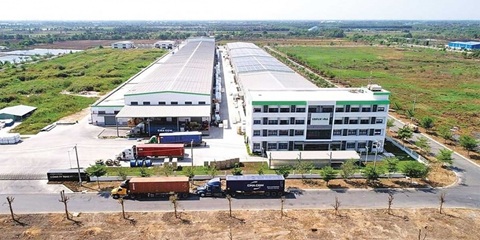
Instead of focusing only on land costs and incentives as usual, foreign investors are seeking a synchronised manufacturing ecosystem, from stable power supply and logistics to shared infrastructure and the convenience of completing residence procedures for experts to serve their long-term investment in the country.
INFRASTRUCTURE / CONSTRUCTION / LOGISTIC / PORT
DONG THAP PROVINCE STEPS UP INDUSTRIAL EXPANSION AND INFRASTRUCTURE CONNECTIVITY
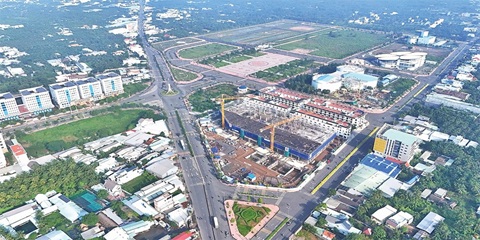
Accelerating public investment, strengthening inter-regional connectivity, and expanding industrial land are helping Dong Thap efficiently bolster competitiveness and drive economic growth. Following the 2025 merger of the former Dong Thap and Tien Giang provinces, the expanded Dong Thap province in the Mekong Delta faces mounting pressure to accelerate infrastructure development and strengthen connectivity among local economic zones, urban areas, industrial parks (IPs), and production centres.
PROPERTY / INDUSTRIAL ZONE
HCM CITY ATTRACTS US$5.7 BILLION INTO EXPORT PROCESSING AND INDUSTRIAL ZONES
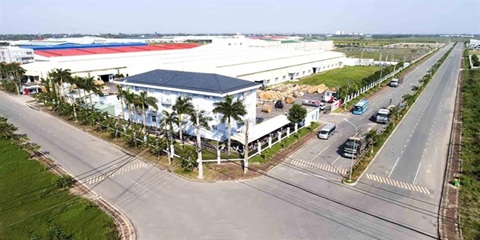
HCM City attracted US$5.7 billion in domestic and foreign investment into its export processing and industrial zones during the first nine months of 2026. The figure exceeded the city's full-year target by 31 per cent, highlighting strong momentum in high-quality industrial investment under Resolution No.10-NQ/TW. Total investment reached 131 per cent of the 2026 target of $4.25 billion and represented a 29 per cent increase compared with the same period in 2025, according to the city's Export Processing and Industrial Zones Authority (HEPZA).

BANKING / FINANCE / INSURANCE / TAX
REMITTANCES TO HCM CITY RISE NEARLY 40% IN Q3
Remittances to HCM City reached more than US$2.83 billion in the third quarter of this year, up 39.5 per cent from the previous quarter and 3.6 per cent year-on-year. This was the first quarter showing positive annual growth this year, helping narrow the decline in remittance inflows over the first nine months. According to the State Bank of Vietnam (SBV)’s Regional Branch 2, remittances transferred to HCM City through credit institutions and economic organisations totalled $2.835 billion in Q3, an increase of more than $802 million from the previous quarter.
VIETNAM ECONOMY INVESTMENT
LOCALITIES REPORT BREAKTHROUGH RESULTS IN FDI IN FIRST NINE MONTHS
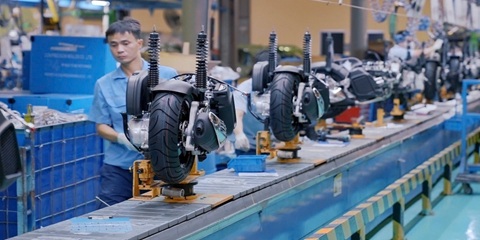
In Ho Chi Minh City, total registered capital reached $17.2 billion in the first nine months, up 4.2 times from the same period last year. The figure included more than $9.35 billion in newly registered capital and over $4.9 billion in additional capital for existing projects. Foreign investors also registered more than $2.9 billion through capital contributions and share purchases.

TECHNOLOGY
TECH SECTOR GROWTH OPENS UP OPPORTUNITIES FOR VIỆT NAM TO GO GLOBAL
The growth of the electronics, semiconductor and high-tech sectors worldwide is opening up a variety of opportunities for Vietnamese enterprises to integrate more deeply into the global supply chain. However, to become suppliers for these corporations, domestic enterprises must meet rigorous standards regarding quality, technology, productivity and order fulfilment capabilities.
Events Sponsors






















